


If you have electrical questions you’d like answered in a future edition of this column, send them to the Editor at northshorejournal@gmail.com, or email John directly at john@clovervalleyelectric.com.
The EV Charger Tax Credit Most Homeowners Don’t Know Still Exists
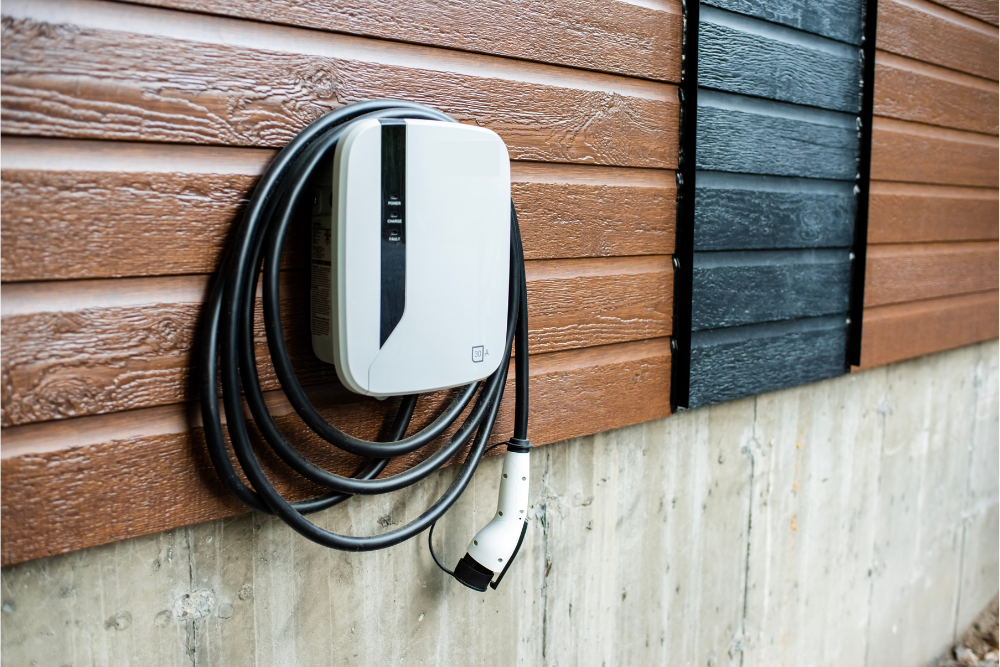
If you have been thinking about installing a Level 2 EV charger at home, there is still one active federal tax credit, at least for a couple more months.
The tax credit is known as the Section 30C Alternative Fuel Vehicle Refueling Property Credit, and under current IRS guidance, it applies to qualified EV charger installations that are placed in service on or before June 30, 2026. After that date, this credit is scheduled to end. I am not a tax advisor, so please confirm with your tax professional if this credit applies to you.
However, in general, “placed in service” means the charger is installed, connected, and ready to use. In other words, ordering equipment or paying a deposit on work before the deadline is likely not enough by itself to qualify for the tax credit.
For homeowners, the credit is generally 30% of the cost, up to a maximum credit of $1,000 per charging port. Costs eligible for the credit include more than just the charger hanging on the wall. IRS guidance says the credit calculation can include the charger itself and associated property directly tied to that installation. In some cases, that can include installation labor, a wall mount or pedestal, and even a new panel or upgraded electrical service, conduit, and wiring when those items are added specifically to serve the charger.
That does not mean every electrical improvement at the house automatically qualifies, but if the work is directly attributable to getting that charger installed and operating, it may be part of the credit basis. That is a good question to run past both your electrician and your tax preparer.
The 30C tax credit is a little more restrictive than others that expired last year. To be eligible for this credit, the charger must be installed in an eligible census tract. Under current IRS rules, that means the address must be in either a low-income community census tract or a non-urban census tract.
For a lot of North Shore homeowners, that may be good news. Most addresses from Duluth to Two Harbors, Silver Bay, Tofte/Lutsen, Grand Marais, Grand Portage, the inland corridors along the Gunflint and Arrowhead Trails, and points in between are likely to fall into the non-urban category. Still, this is something you should verify by address rather than assume. The IRS points taxpayers to the census tract lookup and Appendix B of the Form 8911 instructions, and Argonne National Laboratory also maintains a 30C eligibility locator tool that can help you check your location. I would recommend going to their website and looking for your exact location.
If you are new to EV charging, a Level 2 charger is the step up from a standard 120-volt outlet. A Level 2 charger uses a 240-volt dedicated circuit and is what most homeowners want if they plan to charge overnight and use the vehicle day to day.
If you are considering an EV charger, check whether your address is in an eligible tract, and then talk with a licensed electrician about what the installation would require at your home. And if you want to pursue the credit, please do not wait until the last minute. The project needs to be installed and ready to use before the deadline and it may require a little pre-planning and scheduling.
As always, this column is general information, not tax advice. Your accountant should have the last word on your specific situation.
This column is open for reader feedback and questions. If you have an electrical question or are curious how something works in your electrical system, please send over a question.
John Christensen is a licensed Master Electrician in Minnesota and has a bachelor’s degree in electrical engineering from the University of Minnesota – Duluth. If you have electrical questions you’d like answered in a future edition of this column, send them to the editor, or email John directly at john@clovervalleyelectric.com
The advice provided in this column is intended for general informational purposes only. If you have specific concerns or a situation requiring professional assistance, you should consult with a qualified professional for advice or service tailored to your individual circumstances. The author, this newspaper, and publisher are not responsible for the outcomes or results of following any advice from this column. You are solely responsible for your actions.