


Sentencing is often the most visible and emotionally charged stage of a criminal case. It is deeply personal for victims, defendants, and families because it follows real harm and determines what happens next.
In Minnesota, crime victims have clear and enforceable rights to participate in sentencing through a victim impact statement, which allows them to explain — either in writing or in open court — how the crime affected their lives.
Because the judge announces the sentence in open court, it can appear the decision rests entirely with the judge. In reality, judges do not have unfettered discretion. Sentencing is governed by detailed statutes and rules that significantly limit individual choice.
In felony cases, sentencing begins with the Minnesota Sentencing Guidelines. Legislators created these guidelines to reflect statewide policy choices about punishment, accountability, and public safety. Their purpose is to promote uniform and proportional sentences and to ensure that factors such as race, gender, geography, or a defendant’s exercise of constitutional rights do not influence outcomes.
The guidelines are built around a grid. A vertical axis measures the severity of the offense, with more serious crimes appearing higher on the grid. The horizontal axis measures the defendant’s criminal history score based on prior convictions. Where those two factors intersect, the grid identifies a presumptive sentence. Judges consult different grids depending on the case, including a standard grid, drug grid, and sex-offense grid.
Prison is not the presumptive outcome in every felony case. Prison becomes presumptive only when offense severity and criminal history place the case in a grid cell calling for an executed sentence. Each grid cell provides a presumptive sentence length along with a defined range, which gives structure while allowing limited flexibility. For example, a presumptive sentence of 48 months may allow a range of 41 to 57 months without requiring a departure.
The guidelines frequently call for stayed sentences, meaning probation rather than immediate prison.
With a stay of execution, the judge pronounces the presumptive prison sentence required by the guidelines but stays its execution while the defendant is on supervised probation. That prison sentence remains in place and may be executed, in whole or in part, if the defendant violates probation. Defendants who successfully complete probation never serve their prison sentence.
With a stay of imposition, the judge does not pronounce a prison sentence at all. Instead, the court delays imposing any prison term and gives the defendant an opportunity to succeed on probation. If probation is later revoked, the judge must then impose a sentence using the presumptive grid length and decide whether to execute it. If the defendant successfully completes probation, the court never imposes a prison sentence. As a result, the conviction is treated as a lower-level offense — typically a misdemeanor or gross misdemeanor — for most purposes, reducing long-term consequences related to employment, housing, and certain civil rights.
Judges may also order up to one year of conditional confinement in a local jail or workhouse — such as the Northeast Regional Correctional Center or the Duluth Bethel Female Offender Program — as a condition of probation. Any time served in local custody is credited toward the prison sentence if probation is later revoked.
Before sentencing in felony cases, the court must order a presentence investigation. Probation prepares the investigation as a neutral report examining the defendant’s background, the details of the offense, and the harm caused. It includes criminal history, education, employment, health, substance use, prior supervision, and suitability for probation or treatment. Victims may also provide input. In rural Minnesota, probation officers contribute important local knowledge about available services, travel distances, and realistic supervision options.
When the court imposes an executed prison sentence, the sentence operates in two parts. The defendant serves roughly two-thirds of the sentence in prison and the remaining one-third on supervised release. Any time served in local custody is credited toward their prison sentence. If the defendant violates prison rules or supervised-release conditions, incarceration may be extended, sometimes resulting in the defendant serving the entire sentence in prison.
The law allows departures from the guidelines only in limited circumstances. A downward dispositional departure changes the type of sentence by placing a defendant on probation when the guidelines otherwise call for prison. A durational departure changes only the length of the sentence based on legally recognized mitigating factors related to the offense. In short, dispositional departures affect where a sentence is served, while durational departures affect how long it lasts.
When a court imposes a mitigated departure, the judge must identify specific, legally recognized reasons on the record. Those reasons are subject to appellate review, and a departure may be reversed if it is not supported by adequate findings or consistent with the law. Mitigated departures are often agreed upon between the prosecutor and defense attorney in advance of sentencing. Other common reasons include that the defendant is especially amenable to probation or treatment, clemency requests from the victim or their family, the defendant qualifies for the Veterans Restorative Justice Act, the victim was an aggressor in the incident, the crime was less onerous than usual, or the defendant shows remorse and takes accountability.
Aggravated, or upward, departures face even stricter limits. Prosecutors must request them in advance, and in most cases a jury must find aggravating factors beyond a reasonable doubt. Judges may not impose aggravated sentences based on emotion or public pressure.
Sentencing does not aim to satisfy headlines or hindsight. Judges apply the law as written to promote fairness, consistency, public safety, and rehabilitation where allowed.
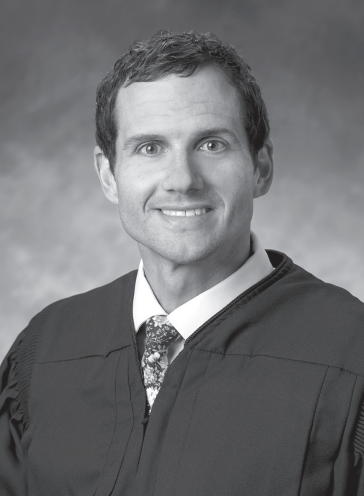
Steve Hanke is a 6th Judicial District judge in the Lake County Courthouse in Two Harbors and in the Cook County Courthouse in Grand Marais. He is a former deputy Duluth city attorney and prosecutor.