
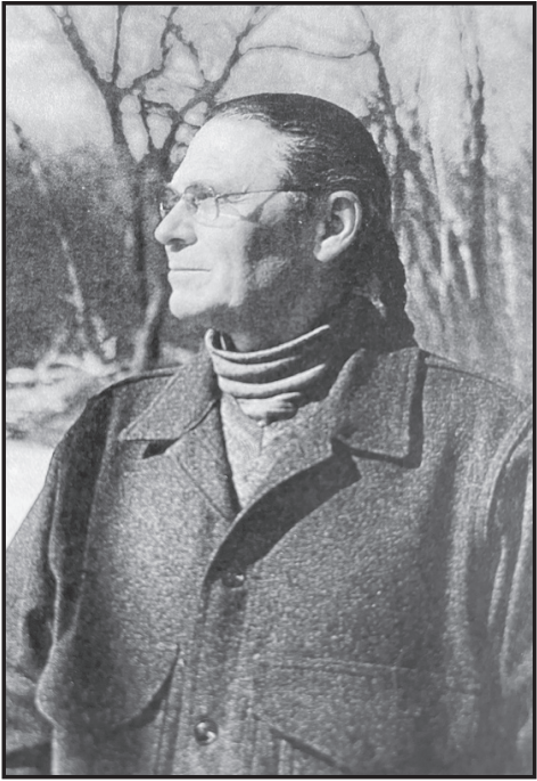
I lived near Traverse City, Michigan, years ago. There, a friend managed his family’s cherry orchard and racing sailboat. They had a regular sailing crew when racing on Grand Traverse Bay and Lake Michigan. Races were intermittent, so crew members were not always available, requiring a second-string crew on call. On rare occasions, they had to dip into the third string of substitutes. That is when I got the call. It was enough that I could pull a rope or crank a winch when told to do so. As rarely as I crewed, I learned some important lessons from those experiences.
A sailboat relies solely on the wind during a race. Without a motor, one strategy to overtake a boat is to steal the wind from the boat in front. Maneuvering, luck, and skill enable a boat to pass on the upwind side of the lead boat, resulting in “stealing their air.” This blocking of wind causes a boat’s sails to go slack and its momentum to stall. A new boat is now in the lead, with the slowed boat having to regain its speed. Sailing tactics to maintain first position are different from the tactics of boats trying to overtake the boats in front of them. If the lead boat should lose its spot, it must change tactics to regain first place. Without changing tactics, the only option is to fall further behind.
Taking the “wind out of their sails” is an old sailing strategy that has taken on a more generalized meaning in causing someone to lose momentum, energy, or confidence. Being “deflated” is about losing air in sails and tires, but in humans, it means an energetic and emotional downturn in confidence and productivity. I think the same concepts are applicable to nations in a competitive world community. The United States has led the global race economically, militarily, and in soft power since World War II. Our innovations in science, manufacturing, agriculture, medicine, national parks, and democracy have inspired our allies and emerging third-world countries. The US dollar has been the safest currency worldwide. Our public and private educational institutions are magnets for foreign students. The American Agency for International Development (USAID) has been unmatched in its assistance to emerging economies and countries in need of help.
While we Americans naively anticipate America’s future as number one, other “second-place” countries are looking to overtake our place as world influencers. The economic engine of a developing middle class in China and India is leaving the American middle class behind in a tight race of affordability. China is tapping African countries’ potential with huge “soft power” and economic investments, while our American President Trump in 2018 referred to those as “shit hole” countries. Reportedly, China is simply waiting for President Trump to dissolve and destroy America’s first-place role in soft power so China can become the number one influencer to countries in need. Soft power relationships enable trade, mining, and military cooperation globally. These advantages are not being stolen by China so much as being wasted by “making America great again.” The current US administration has gutted USAID, Voice of America, and withdrawn from over sixty international organizations highly dependent on US involvement. The list goes on.
China is already globally recognized as number one in the technological race of solar power manufacturing and installation, as well as electric cars and batteries. Their strategy to elevate their world influence includes several economic choke points. China is by far the most important global player in rare earth metals by mining and refining, then controlling exports to major countries, including the US, in need of those metals. Another choke point is their militarization of the South China Sea by ignoring international law and the maritime boundaries of half a dozen countries in the southwest Pacific Ocean. Twenty-four percent of world trade passed through the contested waters claimed by China. Their playbook is preceded by Iran’s control of the Strait of Hormuz. Future control of shipping in the South China Sea will be reinforced by their rapidly developing military presence. The United States military influence is waning in the area. Iran has challenged the US military in all its might with an asymmetrical use of cheap aerial and water drones. Iran’s “second place” strategy in anticipating war with the US was to watch the American war efforts in Iraq and Afghanistan. The US military arrogantly used the same tactics against a surprisingly well-prepared adversary, causing a stall in the action and an off-ramp to the conflict out of reach. The current Iranian control of shipping traffic through the area may be the long-term result. Previous American Presidents have avoided this exact conflict for fear of interrupting world oil supplies. Current presidential “third-string” Christian advisors are more invested in facilitating the “holy war” of end times than maintaining world energy and economic stability.
In some cases, America’s wind is not stolen but given away by “second-string” negotiators settling for chump change and a few jobs, as exemplified by copper/nickel mining efforts adjacent to Minnesota’s Boundary Waters Canoe Area. The wind-stealing economic giveaway is to a Chilean mining company that promises much but historically has delivered much less. Minnesota’s minerals will then be shipped to China for processing and sale to the highest bidder on the world market. Good business has always been “buy low, sell high” to remain profitable. The copper/nickel deal with Minnesota’s resources is to sell low (like a third-world country being exploited), only to buy it back at world commodity value. That is sell low, buy high, which is a backwards and upside-down assault on all Americans, not just us Minnesotans.
The strategy of upfront brouhaha and lies is not making “America great again” as we fall behind other countries in a variety of ways. I learned from the sailing crew how to respond to falling behind. When second and third place boats have maneuvered to steal wind from the leader, that boat’s captain does not say, “We are still winning. No, those boats didn’t pass us. No, they didn’t outmaneuver us.” The captain of my boat did not pull down the sails nor drop anchor. He didn’t go on the radio to broadcast image control. Any such bluster fools not a single spectator when wind-filled sails go slack. Instead, the boat’s captain and first mate immediately planned new strategies to retake the lead position.
Like any sport, there might be an economic incentive to intentionally lose a sailing race. I never experienced that with our boat. However, it is clear to me that some people are getting rich by intentionally losing America’s world position, all the while claiming to “make America great again.” America cannot maintain its historic position of number one simply because we say we are. We have to pull the anchor (greed) out of the (criminal) mud, raise some sails (backbone, rule of law), and find wind blowing with opportunity. There is plenty to be had for a wise and legal captain with a courageous and experienced crew. Good sailing, America.