


LUTSEN – The only ski hill in the Midwest that offers “a true mountain ski area experience” ran short on drinking water this winter.
A primary well utilized by the ski hill “suddenly stopped producing last month,” according to officials at Lutsen Mountains who the Northshore Journal spoke with for this article.
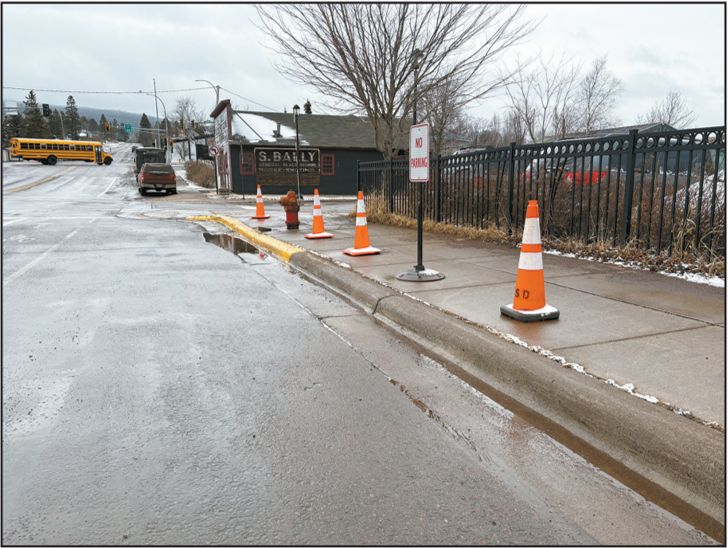
Alternative wells were not an option for the ski hill “due to frozen and snow-covered ground,” said Zak Trimble, the chief operating officer at Lutsen Mountains. As a result, Trimble says the ski hill has been sending trucks capable of holding 5,000 gallons of water to Grand Marais. The trucks are filling up with water via a hydrant across from city hall in Grand Marais. Community members may notice orange parking cones and a no parking sign on Broadway Avenue across from city hall this month and into early May, allowing space for the trucks to fill up with thousands of gallons per day.
Grand Marais City Administrator Mike Roth told this newspaper that the city charges about $10 per 1,000 gallons of water. The ski hill has been filling trucks with city water and driving it back to the ski hill for several weeks, Roth said. There’s precedent for this, Roth explained, noting that sometimes during the summer local contractors in need of large quantities of water will purchase it from the city, filling up at the same hydrant.
“It’s a service we provide,” Roth said.
Meanwhile, Trimble pointed out, “The water purchased from Grand Marais is for the purposes of drinking water, not snowmaking.” A pipeline from Lake Superior is the source used for snowmaking at the ski hill, pursuant to a water appropriations permit issued by the Minnesota Department of Natural Resources, Trimble said.
Indeed, where the ski hill obtains water – be it for making snow, or this year, for drinking water – has been in the news for well over a decade. In 2011, the DNR told Lutsen Mountains that it had to stop drawing water from the nearby Poplar River for snowmaking no later than October 2016. The first full year of use of the waterline running from Lake Superior to the ski hill was the winter of 2018. Setbacks including contractor issues, the intake side of the waterline breaking in severe storms, and other complications were issues the ski hill had to navigate as it transitioned from taking water out of the Poplar River to the Big Lake.
The ski hill has never been shy about asking the state to help offset expenses related to its operations, including approximately $3.6 million in state funding it received to set up the pipeline system for snowmaking with Lake Superior water.
Lutsen officials declined to comment on if they’re asking the state, IRRRB, or any other agencies to provide financial assistance related to the dry wells on the ski hill and the hauling of many thousands of gallons of water from Grand Marais to Lutsen Mountains this winter.
“We will not be providing any other comment at this time,” Trimble said.