


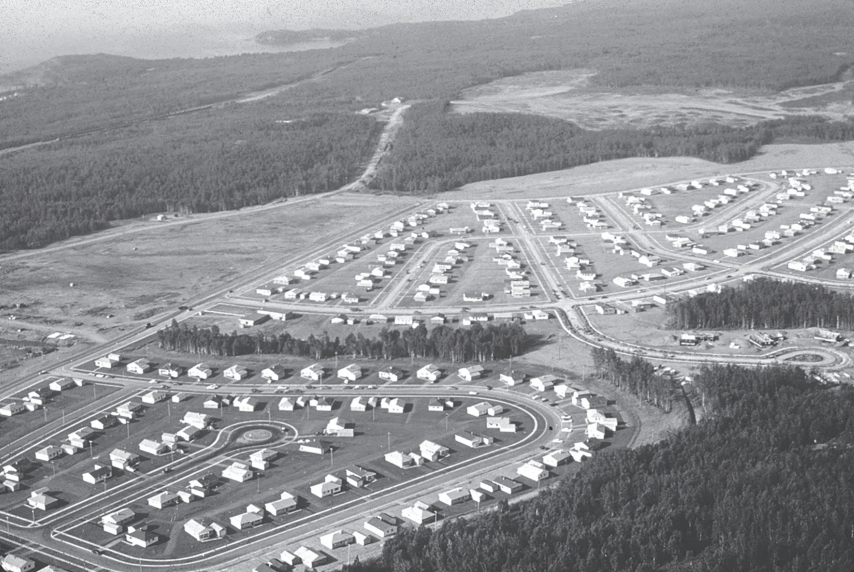
On Tuesday, January 27, history came to life at the Silver Bay Public Library. In a standing-room-only presentation held by the Bay Area Historical Society, locals gathered to hear a captivating presentation by Albertian Planten Vanafton.
After years of exploring the globe, seasoned world traveler Albertian found a new mission closer to home: documenting the history of the North Shore. Motivated by a desire to better understand his adopted community, Albertian collaborated extensively with Muffy Hoffman and the Bay Area Historical Society to curate a comprehensive collection of local lore and historical milestones.
This archival work arrives at a pivotal moment as the city prepares for its 70th Anniversary this year. To kick off the excitement, Albertian delivered a spirited presentation featuring a vintage slideshow with his signature wit, offering residents a nostalgic look at the “grit” and determination that first established the town.
The historical showcase serves as a prelude to the upcoming Bay Days celebration, scheduled for July 10–12, 2026. Through these stories, Albertian reminds both newcomers and longtime residents alike of the hard-working spirit that continues to define Silver Bay’s identity on the Lake Superior coast.
From Beaver Bay to the “Green Door”
The story of the North Shore begins long before the first taconite pellet was ever formed.
Beaver Bay was established in 1856. It was the logical choice for homesteaders. Located where the Beaver River meets Lake Superior, it offered a natural harbor.
The Wieland Legacy: Five brothers arrived in 1856 to settle the area; to this day, the Wieland family remains a cornerstone of the town. Despite its prime topography, Beaver Bay never became an industrial hub. Its population has remained remarkably steady at around 120 people for over a century. The town’s 1928 schoolhouse still stands today, though it now serves a very different purpose as The Green Door Bar and Liquor Store.
How “Silver Bay” Got Its Name
The name of the town wasn’t born in a boardroom, but on the deck of a ship. Oscar Peterson, a local fisherman, once asked his friend, Captain Smith, what he should call his homestead. Smith, who sailed the coast regularly, noted that when he approached the shore from the lake, the rocks shone with a distinct silver hue. This wasn’t due to precious metals, however— it was the result of years of heavy seagull populations! The name was officially adopted in 1954, and the village was incorporated on October 16, 1956.
The Taconite Revolution
The mid-20th century changed the landscape forever. As highgrade iron ore (hematite) was depleted during WWII, the industry turned to Taconite—a harder rock containing 25–30% iron.
• The Process: Thanks to E.W. Davis and his work at the University of Minnesota, a method of magnetic separation was developed to make taconite mining profitable.
• The Infrastructure: In 1955, the Reserve Mining Company built a 60-mile railway connecting the mines in Babbitt to the processing plant in Silver Bay.
• Explosive Growth: To carve a town out of the rugged North Shore rock, crews used one million pounds of dynamite. The blasted rock was repurposed to build the harbor’s massive breakwaters, which reach depths of 110 feet.
Silver Bay was designed with a vision for 5,000 residents. While the population currently sits around a cozy 1,800, the town’s taconite identity is everywhere.
• St. Mary’s Catholic Church features an altar made of five tons of taconite.
• “Rocky Taconite,” the town mascot, stands guard at the entrance to the city.
• The Black Beach Inn showcases taconite in its front desk and fireplace mantel.
• Black Beach itself, now a famous tourist destination and campground, was formed from processed taconite tailings.
Silver Bay: A Resilient Legacy on the North Shore
Today, Silver Bay continues to evolve, balancing its industrious roots with a growing reputation as a premier North Shore destination. A cornerstone of this evolution was the 1999 opening of the Silver Bay Marina, a vital safe harbor that provides 110 slips for vessels up to 100 feet in length. Because Lake Superior is as dangerous as it is beautiful, these protected harbors are strategically spaced roughly every 30 miles along the shoreline to offer boaters a necessary refuge from the lake’s unpredictable temperament.
While the city’s population has declined from its midcentury peaks—a trend driven by shifts in the mining industry— Silver Bay remains defined by its resilience. Through ongoing improvements to local infrastructure and a commitment to enhancing the quality of life for residents, the town continues to transform itself into a welcoming home and a must-visit stop for tourists. Built on a foundation of hard work, Silver Bay endures as a vital hub on the shores of the world’s largest freshwater lake.
Join the Celebration!
Don’t miss the 70th Anniversary during Bay Days, July 10–12, 2026! Stay Updated: Follow the Bay Days Facebook page for the latest news on events, schedules, and celebrations.
Things are going on at the Bay Area Historical Society
The Silver Bay Public Library will be hosting a display entitled “The Cookbooks of Silver Bay,” where visitors can browse through old cookbooks published by churches and other organizations in Silver Bay and the surrounding area throughout the years. If you have memories of using any of the recipes in these books, you can submit them to the library and they may be shared with others in a future Bay Area Historical Society website article. Also, please keep in mind that if you have any old local cookbooks that you no longer want, please contact the Bay Area Historical Society to donate them.
BAHS is also working to schedule a representative of the Minnesota Historical Society to present the Minnesota Digital Newspaper Hub, a digital database of Minnesota newspapers, and its search engine. Many early Silver Bay newspapers are scanned into the database and are available for all to peruse or use in their research. They continue to add more newspapers to the database and are still looking for old shoppers.
BAHS would love to have you as a member. You can join by emailing them at: bayareahistoricalsociety@gmail. com or by visiting their website: bayareahistoricalsociety.com
If you have any old memorabilia or vintage items you would like to donate or share, please contact the Bay Area Historical Society via email, which is listed above. They are always trying to add to their historical collection.