
In a previous article, I wrote about how the brain creates new pathways of knowledge based on our sensory organs. The eyes are a unique sensing organ due to religious and spiritual implications. “Eyes are the mirror of the soul” is a near-universal concept. In Christianity, the eye symbolizes omniscience and eternal watchfulness. The final step in making sacred Hindu art and sculpture is painting the eyes to bring the deity to life. Islam encourages using the eyes for noble purposes and expressing awe of God. The Jewish tradition of “Tikkun Olam” espouses eye contact as a way to build bridges and repair the world. Eyes are pathways to clairvoyance (referred to as the “third eye”) in some traditions. There is a great deal of spiritual expectation placed on the remarkably complex eye and its ability to perceive light.
My intention with this article is to shine a little light (yes, pun intended) on how our eyes are conditioned by culture and society to see only part of the world around us. We are influenced in what to look at as well as not look at, and then are given language to interpret what we see. This process creates our individual and societal “world view,” which can be very narrow or expansive based on how we use our eyes and brains.
Eye structures (cones and rods of the retina) and muscles can be trained to “see” in specific ways, varied by culture. Modern visual acuity is based on the predominant use of cones in the eyes. Cones are the least light sensitive of the retina’s photoreceptors, but are color sensitive and best for small detail. This kind of acuity is enhanced by the convergent focus of both eyes. This type of vision relies on only 6% of the eye’s total photoreceptors and marginalizes the rods, which make up 94% of photoreceptors. Rods are the most sensitive photoreceptors in the eye and are best at perceiving motion, relationships, and low-light events. Rods are useful in focused or unfocused vision. Their perceptive information is often referred to as peripheral vision because the rods are arranged around the central area containing the cones.
Modern Western languages have an enormous vocabulary for what the cones perceive (objects and detail), but much less language describing what is perceived by the rods (motion, interconnectedness). The use of “central” and “peripheral” is an example of language that displays the Western preference for the perceptions of cones (nouns) over rods (verbs). English is a “noun-based” language with nouns (words for objects and details) outnumbering verbs (words for movement) two to one or three to one, according to different counts. Other societies see the world in terms of movement and connectedness. Potawatomi vocabulary consists of seventy percent verbs. Japanese is a verb-dominant language. Solely using the cones to witness detail and objects which are static is a dismemberment from the whole—a piecemeal vision of the world. The more a population sees their environment with a static view of detail and objects, the more fixed and narrow their worldview becomes.
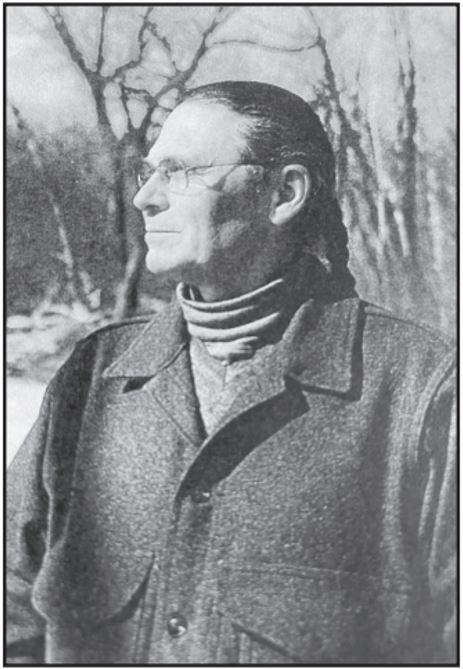
The rods perceive motion and ethereal events (Webster: formless, immaterial, non-physical) which are dynamic in the connectedness of relationship. Many of the processes that move the living world are witnessed with our rod vision to notice motion, energy, and the big picture. The rods allow us to see that whole picture if we are trained to do so. Some cultures expect this, but in the West, specific individuals are trained in this skill. Specialized police and military personnel are trained in the “soft eyes” technique. This skill allows them to quickly assess a whole situational event before focusing on a specific part of that event. Threat assessment (and any wise assessment) requires the “whole picture.” This visual skill relies on muscle training, resulting in unfocused, non-convergent use of two eyes. By training the eyes to not focus on specific detail, a person can utilize the peripheral (rods) vision of both eyes to observe the whole dynamic event confronting them. This visual ability is present in many artists, designers, visionaries, and spiritual mystics. I have a very old text (Lives of Famous Indian Chiefs, by Norman B. Wood, 1906) that contains photographic portraits of Native leaders. Many of those photographs display important elders with non-convergent eyes. One eye looks at the camera while the other eye looks elsewhere. My assumption is that their different “view of the world” was one aspect establishing their cultural importance. In modern times, “crossed eyes” (convergent insufficiency) is considered an abnormality to be corrected.
A “worldview” is a cognitive framework through which a person or society interprets reality, perceives the world, and acts within it. Since modern Americans use focused, cone-based vision exclusively, it is easy to recognize the narrow worldview of many US citizens. Many operate from a personally focused perspective without recognition of the bigger picture. This influences many Americans into becoming single-issue voters. Their favored candidate has to align with that one single issue to get their vote. By narrowly focusing on one chosen topic, the voter loses sight of the dynamic interconnectedness of many issues, each impacting the other. Some who voted for Donald Trump to “make the liberals cry” are now crying themselves for not seeing the whole agenda of his presidency. Many doubters of climate change as a single issue didn’t see how that change would impact their home, food, insurance, and assets. The pushback on Green Energy conversion, when viewed as a single issue, completely misses the long-term implications best recognized by witnessing the environment globally.
The American cultural controversies of “cancel culture” and “woke” are a clash of world views. One based on attitudes and beliefs promoted and accepted. The other on observing the “whole picture” of humanity. I believe all Americans would be better served with an expanded view created by adding “peripheral vision” to “focused vision.” This expanded vision allows for better choices in action and policy that truly benefit whole communities and the nation. The dogmatic view of our current federal administration is narrowly focused on benefiting a few while disenfranchising many. The breakdown in the rule of law and economic opportunities, causing chaos and uncertainty, can be overwhelming, resulting in many citizens contracting into a narrow set of avoidance and distractions. Other Americans, with an expanded view of what is possible, are motivated into practical action as an antidote to rigid ideologies being expressed in Washington. Living fully is an active process of verbs enlivening the nouns of our surroundings. Peripheral vision adds context and meaning to central vision. Regardless of the controversy in “woke,” make sure to be fully awake.