


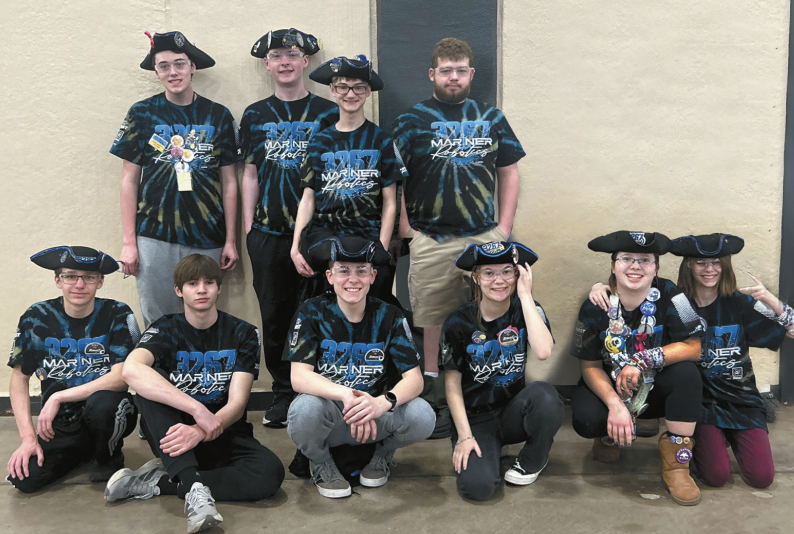
DULUTH — Inside the halls of the Duluth Entertainment Convention Center (DECC) this past weekend, the air was thick with the scent of excitement and pure adrenaline. Amidst a sea of flashing lights and cheering fans, Mariner Robotics put their many hours of rigorous engineering to the test, ultimately securing a coveted spot in the playoff rounds of the FIRST® Robotics Regional competition.
The journey to Duluth began in early January, when FIRST® unveiled this year’s brand-new game challenge. The announcement triggered a grueling six-week “build season,” a period where students and mentors worked around the clock to design, prototype, and program a custom robot from scratch. For Mariner Robotics, the stakes felt higher than ever, and the team arrived at the DECC ready to showcase their mechanical craftsmanship.
A Game of Precision and Power
This season’s game is a high-speed test of accuracy and verticality. Teams are tasked with gathering and launching yellow balls—officially dubbed “fuel”—into the “Hub,” a towering six-foot hopper located in the center of the field. Points are earned through volume and velocity, but the real engineering marvel of the Mariner robot lies in its finish where it “climbs” (lifts itself) on a tower.
The team’s technical prowess was evident during the autonomous period—for 20 seconds of the match the robot operates solely on pre-programmed code without human intervention. Mariner Robotics boasted a near-perfect record in this phase, with their machine consistently navigating the field and securing climbs with clockwork reliability.
More Than a Scoreboard
While the competition is fierce, the atmosphere at a FIRST® event is unlike any traditional high school sport. The “Gracious Professionalism” ethos was on full display in Duluth. In a unique twist, teams are randomly assigned into three team “alliances.” A team might find themselves competing against a school in one round, only to be paired as strategic partners in the next.
This collaborative spirit defines the experience. Between matches, the pits were a hub of activity as some students traded commemorative pins and custom trinkets, sharing technical advice even with their direct rivals. “The camaraderie is genuine,” noted the coaching staff. “No matter what the scoreboard says, everyone is there to see each other succeed.”
Playoff Bound
As the qualifying rounds progressed, Mariner Robotics’ consistency paid off. The team climbed into the top 10 rankings several times throughout the weekend. In the world of FIRST®, the top eight teams become “alliance captains,” earning the right to draft two other teams to join them for the playoff bracket.
The tension peaked during the alliance selection period. When the #6 seed captain called out the Mariner Robotics’ team number, the group erupted in cheers. Joining the #6 alliance guaranteed the team a spot in the high-stakes playoff rounds.
Though the team was eventually eliminated from the playoffs due to unforeseen technical glitches, the mood remained optimistic. The “bugs” identified in Duluth are already being addressed by the student programmers and mechanical leads.
Looking Ahead to Iowa
The Duluth regional was just the beginning. Mariner Robotics is currently back in the shop making strategic tweaks and hardware adjustments. The team is preparing for their second regional appearance in Iowa, scheduled for March 25-28, where they intend to leverage their playoff experience to aim for the podium.
Supporters can follow the team’s progress, view behind-the-scenes build photos, and stay updated on community events by visiting their Facebook page at facebook.com/MarinerRobotics. To see the Duluth match footage and detailed scoring statistics, fans can also search for the team on The Blue Alliance (thebluealliance.com).