


(Here is the final installment of our four-part series, covering the seasonal shift that defines the transition from asphalt to the “variable” surfaces in the woods.)
In the suburbs, the transition from “road” to “home” is a silent, seamless glide. You turn off a four-lane boulevard onto a collector street, hit the cul-de-sac, and roll over a concrete curb into a driveway of smooth, black asphalt. The most “off-road” experience you might encounter is a stray basketball or a particularly aggressive speed bump. In that world, the road is a servant— predictable, manicured, and framed by the civilizing geometry of the sidewalk.
But on the North Shore, everything changes.
There is a specific, bonedeep hum that occurs when a city-tuned suspension meets a “washboard” stretch of gravel in the Superior National Forest. It’s the sound of your teeth chattering in time with your glovebox hinges.
In the suburbs, “minimum maintenance” means an uncut lawn. Up here, it’s code for “protect your oil pan.” Fine, grey dust clouds coat the pines as you drive. The road isn’t a servant; it’s a shifting participant, needing new manners, better clearance, and the humility to accept that, eventually, we all return to the mud. Some mornings, you slow down to let a deer slip across the road or wave a neighbor through a narrowed pass, reminded that surrendering a little control is its own kind of wisdom. The landscape demands patience, but often, it rewards you with moments of quiet collaboration between traveler, road, and forest.
This difference becomes even starker outside of the Highway 61 corridor, where many people live on gravel or “minimum maintenance” roads. These roads don’t just sit there; they heave, they soften, and they occasionally try to claim your vehicle. Navigating them requires a specific set of skills and a deep respect for the seasons.
While others cheer spring, North Shore residents brace for “The Breakup.” As frost leaves, gravel roads turn to oatmeal or quicksand consistency, and Load Limits restrict heavy vehicles to protect roadbeds.
If you’re building a house or expecting a major delivery, know that “heavy trucks” are barred from restricted roads for weeks in March, April, and sometimes early May. In the city, you book a delivery; on the Shore, you wait for frost to leave.
Newcomers often make the mistake of driving on gravel as they do on blacktop. To survive here, you must understand the Crown. A well-maintained gravel road is higher in the middle to allow water to run off into the ditches. If there is no oncoming traffic, experienced local drivers often drive near the center “crown” to avoid the soft, treacherous shoulders. When you do encounter an oncoming neighbor, pull to the right, slow down to minimize dust or flying rocks, and offer the “North Shore Wave”—a simple lift of the index finger from the steering wheel. It’s the universal sign for “I see you, neighbor, and I’m not going to crack your windshield.”
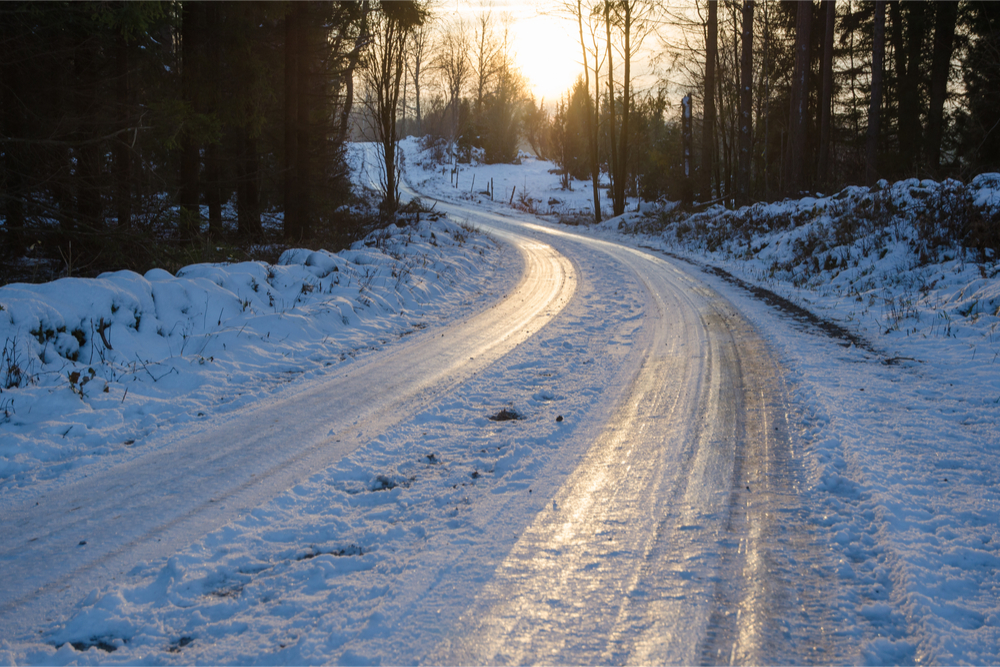
In the metro, the city plows clear the street, and then a secondary crew often clears the “aprons.” Here, the plow’s job is to keep the road passable, not “bare pavement.” The plow will inevitably leave a “windrow”—a heavy, icy wall of snow—at the end of your driveway. There is no sidewalk crew coming to save you. That wall is your morning workout, and it’s why a high-clearance 4WD vehicle isn’t a status symbol here; it’s a necessity.
Finally, a clean car often belongs to someone who hasn’t been anywhere interesting. Between the salt of winter and the dust of summer, your vehicle will wear the landscape.
Ultimately, living on a gravel road forces you to slow down, both literally and figuratively. It reminds you that you are a guest in the boreal forest. Life here is a little louder, a little bumpier, and a lot muddier than in the suburbs, but the view at the end of the lane is always worth the wash job. So, as you head out next time, pause for a moment and consider: What story will the road leave on your car today?