


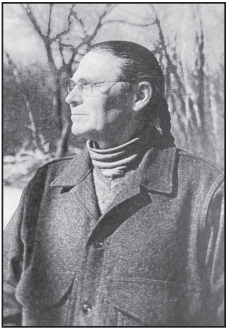
I sat in the pre-dawn dark of our woods on the Saturday morning of opening deer season. My location was inside an elbow on our trail we call the “Back Loop.” My wife and I had cut the trail through poplar regrowth one to three inches in diameter. We worked hard for four days in a snowless late winter many years ago. When aspens are clearcut, the regrowth is often ten thousand stems per acre. When we made our trail, that density had thinned somewhat, but we still made eighty-five brush piles along the almost half-mile trail.
As I sat in the darkness waiting for shooting light a half-hour before sunrise, I reminisced about the Herculean task of making this trail. The same effort created other trails that connected to the Back Loop. All told, my hike had been a mile through our woodland and across various beaver flowages. The forest I sat in this morning is even less dense than when we cut the original trail. The remaining trees are taller and fewer, as their canopies shaded out others. In the increasing daylight, I could see the forest floor littered with dead trees that had been crowded out and overshadowed.
There was a heavy frost that morning. When sunlight hit the very top branches, the melted frost water began to drip in the woods. I could hear it all around me. The higher the sun rose, more frost melted, increasing the falling water drops. It reminded me of making popcorn. You know what I mean if you have ever popped your own. The first one pops, then several. Pretty quickly, there is an intense rush of exploding kernels, then the rapid rate slows down to almost nothing. The melting frost falling off the branches and twigs was like that. The frost on the tree trunks didn’t fall to the ground in drops; rather, it ran down the tree trunks in long rivulets that now glistened in the sunlight. The forest was full of reflecting trunks. In the moment, I witnessed a unique and wonderful vertical light show as the rising sun played with the naked trees of November.
Deer hunting in the thick boreal forest is mostly a practice of patience and silent waiting. Being an “impatient perfectionist,” I have to work at stillness, and I can be quiet if I need to. Compensating for my temperamental mismatch with deer-hunting, I closely observe the woodland around me and let my mind wander. This becomes my purpose for staying in the woods when no deer present themselves. What the forest offers to me is my reward. That morning I was inspired by all the thin, dead poplar trees jackstrawed across the forest floor that had been crowded out and overshadowed by larger trees. In our linear thinking, dead means gone and done without purpose or function. Some would see the individual trees in a competition with each other over space and sunlight. Winners and losers. The wooden biomass lying down wasn’t gone or without function. It was adding to the health of the forest by delivering nutrients to the remaining trees and a myriad of shade-loving plants. The dead and dying trees provide habitat for all manner of living critters. Being overshadowed has not eclipsed purpose and usefulness. Nature finds value in the trees thinned out by its own process.
I thought about people who are crowded out and overshadowed. Some human values and systems are not so utilitarian in their “thinning” processes as nature’s complex inter-relatedness. Individuals and whole communities are “crowded out” by natural disasters and global shifts of human influences like climate change, war, and famine. The resulting migrations have evoked fear and backlash in pass-through and destination countries. Receiving nations seem unable or unwilling to find space and purpose for newcomers for the long term. Perhaps host countries, with time and inspiration, can turn this displacement into a social and economic positive. To do so, societies will have to remember that culture is not a static thing and that demanding theirs remain unchanged is disastrous. Natural forests don’t select a few individual trees or limit themselves to a single species because variability and adapting to change are their foundational systems that promote sustainable and healthy communities.
A human-made capitalistic economy can “thin out” its diverse sources of prosperity by “over-shadowing” smaller participants. Big money eclipses smaller money through mergers and acquisitions. Economic and technological development can be the engine of wealth and innovation for some. However, those developments are not universally beneficial. Henry Ford paid his early automotive workers five dollars a day. That was an unheard-of wage that had workers flocking to his factories and angered other industrialists. Mr. Ford’s logic was that he wanted his employees to afford one of his cars. He was creating an expanded market for his product. His was an example of finding usefulness in those he overshadowed. If technological innovation doesn’t follow Ford’s example but rather leads to job and income loss, there will be fewer buyers to support our consumer economy. Evolving economic and governing systems need to wisely look to future implications of decisions made in the short run. The boreal forest has existed since the last glacier retreated ten thousand years ago. Even though people have been on Earth longer, no human system can claim the staying power of the boreal forest. We would do well to observe and emulate nature’s success. “Success” is actually the wrong word. Nature’s sustainability, evolution and adaptation are more applicable terms to our current human experiment.
In a hierarchical view of the world, we might admire the tall majestic trees whose uppermost branches define the skyline of the forest. But we would be foolish to ignore the understory that supports the entire ecological system producing the big trees. We might value the queen bee (note the name) over the worker bees who actually produce the honey. We are captivated by the magnificent monuments left behind by Egyptian Pharaohs and historic kings and queens. We have less adoration and information about the engineers and laborers who actually built those temples of greatness. It is important for decision makers to be fully aware that their positions take up space in the crowning sunlight of elevated privilege and service. It is their responsibility to create and maintain systems that make place and purpose for all. This will ensure civic and national stability by enabling functionality at the individual level. Not everyone wants to be at the peak, but everyone wants to be part of the building process. People want to participate and be seen as contributors. The rising sun is the glorious promise of a new day for everyone waking in the morning light.