

Hennepin and Ramsey counties lost a net total of 87,839 residents to domestic out-migration from 2020 to 2024, highlighting notable demographic shifts that influence regional planning, according to the Center for Rural Policy and Development’s (CRPD) 2025 State of Rural report. Many of those people simply moved to the ‘outer ring’ suburbs (like Wright or Sherburne counties). Still, a historically significant number—the ‘urban refugees’—ventured much farther into the ‘Entirely Rural’ or ‘Rural-Recreational’ counties, such as Cook and Lake, affecting local population dynamics and service needs.
CRPD is a non-partisan, non-profit “think tank” based in Mankato, MN. Its entire mission is to provide data-driven research to help state legislators and the public understand the unique challenges and opportunities facing “Greater Minnesota.”
While specific “urban-to-rural” migration counts for Cook and Lake Counties aren’t tracked in a single real-time ticker, current census estimates and rural migration studies provide a clear picture of this trend.
Since the 2020 pandemic, Cook County has been a beneficiary of the “rural rebound,” with its population growing to approximately 5,720 (as of 2024/2025 estimates), a significant 2.1% growth rate, while many neighboring rural counties in the “Entirely Rural” category are lucky to break even.
Data indicates that the demographic driving this rural rebound is the 30-to-49-year-olds. This group is migrating into rural Minnesota at the highest rates, representing a key component of urban-to-rural migration patterns. They are mid-career professionals who, thanks to the vibrant fiber optic system in Cook County, can work as efficiently from a lake cabin in Lutsen as from an office tower in Eden Prairie. Rural researchers call this inflow the ‘Brain Gain.’ These newcomers bring professional experience, families, and high-speed internet demands, fundamentally changing the ‘human condition’ of small towns and illustrating the significance of migration trends for regional development.
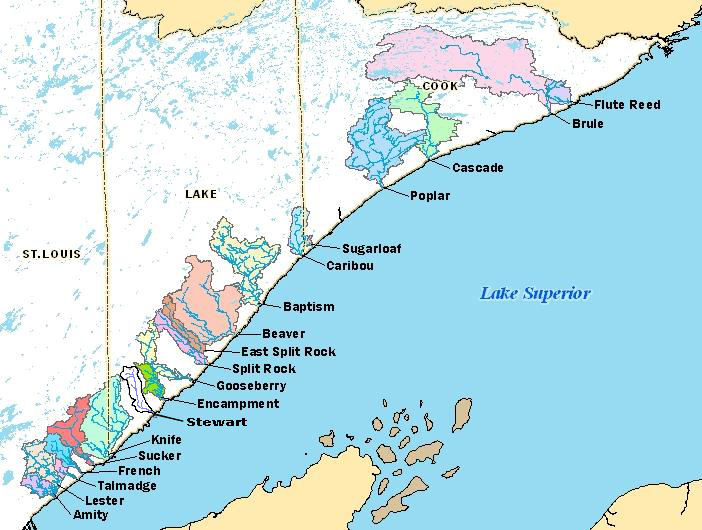
Lake County presents a fascinating contrast to Cook County. While Cook County is the “scenic outlier” with rapid growth, Lake County— home to Two Harbors and Silver Bay—is the “steady transitioner.” It has a larger population base, but its demographic shifts are more subtle and closely tied to its industrial roots and proximity to Duluth, reflect diverse migration patterns that influence regional planning and economic strategies.
Lake County’s population sits at approximately 10,698. Unlike Cook County’s positive population growth, it has seen a slight overall population dip of about 1.9% since 2020, but this masks significant “internal churn” as people move in from urban areas. Even with an overall decline, primarily due to an aging population, Lake County sees a steady inflow. About 5% of residents moved from a different county within the last year—primarily from Duluth and the Twin Cities metro areas. While Lake County is technically 100% rural by Census definitions, it is increasingly becoming a “bedroom community” for Duluth. Urban professionals are moving to the Two Harbors area to escape city taxes while maintaining a 25-minute commute to “the office.”
Regardless of age, the choices of urban refugees-paying a premium for scenery in Cook County or seeking affordability in Lake County-show how housing prices and lifestyle preferences shape migration. Recognizing these factors can help stakeholders guide sustainable growth and community character.
In Cook County, the highest percentage of urban refugees is from the Hennepin/Ramsey County area, while the highest rate in Lake County is from the St. Louis County metro. Housing prices in Grand Marais and Lutsen are roughly 50% higher than in Lake County. You are paying for “The Big Lake” and the BWCA access. Lake County still has a “working” feel (taconite shipping, logging) that appeals to those who find Cook County a bit too “touristy” or precious.
By now, both counties have become prime destinations for “urban refugees,” but the motivations— and the resulting lifestyles—are distinct. In both counties, the “kind” of person moving in is the same— someone looking for a version of life that feels more authentic than a corporate PowerPoint. They just differ in the “degree” to which they are willing to pay for the view.