
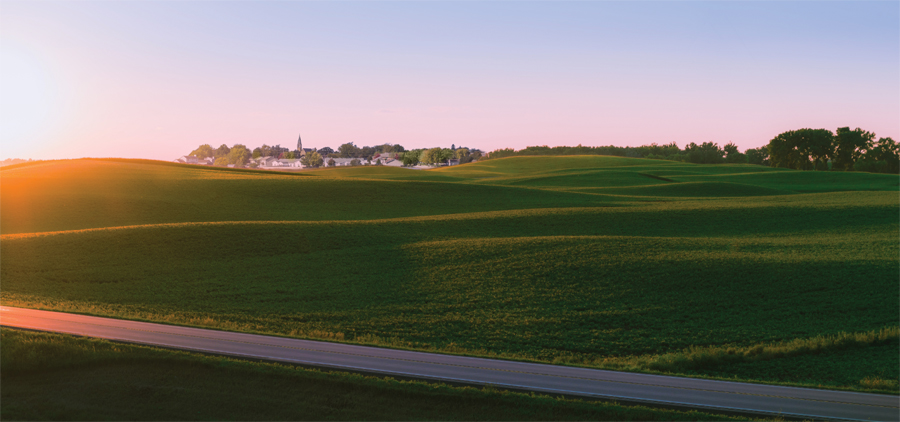
Rural Minnesota is navigating a complex transition as the second half of the decade begins, according to a new report released Monday by the Center for Rural Policy and Development (CRPD). The 2026 “State of Rural” report paints a picture of a region defined by a “tug-of-war” between encouraging migration gains and the unrelenting pressure of an aging workforce.
The findings suggest that the post-pandemic era has carved out a new demographic reality for Greater Minnesota. After a decade of seeing many rural counties hollow out, the trend has shifted toward stabilization. More people are choosing to call rural Minnesota home, a move that is effectively masking—at least for now—deeper demographic challenges.
The Migration Turnaround
Over the ten years starting in 2010, St. Louis and Lake Counties experienced a net population loss, while Cook County experienced a net population gain. Over the last five years, all three counties experienced population growth. The most striking takeaway from the 2026 data is the shift in who is moving where. Throughout the 2010s, many rural counties faced consistent population declines. However, since the late 2010s and through the first half of the 2020s, in-migration has surged.
“Rural Minnesota is at an inflection point,” said Julie Tesch, President and CEO of the CRPD. “We’re seeing encouraging signs— population stabilization, income growth—but those gains are fragile.”
The report highlights who is moving where. While young adults in their 20s continue to migrate toward urban centers for education and early career opportunities, they are being replaced by a steady stream of “returners” or new residents in their 30s and 40s. These working age adults often bring families with them, helping to shore up local school enrollments and community tax bases.
Additionally, the report notes that BIPOC (Black, Indigenous, and People of Color) populations are playing an increasingly critical role in rural growth, diversifying the workforce and the culture of regions that have historically been demographically stagnant.
Demographic Headwinds
Despite the influx of new residents, rural Minnesota is fighting a biological battle. The report warns of persistent “demographic headwinds,” noting that death rates are currently outpacing birth rates in many rural areas.
As the “Baby Boomer” generation ages, the “natural” population decrease—more deaths than births—is expected to continue. This means that for a rural community to simply maintain its current size, it must successfully recruit new residents from outside its borders every year just to break even.
The Workforce Vacuum
This demographic reality is hitting local economies where it hurts most: the help-wanted sign. Job vacancy rates remain significantly higher in Greater Minnesota than in the Twin Cities metro area.
“These trends tell a nuanced story,” said Kelly Asche, Senior Researcher at the CRPD. “We’re seeing positive signs… but those gains are happening alongside long-term demographic challenges we can’t ignore. The reality is that rural communities are competing for people and workers in a much tighter labor market.”
The labor shortage has driven up wages, a silver lining for workers but a strain for small-business owners. Rural regions have actually seen some of the strongest income growth in the state over the last two decades. While the raw dollar amount of a paycheck in Cook or Lake County might still trail a Minneapolis salary, the report suggests a lower cost of living often offsets that gap—though “affordability” varies wildly depending on the local housing market.
A Specialized Economy
The report also sheds light on the unique industrial profile of rural Minnesota. These economies rely heavily on three pillars: healthcare, government, and selfemployment. The prevalence of self-employed “entrepreneurs by necessity” or small-scale business owners provides a certain level of resilience, but it also makes these communities more sensitive to changes in healthcare costs and state-level policy decisions.
As local leaders look toward the remainder of 2026 and beyond, the CRPD emphasizes that the current “momentum” is an opportunity, not a guarantee. The stabilization of the population provides a window of time for policymakers to address the “persistent challenges” of housing and childcare that often prevent the 30-to-40-year-old demographic from sticking around long-term.
The full report, along with the interactive “Atlas of Rural Minnesota,” is available on the Center’s website, providing a county-by-county look at the data likely to shape legislative debates in St. Paul for the coming year.
“The decisions we make today,” Asche concluded, “will determine whether recent progress turns into long-term sustainability.”
CRPD is a non-partisan, not-for profit policy research organization dedicated to benefiting Minnesota by providing its policymakers with unbiased information and evaluations of issues from a rural perspective. CRPD’s “State of Rural” report provides policymakers with a clear, data-driven picture of how Minnesota’s rural regions are changing, and what those trends mean for the state’s future.