


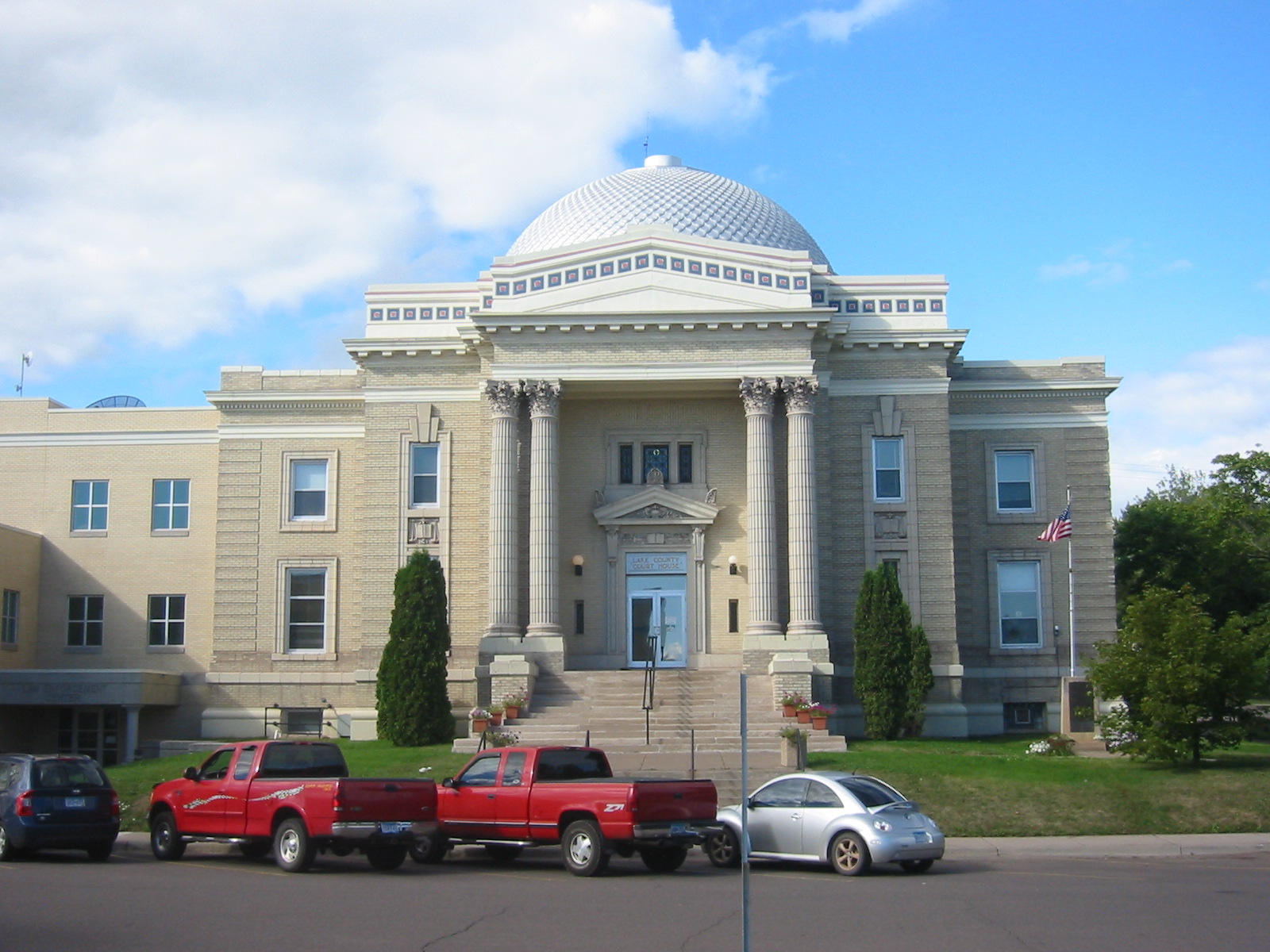
The Lake County Board meeting on October 13th featured a number of project updates from Drew Stroberg, Deputy Forest Supervisor for the U.S. Forest Service’s Superior National Forest branch. The first and main topic for discussion was a rundown of the next Thye Blatnik appraisal process.
The Thye Blatnik Act, passed in 1948, provides annual payments to Lake, Cook, and St. Louis Counties for land within the Boundary Waters Canoe Area Wilderness (BWCAW) as an alternative to property tax payments that the Counties would have gained through land development. The worth of the land, and therefore the size of the Thye Blatnik payments, is determined through appraisals done every ten years. As of now, the last appraisal was in 2018, and the Forest Service is beginning preparations for the 2028 appraisal.
2018’s appraisal came with no small share of controversy, and Stroberg gave a short lead-in to current events: the Forest Service did the appraisal themselves every ten years without incident until 2008, when they switched to contracting the work out. The real problem, however, was not who did the appraisal but when that appraisal was done. Stroberg pointed out the appraisal was technically done in 2007 at the top of the housing bubble, shortly before the infamous 2008 housing crash. Because of this unusual timing, the values in the 2008 but technically 2007 estimate were “artificially high,” he said, and “that corrected, of course, in 2008” with the bubble popping’s economic fallout.
This in turn forced a sharp correction ten years later for the 2018 appraisal, when the figures were reassessed outside the bubble for a value “that was a significant reduction in the property values up there,” resulting in a severe reduction of the payments coming out of Thye Blatnik. Although the Forest Service had previously only ever done one appraisal per cycle, in 2018 they did two, using an average between the two as the final numbers. Now they are deciding whether to repeat the dual appraisal for 2028. This time around, he emphasized, the U.S. Forest Service’s goal is to be as transparent and communicative as possible. “Our commitment is to work with you on every step of the way.”
Currently, the three counties are being informed of the process and solicited for feedback. This will happen regularly until after the appraisals, when the counties will be given a chance to review and provide comments on the results. Around next February/March, the Forest Service is planning to prepare a solicitation request to go out for contracting. They are hoping to have the contracting process complete by the end of summer next year, then, a year from now, award the contract and finish preparations for the appraisal. The appraisal itself would then be done late 2027 into early 2028, wrapping by April. The three Counties would weigh in on the appraisals in summer 2028 with the goal of having final numbers presented to the Secretary of State early 2029. The new rates based on these appraisals would then be included in the 2030 federal budget.
Stroberg’s second topic was the possible sale of school trust land in the Boundary Waters. The Forest Service has been trying to acquire just over 80,000 acres for decades, he said, noting there were two separate tracks for how things were going: state-side and federal-side.
On the state side, he explained, the Minnesota Department of Natural Resources has mostly finished its appraisal of the land involved, though there will need to be updates as damage from recent fires has not yet been taken into account. Appraisal augments aside, they are mostly waiting on the State Attorney General’s office to file condemnation actions in each of the three counties. “Basically as I understand it,” Stroberg said, “the state has to go to trial against itself to condemn those lands.” The process to condemn the lands should take roughly a year once begun.
Meanwhile, on the federal side, they have the preliminary title opinions for the parcels to be sold, and attorneys are sorting through titles for any problems or encumbrances that may be of concern and working them out before the sale. They will also need to do basic surveys of the land.
The goal, shared by the Forest Service and all three counties, is to get the land sale process completed before the next Thye Blatnik appraisal. This is because once sold, those lands can be included in the appraisal. “It’s gonna be challenging though, just looking at the timelines,” he added, encouraging Lake County to give a push to the state for action.
Third on Stroberg’s list was fires. His branch of the U.S. Forest Service burned just over 66,000 acres of forest this year, mostly in St. Louis County on the northwest corner of the Boundary Waters in areas affected by the Camp House Fire. Although fires are contained and controlled, they are not yet considered out; the first significant snow, he explained, is expected to wipe out all remaining fires. The Boundary Waters have been reopened “as much as we can,” with the Forest Service still performing campsite assessments and cleanup of potential hazards. He estimated roughly over 100 campsites were significantly damaged in the fires. Supplies to replace those lost in the fires will be hauled in over winter with the intent of having as much of the Boundary Waters as possible back to normal by next spring.
Stroberg paused in his rundown to give appreciation to the Lake County Sheriff’s Office and emergency management personnel. “The partnership that we’ve had there has just been outstanding,” he commented, adding it was a critical element of doing emergency work in the region.
The fourth topic was possible changes to the Boundary Waters cancellation policy. Since 2020, he explained, there has been a significant increase in permits sold but unused, leading to slots being booked but ending up empty. The Forest Service hopes increasing penalties for lack of use or late cancellations will help cut down on the no-shows and has been gathering feedback on what steps to take.
Right now, users can cancel up to three days before to get their full deposit back. The Forest Service’s current proposal is to give 50% of a deposit back if cancelled over 28 days in advance, 25% of deposit back if cancelled between 28 days and 3 days in advance, and no deposit back if cancelled after that. So far in response to that proposal, he said, the majority of public comments were in support of even stricter penalties such as no deposit back after making a reservation, period. Commissioner Joe Baltich agreed with no deposits back. “Make it painful,” he added, “otherwise they’re not going to take you seriously.”
In addition to less forgiving deposits, they are now considering a “possibly substantial increase in the fees” connected to using the Boundary Waters. Any new fees would have to be approved by a board of professionals and other experts in the region before going into effect, a process that would take some time to put together. Realistically, they are hoping to have a new fee structure in place by 2028.
Fifth up to bat was the Boundary Waters Plan Amendment. All three counties – Lake, Cook, and St. Louis – have signed up to be cooperating agencies. “We’re very appreciative of that and look forward to working with them” on the amendment, Stroberg stated. He explained the plan governs “how the Boundary Waters is being managed” as a whole, from towboat usage to permit changes. As it stands, the portion of the Forest Plan regarding the Boundary Waters has remained unchanged since 1993. “More than 30 years old, and we all know things have changed quite a bit since,” he said. They are hoping to have a new amendment complete sometime in 2030.
Stroberg had words on a few other key topics, calling the recent Two Harbors deal with Pulsar good news for the County. The Forest Service is working with the County on a special use permit for the Dunka River Road in preparation for industrial work in the area. Active Forest Management such as the Tofte Landscape Project is ongoing, involving thinning, reforestation, and prescribed burning. The Fernberg Corridor Landscape Management Project will similarly deal with fuel reduction and timber work just outside of Ely. Prescribed burnings in the area are being delayed at present due to staffing and the complexity of the work.
After wrapping up his project rundown, Stroberg provided a few numbers for the U.S. Forest Service’s Superior National Forest branch. They planted around 1.8 million trees last year as part of reforestation efforts, mostly in the Camp House and Jenkins Creek Fire areas. This was a little higher than most years. They also sold about 56 million board feet of timber, meeting the target set by their regional office.
The Board was given a heads-up on regulation updates for the National Environmental Policy Act (NEPA). The public comment and objection periods for projects involving an environmental impact statement are being shortened to 15 days, down from 45 for objections and 30 for comments.
The Board was clear on the importance of several of the matters at hand and their complexity. Given time constraints for the session, they decided to save the majority of their questions for a later time. County Administrator Matthew Huddleston did voice frustration with the land sale’s delay, explaining that “If we fail to get this into the next Thye Blatnik appraisal, we’re losing,” due to the amount the County is being paid per acre and the different payment methods used for the land being County-owned versus Forest Service-owned.
“I share that concern,” Stroberg answered, noting the difficulty of managing the land in its current state. “It’s a win-win if we can make this happen.”