

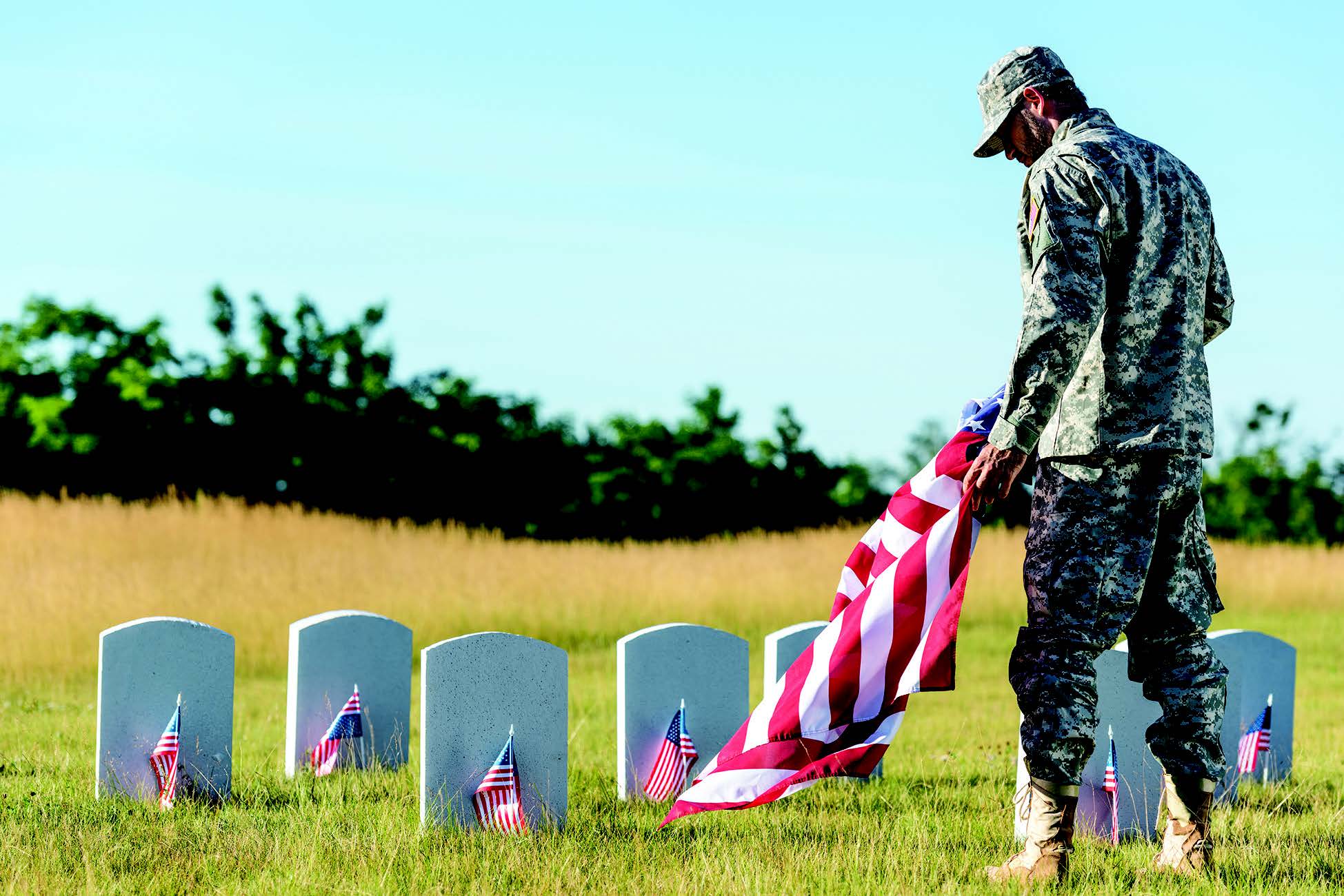
Memorial Day, as it’s known today, did not start out as a federal holiday or a three-day weekend for picnics, fishing, and softball games. Memorial Day took hold in the aftermath of the Civil War, more than 100 years ago. That war claimed the lives of more Americans than any other armed conflict in the nation’s history, claiming more than 600,000 American lives.
At first, the infant remembrance holiday began as “Decoration Day,” a name familiar to those of a certain age. It was the late 1860s, and towns across the country began organizing spontaneous, localized days in the Spring to come together as a community to clean cemeteries of weeds and debris and decorate the graves of fallen soldiers with spring flowers.
In true American fashion, many towns claimed to be the birthplace of the Decoration Day tradition. One of the earliest documented observances of what we now call Memorial Day occurred in Charleston, SC, on May 1, 1865. A group of thousands of formerly enslaved people, accompanied by regiments of the U.S. Colored Troops, gathered at a former Confederate prison camp where dead Union soldiers had been buried in a mass grave. They exhumed and reburied the bodies properly, built a fence around the site, and held a massive procession to honor the dead.
They decorated the graves with flowers while singing patriotic hymns and constructed a monument in their memory.
US General John A. Logan, leader of the Grand Army of the Republic, an organization for Northern Civil War veterans, issued a proclamation on May 5, 1868, calling for a national “Decoration Day” to be observed annually on May 30. That date was chosen because it was not the anniversary of a particular Civil War battle, but because flowers would be in full bloom across the entire country. Union General Ulysses S. Grant presided over the first official ceremony at Arlington National Cemetery.
For years, Decoration Day was strictly a Civil War remembrance. After World War I, a new generation of American families faced catastrophic losses overseas. The holiday was widened to honor all American military personnel who died in any war.
In 1968, Congress passed the Uniform Monday Holiday Act to create convenient three-day weekends for federal employees. Congress moved four holidays— including Memorial Day—to designated Mondays. The law went into effect in 1971, anchoring Memorial Day to the last Monday in May and officially declaring it a federal holiday.
In 2000, Congress passed legislation that established the National Moment of Remembrance, which asks all Americans to pause for one minute of silence at 3:00 p.m. local time on the holiday. Other holiday traditions include visiting cemeteries and memorials to honor those who died while serving in the U.S. military. Veterans day, many towns and cities host Memorial Day parades, often featuring military personnel, veterans, and marching bands. The American flag is flown at half-staff from sunrise until noon on Memorial Day. It is then to be raised to the top of the staff for the rest of the day.
Memorial Day weekend is the unofficial start of summer, so it’s common for families and friends to get together for barbecues, picnics, and outdoor activities. It offers a solemn reminder of the members of our military who died in service to the country.
Veterans Day, which is on November 11 each year, is the day to honor all those who have served in the U.S. military.