


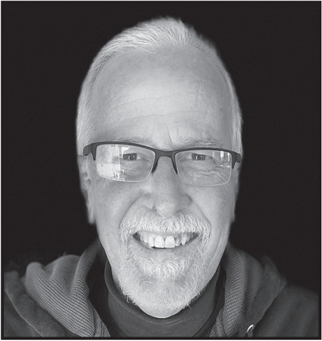
In our highly mobile society, where “home” is often just where the Wi-Fi connects, we sometimes get taken over by a desire to know where our “people” came from, at least before the grandparents, whose story we learn growing up. And, like most things today, an industry has sprouted up to make money off what I like to call the Heritage Hype. There is something deeply humbling about paying a tech giant in Utah forty bucks a month to confirm that my ancestors were exactly who they said they were: a long line of stoic Scandinavians who would be absolutely horrified that I just spent forty bucks to talk to a computer about them.
This renewed curiosity about origins became especially relevant for me back in 2018, when I struggled with a painful medical condition that was beyond the treatment ability of my specialist in Duluth. He referred me, with little optimism, to a specialist at the Mayo Clinic in Rochester.
After a day of invasive tests, a surgeon young enough to be my son told me what was wrong and how he and a team that included orthopedic, plastic, and general surgery would fix me up. He said, “I’ve done five or six of these procedures, and I believe I can give you your quality of life back.”
After a 12-hour surgery, 18 days in Mayo, and two weeks of recovery at our local hospital, I was well on my way. At my one-year checkup, the young doctor said, “I told you I’d give you back your quality of life.” He had, with an amazing group of doctors and nurses at Mayo.
So when researchers at Mayo asked if I’d participate in The Tapestry DNA Sequencing Research Study, I couldn’t say no. I owed them my life. The study is designed to understand the short- and long-term impact of incorporating genetic test results into the electronic health record on people’s health care.
I spit into a test tube and sent the sample to a company in California. They sequenced my DNA and added the result to the Mayo study database. They provided an ancestry report, tracing my origin to six regions of the globe. According to their testing, I’m 96.3% European. My DNA also shows me at 3.2% Persian and 0.5% Melanesian. The biggest takeaway was that I have a genetic variant called Arctic Adaptation, which helps humans adapt to colder climates. The sequencing and report cost me nothing.
Last Christmas, our family in Carlton gifted me with a beginner kit for Ancestry.com, a well-known subscription service that ropes you in with promises of determining your heritage and connecting you with relatives you never knew you had. So again, I went online, filled in my details, spit in another tube, and mailed it off to Utah.
Ancestry’s DNA matching technology is highly reliable because it measures actual shared chromosome segments. If their report says a guy named “Olaf” in Duluth is your second cousin, they are almost certainly right. My report showed a gal named Abigail, whom they estimated was a niece, sharing just under 25% of my DNA. She is actually my granddaughter, building a noble career in genetics and medicine. The only one of my known relatives so far who is on the Ancestry juggernaut.
The ethnicity estimate ranks low on the accuracy scale. Ancestry compares your spit to a “Reference Panel” of modern people. This is the part most people care about, and it is the least scientific. They do not compare your DNA to people from the year 1700. Instead, they use a panel of modern people with long histories in a specific region.
Ancestry says my origins are in Sunne and Norra Värmland, Sweden. It calls them among the “most culturally rich and atmospheric regions of Sweden.” Sunne sits in the heart of the Fryken Valley, centered around three long, narrow lakes (Lower, Middle, and Upper Fryken). This area is the epicenter of Swedish storytelling. There is a specific “brand” of personality associated with Norra Värmland that Ancestry thinks I might recognize in my own family. Värmlanders are known for being talkative, humorous, and slightly prone to exaggeration. They don’t just tell a fact; they build a narrative around it. In other words, I’m continuing on a long line of bullshit artists.
Ancestry presented a list of 96 personal traits based on my DNA. The Mayo-sponsored report was just 18 traits. Both confirmed my high tolerance and ingestion of caffeine. On the other hand, both were wrong about my face flushing when I consume alcoholic beverages. And oddly, both predicted that brown eyes were a dominant trait, blowing the whole blonde-and-blue-eyed image I always harbored about Swedes.
I’m forever indebted to the Mayo Clinic for giving me back an almost normal life, and I hope my little contribution of spit to their research helps someone dealing with medical issues.
I’m also grateful to my Proctor progeny for fueling my interest in Ancestry Heritage Hype.