


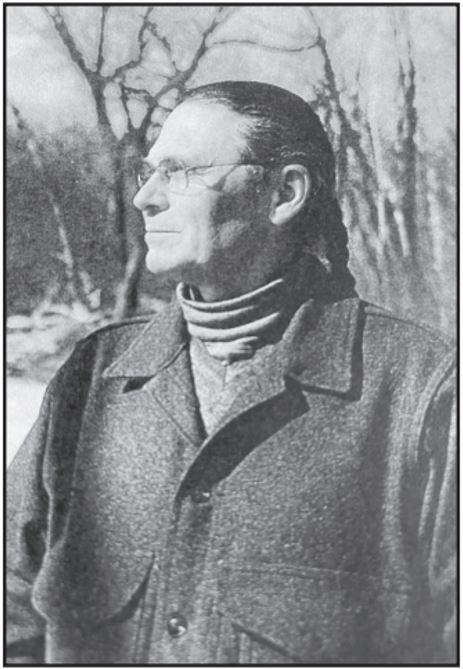
Recently, I attended a ceremony of the Grand Portage Band of Minnesota Chippewa Tribe to celebrate the return of three parcels of land back to tribal ownership. The local drum group played and sang songs, an elder made prayers with his pipe, and two elders spoke in Ojibwemowin and English to the large gathering. They told the Ojibwe creation story and spoke of a deep spiritual relationship to the land. Representatives of the Lloyd K. Johnson Foundation told of their journey in acknowledging the harm created by historic acquisitions of native lands and wanting to begin a reconciliation by returning the parcels celebrated that day I watched tribal leaders joyfully sign documents returning legal ownership to the tribe. It made me think of all the signatures, marks, and glyphs on treaty documents since the 1660’s.
The event inspired many thoughts that I will wander through, like I wander on the land in wonderment of all that the earth gives to landbased living things. Indigenous relationship to the land is a spiritual and physical honoring of what the land gives to sustain life. For tens of thousands of years, Native peoples moved across the land, living off what the earth produced through natural cycles of regeneration. Some tribes eventually created settled communities dependent on farming practices less impactful than those of European settlers would bring. Colonizers’ relationship to the land was one of “taking” from the land, quite unlike the earth’s “giving” relationship with Indigenous peoples.
My mother’s German relatives settled in southeastern Michigan after the land was ceded by the Treaty of Detroit (1807) from the Potawatomi, Chippewa, Ottawa, and Wyandot. The first thing my relatives did to the historic hunting territory of multiple tribes was cut down all the white pine to make farm fields. Most of the virgin trees, too plentiful to be valued by farmers, were burnt by the new German immigrants wanting the soil for planting crops. The tree stumps were dragged into a row with their upturned roots interlaced, forming a fence line. The roots that once nourished trees for hundreds of years looked like skeletal arms reaching skyward when I saw them as a young boy, a hundred years after the trees’ relationship with the land was turned into a cattle fence. As the daughter of “dirt farmers” (a derogatory, classist term), my mother had a conflicted relationship to the land. She used “soil” for planting, but “dirt” was to be washed off in repugnance.
The European colonizers saw the land in the “new world” as underutilized and full of potential wealth. To acquire that wealth, the newcomers had to take. Taking the land, owning the land was first and foremost. Owning was a foreign (yes, foreign) concept to the Indigenous residents who had been gifted life by the land for countless centuries. “Taking” on a grand scale was unknown to Native peoples. Once the land was owned by the takers, the extraction of wealth began. Logging, mining, fishing, and manufacturing were the methods of extraction. Even modern industrial farming is extraction by using up the life-giving quality of soil, necessitating the artificial replenishing with petroleum-based fertilizers, herbicides, and pesticides.
The rate of extraction has sped up to meet the demands of the increased human population and profits. This has resulted in the development of artificial substitutes and methods for foods and medicines when the natural source has been exhausted or deemed inefficient to meet demand. A short article in the Minnesota Conservation Volunteer (Mar-Apr, 26) is on the wintergreen plant and its human uses as flavoring and medicine. The last line says the oil that used to be extracted from the plant is now produced synthetically. The synthetic process requires salicylic acid (petrochemical), methanol, sulfuric acid, heat, water, and sodium bicarbonate. The ingredients, process, and final result, methyl salicylate, are approved as GRAS (generally recognized as safe), a manufacturer’s self-defined class of food additives affecting fifty percent of all food additives. The story of wintergreen exemplifies a changed relationship to the land. The plant is of the land, given to us by the very nature of land. The synthesized substitute is a product of industrial manufacturing in a building situated on soil removed from any possibility of natural regeneration.
I am not opposed to innovation. I have lived in this modern world long enough to be skeptical of innovation for the sole purpose of creating new markets and new wealth. I am very alarmed that most innovation does not take into consideration future generations and their health and prosperity. Enormous environmental degradation done in the name of progress should ring alarm bells for anyone looking past short-term profits and power. That degradation is the result of a relationship with the land shifting from nature “giving” to “taking” from the land. In the taking, it is hard to remember that the actual cells of our bodies are made by food from the land. Gravity forces us to walk on the land, whether the actual ground surface or a high floor of a skyscraper built on the ground. Every sailor to ever board a ship has returned to land or died at sea because we are not aquatic animals but terrestrial beasts. Every plane pilot and astronaut entering airspace must return to terra firma alive or dead.
The elders at the land return celebration at Grand Portage talked about their land being available for seven generations into the future. Much of their reservation is wilderness and is intended to stay wilderness. Development of any kind, even by band members, is forbidden by the tribe to maintain the land’s wilderness characteristics. They want seven future generations to know what wilderness is and how it supported their ancestors for thousands of years. Wise stewardship is making decisions by combining immediate needs with those of future generations. That is hard to do in the face of a colonizing culture prioritizing instant gratification, but a spiritual relationship to the land, as demonstrated at Grand Portage, is a tremendous aid to the wisdom required.
The land itself holds much guidance. Natural, forested land demonstrates a dynamic, sustaining community based on variety. Variety is the vitality in nature. This is true from the northern boreal forests to tropical jungles. The land also demonstrates life-sustaining power by combining itself with water, sunlight, and air. Many modern humans have forgotten that stewardship of the land requires stewardship of water, sun, and air. These four elements are needed for life as we know it. No amount of money in the bank can replace any one of the four once gone. Without those four elements, the wealth stripped from the land is worthless, and our greedy political posturing is senseless.