

Juneteenth commemorates June 19, 1865, when Union troops arrived in Galveston, Texas, and announced that enslaved people were free. President Abraham Lincoln had issued the Emancipation Proclamation more than two years earlier, but freedom written on paper had not yet become freedom in practice.
That delay offers an enduring lesson for our judicial system: A right declared is not necessarily a right delivered.
Here in Northeastern Minnesota, another June anniversary reminds us what can happen when the protections of law disappear altogether.
On June 15, 1920, Elias Clayton, Elmer Jackson, and Isaac McGhie — three young Black circus workers — were taken from the Duluth jail by a white mob. They had been accused of a crime, but they never received a lawful trial. Instead, the mob held its own mock proceeding and lynched the three men in downtown Duluth.
They had no impartial jury, no meaningful opportunity to confront the accusation, and no protection from the government that held them in custody. Rumor and racial hatred replaced evidence and due process. Mob power replaced law. Their names now stand on a memorial near the place where they were killed. That memorial is not merely about Duluth’s past. It is a warning about the obligations of our justice system today.
Courts operate in the space between the promises of the law and the experiences of real people. Constitutions and statutes establish rights. Courts must make those rights meaningful in individual cases — fairly, impartially, and without unnecessary delay.
Minnesota’s Constitution states that every person is entitled to a remedy for injuries or wrongs and to obtain justice “freely and without purchase, completely and without denial, promptly and without delay.” Those are admirable words. Juneteenth and the memory of Clayton, Jackson, and McGhie remind us that admirable words require institutions willing and able to carry them out.
In rural Northeastern Minnesota, equal access to justice has practical dimensions. A trip to court may involve a hundred miles of travel, winter roads, missed work, childcare arrangements, or unreliable (or no) transportation. Some communities have few attorneys. Some residents lack dependable broadband, cellphone service, or private space for a remote hearing.
Justice is not truly accessible merely because a courthouse exists somewhere on a map. Access means people can understand the proceeding and be understood. It means providing interpreters, useful information, and a meaningful opportunity to be heard. It also means deciding which hearings can occur remotely and which require an in-person courtroom without sacrificing fairness, dignity, or public confidence.
Equal justice depends upon judges and jurors alike. A jury brings the judgment and experience of ordinary citizens into the courtroom. Judges must apply the same law regardless of a person’s race, income, occupation, hometown, or social standing. We must insist on evidence rather than rumor, process rather than passion, and individual justice rather than the judgment of a crowd.
Courthouses generally are closed on Juneteenth, but the holiday should mean more than an empty court calendar. The work of equal justice continues whenever a juror answers a summons, a court employee helps a confused litigant, an interpreter gives someone a voice, an attorney provides representation, or a judge pauses long enough to listen carefully.
Freedom was late reaching Galveston. Justice never reached Clayton, Jackson, and McGhie. Juneteenth calls upon our courts — and all of us — to ensure that justice promised becomes justice delivered.
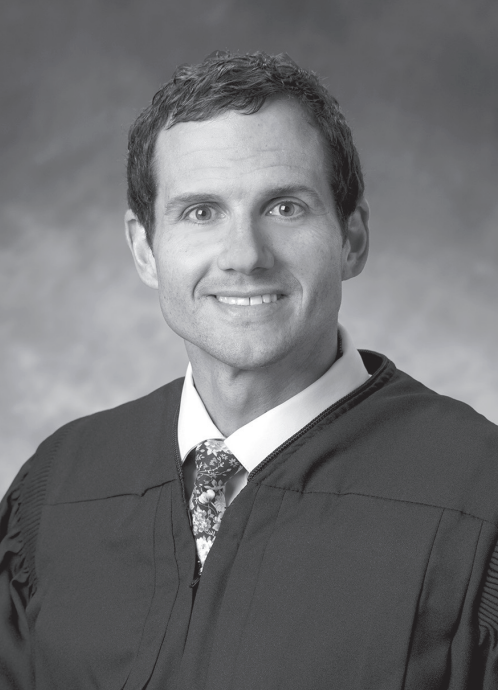
Steve Hanke is a 6th Judicial District judge chambered in the Lake County Courthouse in Two Harbors and in the Cook County Courthouse in Grand Marais.