


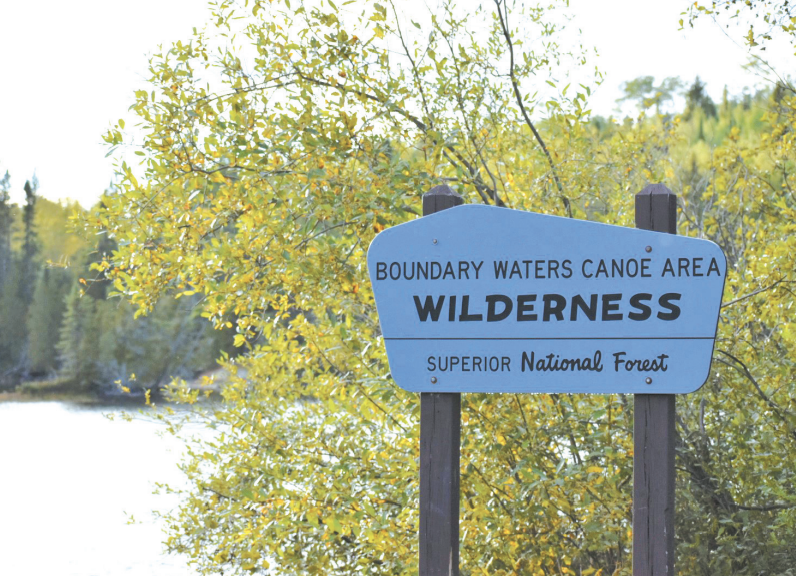
In July this year, wildfires in the Arrowhead burned over 70,000 acres of our boreal forests, blanketing the region in smoke. The U.S. Forest Service had to shut down the Boundary Waters Canoe Area Wilderness (BWCAW) for almost two weeks, starting July 14, the third full public closure in the BWCAW’s history.
The fires and smoke, along with the wilderness closure, dealt a direct and serious financial blow to wilderness outfitters and other businesses along the North Shore and the Gunflint Trail during the peak of their summer tourism season.
According to a report by Michael Vasichek at the University of Minnesota Duluth’s Bureau of Business and Economic Research (BBER), the closure cost the region’s two primary gateway hubs—Ely and Grand Marais—a combined $9.0 million in lost economic output, threatening 72 regional jobs.
Bringing the harmful effects home, the Angry Trout Cafe in Grand Marais announced on its Instagram page last Friday that it would not open for the upcoming winter season. “We have come to the disheartening realization that with last year’s slower winter season and the added losses incurred by the wildfire smoke this summer, that it isn’t financially feasible for us to be open for this coming winter. We will be closed starting November 1st, reopening April 29th [2027].”
Traditionally a seasonal restaurant, Angry Trout’s special winter service began in December 2023 after a change in ownership.
The BWCAW attracts more than 150,000 wilderness visitors annually. According to the University of Minnesota Tourism Impact Study for Visit Cook County, more than 1.2 million people visit Cook County each year. Local outfitters, resorts, restaurants, and retail shops rely heavily on visitors from mid-July through late August to meet their annual sales goals. The wilderness closure and the resulting disruption can derail an entire year for impacted businesses.
Tourism drives roughly 80% of Cook County’s economy and supports a large share of local employment.
Visitor numbers plummeted immediately following the July 14 closure. Compounding the issue, hazardous air quality forced the cancellation of the annual Blueberry Arts Festival, an event that typically draws 30,000 to 40,000 attendees over three days. In total, Ely lost 22,070 visitor-days in July, logging 182,000 visitor-days compared to its two-year average of 204,000. Located farther from the fire epicenters, Grand Marais saw visitor counts recover more quickly by the fourth week of the month. Nevertheless, the town lost 25,647 visitor-days in July, dropping to 187,000 from a baseline average of 212,000.
Combining regional visitor data with BBER survey metrics—which show that the typical non-local visitor spends $168 per day—researchers modeled the full economic loss to get to the $9 million figure.
According to the BBER, ongoing campsite closures and lingering campfire restrictions mean the full financial toll will echo strongly past the summer. BBER’s quantitative findings provide crucial data for civic leaders and legislators seeking targeted financial support for small-business owners, outfitters, and hospitality workers across Northeastern Minnesota.