


I grew up on my parents’ record collection, the kind of mismatched stack that shaped my musical childhood long before I understood it was doing so. Over the years I’ve added to it when I’ve found records at estate sales or thrift stores, and I’ve told my family those albums are the only things I want in the will. They feel like a map of where I came from.
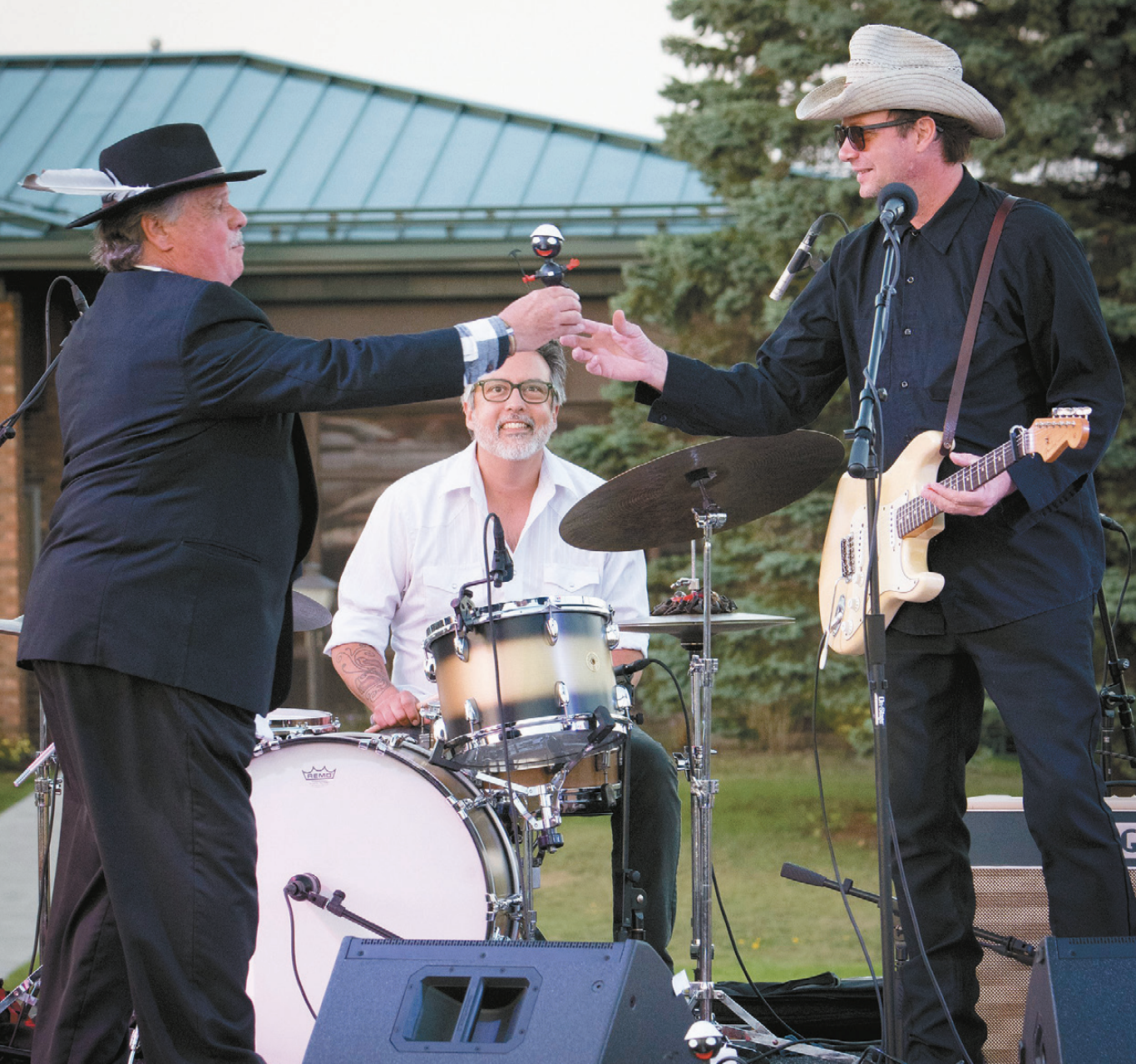
Erik Koskinen, an award-winning Minnesota musician recognized by the Minnesota Music Awards and the Minnesota State Arts Board, grew up the same way and still listens to the same collection on the same stereo.
“I still have the record player and the speakers,” he said. “Somehow I ended up with them all these years later.”
The tonality is the same, he told me, and listening to those old records on the same equipment reminds him of a certain era. His family bought the setup when he was young, a console with a tuner, receiver and dual cassette deck behind a glass door.
He remembers all of them picking out albums together, one every six months or so, and how those choices shaped what he heard. Paul Simon’s Graceland was one of them. Tracy Chapman’s debut was another. His brothers added Australian rock into the mix with Midnight Oil and INXS.
He also remembers how deliberate those choices felt. Money was not endless, and each record had to count. Some were current hits, some were older bluegrass albums, some were blues and folk. He said his dad had lost a record collection years earlier and slowly rebuilt it once he could afford a new player. The new stack became a kind of family project, a shared soundtrack that seeped into his bones long before he knew he would make music for a living.
We talked about graduating to cassettes and Walkmans and the thrill of catching a song off the radio before the DJ talked over the intro. We laughed remembering how we would sit by the stereo, waiting for the announcer to promise a song we wanted.
Koskinen also plugged a cheap microphone into the cassette deck and tried to record his own songs. He still has some of those tapes from the mid-nineties, though he does not listen to them, stating, “I don’t need to hear it anymore. Kind of like not even the same person in some ways.”
When I accused him of being, like me, a nostalgic person, he did not quite buy it. He remembers the past, but he does not romanticize it. What he misses is the texture of life before everything was documented.
“I’m glad I’m old enough to know what it was like without the cell phone,” he said, thinking back to cross-country drives with a paper map and a pocketful of quarters for pay phones. He drove across the United States more than once that way, with a folded atlas on the passenger seat.
“It was a different world,” he said. “We can still do it, I guess, but the highways look a little different now. Maybe I’d miss an exit or two.”
He started playing in band in fourth grade and said music chose him more than he chose it. He liked sports, but he did not feel pulled toward team life. He preferred spending time alone, being creative, and music was the outlet that made sense.
“I could never draw better than a stick person,” he said, laughing. “I gravitated toward the music.”
He studied music theory when he was younger and still thinks of it as a kind of second language.
“It’s kind of like taking a language class,” he said. “Like learning French or something like that.”
He talked about scales and intervals, about how tones are measured in hertz, about how the science underneath the sound shapes what we hear.
“Music theory is math all the way,” he said. “Music is math with emotion.”
Once you know that, he said, you start to hear songs differently. You notice how parts fit together, how certain notes resolve tension, how others create it.
Koskinen grew up in Michigan, near Lake Superior, and that shaped him too. The lake was part of his daily landscape, and he said he misses it now that he lives in prairie country.
“I do miss being near the lake,” he said. “It’s always great to be up there for that.”
When he comes to the North Shore, he feels something familiar settle in.
“They’re kind of my people,” he said. “Similar to where I grew up and the local population.”
The small towns along the shore remind him of the places he knew as a kid, communities built around industry and water, places where the horizon is more lake than land.
After a decade living on a farm outside town, he moved a little over a year ago and bought a house in a nearby community. The change gave him a different kind of home base, closer to his studio and the everyday errands that stack up between tours. He said the new place is working well. It is close enough to feel rural, close enough to feel connected, and it lets him slip between home life and studio life without a long drive.
That groundedness follows him now. After years of touring, he is in a rare stretch of quiet, spending his days in the studio or catching up on the ordinary things that pile up when you are gone more than you are home.
He called it one of his first stretches of time without shows in a long while, a chance to do “house stuff and other things I don’t do when I’m gone.”
His recording studio sits in Cleveland, Minnesota, a tiny farm town of about 700. It is in what used to be a hardware store, a little downtown building across from the Legion and the post office. He has had a studio for close to two decades, but he has been in this particular location since 2018.
Koskinen talks about acoustics with the kind of enthusiasm that makes you lean in. Once you hear him explain it, you understand why he pays such close attention to the places he plays. He described how sound bounces in square rooms, how frequencies can cancel each other out or build up in ways that muddy the mix, and how much more math there is in music.
“If too many of the same frequencies align together, they start to cancel each other out,” he said. “Or there are certain ones that are built up way too much.”
He said professional studios are designed to avoid those problems, with angled walls and ceilings that keep sound from slapping back at itself. Instead of front and back walls being the same width, one might be wider, and ceilings might change height from one section to another. Those differences keep sound from bouncing straight back to where it started.
That is part of why he loves playing in log houses.
“In a log structure everything is curved,” he said. “Nothing bounces back to the same place, so the sound will diffuse.”
He has recorded albums in log homes before and knows how rare it is to find a room that helps instead of hinders. The benefit house concert he will play in Silver Bay is one of those rooms. He said it sounds good in a way that is hard to replicate, and that it is fun to play there not just because of the acoustics but because of the people. The logs, the multiple ceiling heights, the absence of flat surfaces, all of it adds up to a space where sound feels warm and natural.
The last time he played Silver Bay, the weather pushed the show indoors. He is hoping this year brings the kind of clear sky that lets the outdoor backdrop do its work. The setting behind the stage is part of the draw for him.
According to Koskinen, the space is big enough that outdoor acoustics behave differently, without the slapback problems that plague smaller venues. He likes that openness, the way sound moves without getting trapped. Outdoor shows come with their own challenges, but the Silver Bay space is large enough to avoid most of them, and the view is hard to beat.
He looks forward to coming up the shore, to be near the lake and the people who feel like kin. Talking to him, you understand how much place matters, how much sound matters, and how much the past can inform the present without trapping it.
The Erik Koskinen Band will return to take the City Center Stage Friday, August 7, in an event free to the public and produced by Rocky Wall Entertainment. The show starts at 7:30 PM. They will play at the Rocky Wall Benefit House Concert the following day. Tickets and more information are available at rockywallentertainment.org. For more on the Erik Koskinen Band, visit erikkoskinen.com.