


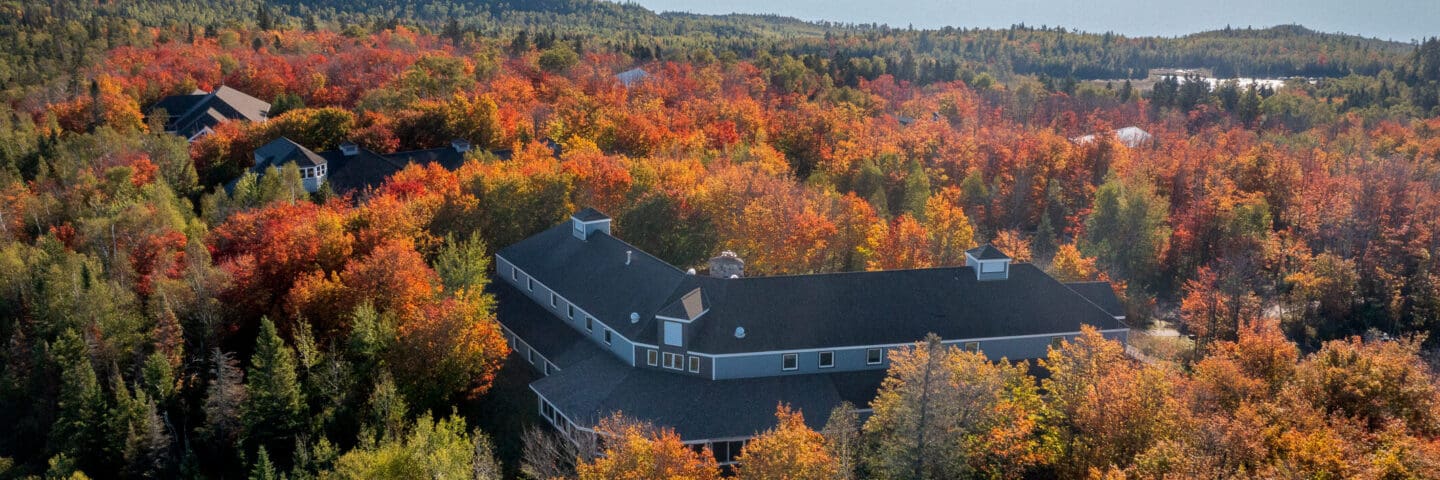
Last week, Wolf Ridge Environmental Learning Center and The Nature Conservancy (TNC) announced a conservation easement to permanently protect 928 acres of forest, lakes, and streams along the North Shore. The land will remain intact for wildlife and generations of students to come, and it makes up a significant portion of Wolf Ridge’s larger, nearly 2,000-acre campus in Finland.
Wolf Ridge’s statement notes that the protected land contains forests and wetlands that provide habitat for wildlife, including moose and bears, as well as eagles, falcons, and numerous migratory songbirds. Nearly half the protected acreage is recognized by the State of Minnesota as high biodiversity, with rare plants and animals, along with some older, undisturbed forest.
The protected land also includes high-quality freshwater resources, including parts of the Baptism River, Sawmill Creek, and Johnson Lake. All flows to Lake Superior support aquatic habitat and the health of the Great Lakes.
A conservation easement is a “land-protection lock.” A property owner has a bundle of rights, including the right to build, clear-cut, subdivide into smaller lots, or dig a mine. Under a conservation easement, owners voluntarily remove some of those rights, usually the rights to develop, build, or commercially log the land, and grant them to a trustworthy keeper, such as The Nature Conservancy or a government agency like the DNR.
In this instance, the land remains owned by Wolf Ridge, but the “lock” stays on the property deed forever.
“This place is special not just because of its forests and clean water, but because of how many people have experienced it,” said Rich Biske, TNC’s director of land protection in Minnesota, North Dakota and South Dakota. “By protecting this land, we’re safeguarding habitat and making sure kids can keep coming here to explore, learn and build a connection to nature.”
The conservation easement limits development, protects sensitive areas such as shorelines and wetlands, and guides long-term forest management, ensuring the land remains protected over time.
Funding for the project comes from Minnesota’s Outdoor Heritage Fund, which was created under the Clean Water, Land and Legacy Amendment and approved by Minnesota voters in 2008. Funds received from the easement will support an endowment, strengthening Wolf Ridge’s long-term sustainability and educational mission.
“As steward of nearly 2,000 acres of some of the most beautiful land in Minnesota, this commitment ensures the ecological protection of the land where our students are immersed in environmental learning—forever,” said Pete Smerud, executive director of Wolf Ridge. “Wolf Ridge’s classroom is the outdoors, and it is simply a spectacular place to learn.”
Combining easements for DNR trout streams, Minnesota Land Trust shorelines, and major projects like Wolf Ridge and The Nature Conservancy, there are almost 100 conservation easements woven into the property tax maps of Cook and Lake counties. The vast majority of large-acreage conservation easements along the North Shore are held by private non-profits such as The Minnesota Land Trust, which holds over 50 permanent conservation easements, protecting thousands of acres of private wilderness in Cook and Lake counties.