
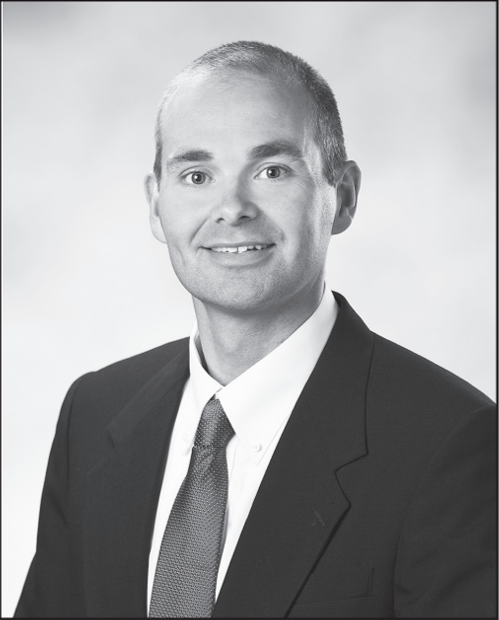
After a week that took him from Washington, D.C., to up the North Shore, Aspirus Lake View President Greg Ruberg was just barely settling back in when I got him on the phone. Two weeks earlier he had been in the Twin Cities. He had spent much of the spring on the road navigating legislative sessions, rural health care advocacy, and system wide responsibilities, and he said he was happy to be home.
I caught him just after he returned from Grand Marais, where he had spent the day supporting another hospital board. It was a fitting moment to congratulate him and his team on a milestone that is becoming increasingly rare in rural health care. Aspirus Lake View (ALV) has been named one of the top 20 critical access hospitals (CAH) in the country for patient satisfaction for the second year in a row, placing the hospital in the top 1.5 percent of more than 1,350 CAHs nationwide.
“I was absolutely shocked when I got the communication this year that we got it for the second year,” Ruberg said. “I’m so proud of our team. I think all the stuff we’ve been through together and to be able to still never lose focus on patients is just amazing.”
The recognition comes from the National Rural Health Association, using data from the Chartis Center for Rural Health’s Rural Health Performance INDEX. It is a composite of eight measures, including quality, outcomes, patient perspective, cost, and financial stability. For ALV, the award is not just a repeat performance. It is a reflection of a year defined by major internal changes and external pressures that could have easily disrupted patient experience.
Ruberg said the second year feels different because of what the hospital navigated behind the scenes. The biggest shift was the implementation of a new electronic health record across the entire organization.
“We implemented an entire new medical record across all of Lake View. So we put it in the hospital and both of our clinics, and that touched every single patient encounter,” he said. “Our teams had to learn an entire new process. All of our documentation was different. Our billing was different.”
The transition happened on April 1 of last year. It was a massive undertaking for a small hospital, and it came with expected bumps.
“It just takes time to navigate that,” he said. “Sometimes what I really got worried about is we can’t lose focus on our patients when we take on big projects like that. Our patients should never know that we’re doing that behind the scenes.”
They also went through a payer negotiation with Blue Cross Blue Shield in the fall, another process that can strain staff and test community patience.
“Our team just rose above all of those challenges and focused on patients,” Ruberg said. “I think it was great that we were recognized again for being that top 20, despite all of that.”
Patients are already seeing the benefits of the new system, especially through the upgraded portal.
“We have a really nice process where you can go in and make appointments, you can get your results, you can message your doctor,” he said. “It’s the best in the industry, what we’ve got now.”
The award also lands during a turbulent moment for rural health care in Minnesota and across the country. Ruberg, who is serving as board chair of the Minnesota Hospital Association this year, has a front row seat to the challenges.
“Hennepin Healthcare in the Twin Cities is on the verge of closure. North Memorial Hospital is saying that they need some significant help,” he said. “The Hospital Association is saying that more than 30 hospitals across rural Minnesota are financially distressed and at risk of closure.”
He hears from leaders across the state who are fighting to keep their doors open.
“They’re saying we can’t make payroll. We can barely stay open. We’re going to have to shut down services,” he said. “Some hospitals are beginning closing proceedings because they just can’t make it.”
Against that backdrop, ALV’s stability stands out.
“I think it just makes it even more unique and maybe more special that our team was able to achieve this during a really, really hard time last year going into this year,” he said.
Ruberg credits the hospital’s culture for its ability to weather change and maintain patient satisfaction.
“You have to have a strong organizational culture, no matter what organization you’re in, if you’re going to be successful,” he said. “Every member of our team has to feel like they’re aligned with our mission and vision.”
Ruberg said that culture shows up most clearly in how staff respond to both praise and problems. He hears ideas, concerns, and observations every day, and he sees that willingness to speak up as a sign that people feel ownership in the work. Whether it is a workflow issue, a patient concern, or a suggestion for improvement, he said employees are comfortable raising it because they trust it will be heard.
From what he hears from the community, Ruberg feels that trust is felt with the patients they serve as well.
“When patients come in, I don’t think they care what department we work in,” he said. “They just want to be supported and cared for. I walk around and just talk with people, see how things are going. People will say, hey, I have a question or I’ve got an idea or I’ve got a suggestion.”
He said that openness extends to constructive patient feedback as well, and he sees it as essential to maintaining trust.
“If something doesn’t go the way they want it, they’re just as willing to share that,” he said. “Every single patient deserves a follow through on that or to close the loop.”
He rounds on hospital patients regularly and gives out his cell phone number.
“It’s so much fun to get a voicemail or a call and say, hey, I’m a patient in the hospital right now, I want to talk to you,” he said. “There’s nothing more rewarding than supporting a patient in that way.”
The hospital is focusing on expanding services that keep care close to home.
“One of our focuses is trying to bring in more specialists to Two Harbors and Lake County,” Ruberg said. “Our goal is to try to bring in more specialty service so patients can be seen right in Lake County.”
Infusion therapy is another area of growth, now available five days a week in Two Harbors.
“People don’t have to drive to Duluth, they don’t have to pay for parking, they don’t have to navigate the bigger city,” Ruberg said. The hospital is also preparing for broader industry challenges.
“We’re trying to maintain or protect our foundation. We’re adding these new services and expanding service and then just try to weather the storm that’s coming in healthcare,” he said. “The earthquake is happening right now in the healthcare industry. The tsunami may be coming.”
Ruberg said the hospital’s success is tied to strong partnerships with public health, schools, law enforcement, and local nonprofits. He believes those relationships are essential for rural health care to function, especially as financial pressures mount statewide.
“There’s no way a hospital can do this alone,” he said. “We rely on their support. We also try to support them.”
He sees the award as a reflection of the entire community. The trust patients place in ALV, he said, is something the hospital works to earn every day, especially during periods of change. Residents continued to show up, offer feedback, and support staff as they learned new systems, and he believes that partnership is part of what makes the recognition meaningful.
“Our community has continued to trust us to provide care, and that says a lot about our community,” he said.
For Ruberg, the work is not abstract. He lives in the community, sees patients at the grocery store and at school events, and hears directly from families about their experiences. That proximity, he said, keeps the mission grounded. The decisions he makes affect his neighbors, his friends, and the people he sees every day, which is why he views the hospital’s stability and service expansion as personal commitments as much as professional ones.
“I live here, so I’ve got a vested interest,” he said. “I want to support our entire county as best we can from a healthcare perspective.”