


For many locals along the North Shore, the arrival of spring isn’t marked by a calendar, but by the first drip of maple sap. It is a seasonal ritual, a way to literally tap into nature and celebrate its post-winter bounty.
Maple syrup processing in Minnesota is a heritage passed down through centuries. It began with the Indigenous peoples of Northeastern North America, specifically the Haudenosaunee and Anishinaabe. Long before metal was available, they used birch bark buckets to catch the sap, hollowed logs or bark vessels as vats and heated rocks dropped directly into the sap to boil it down.
As European settlers arrived, they introduced metal kettles and drills, improving efficiency. Interestingly, during the Civil War, maple sugar became a symbol of resistance; Northerners used it as an alternative to Southern cane sugar to protest the slave trade. The technology has shifted from wooden spiles to high-tech vacuum systems, but the goal remains the same.
Kaare Melby and his wife, Pam, owners of Finnskogen Farm, are keepers of this tradition. While they are famous at the Finland Farmers Market for their sourdough bread, their maple syrup is a different story. To them, it is too precious to sell—it’s a labor of love kept for family and friends.
This year, Kaare has tapped 95 so far. Finding the right tree to tap in the dead of winter is an art. Without leaves, he relies on the bark and a trick his father, Tim, taught him:
Ash trees have ‘fat fingers’; the tips of their branches are much thicker than the delicate tips of a maple.
Criteria for a perfect tap:
• Size: The tree must be at least 10–12 inches in diameter (about the size of a dinner plate).
• Health: A “crown” of many unbroken branches indicates a strong tree.
• Location : Their “sugarbush” is on a hillside. While the steep terrain is hard to hike, gravity helps the sap flow through the tubing system.
From Tree to Table: The Process
Making syrup is a test of patience. It can take several days of constant fire to turn a batch of watery sap into golden syrup.
1. Tapping: They start at the bottom of the hill and work up, thanking each tree before drilling.
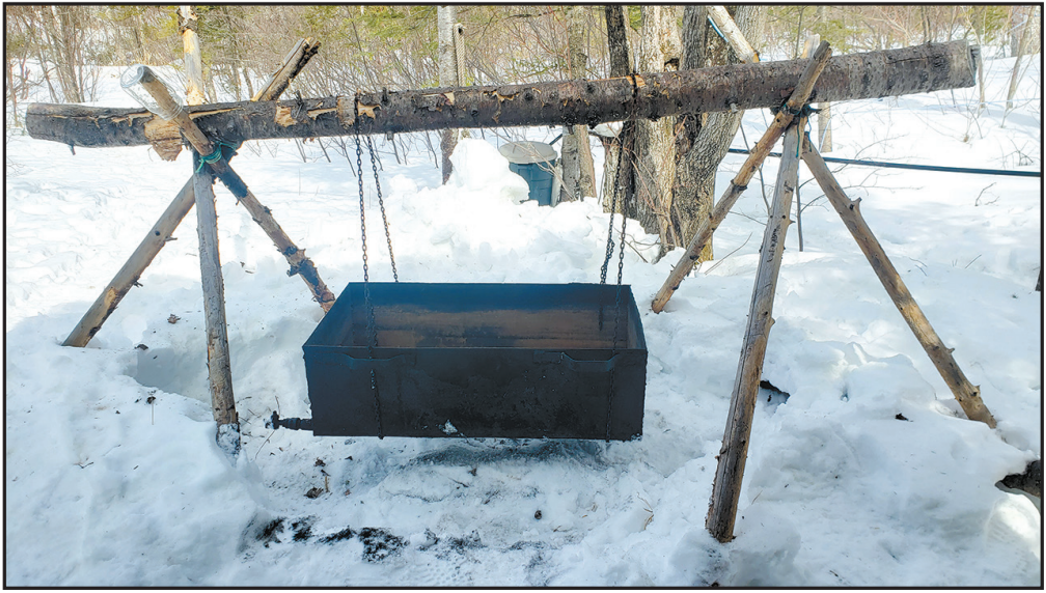
2. The Outdoor Boil: Using a unique method, Kaare suspends a large steel pan from chains on a tripod. This open-fire style allows maximum heat to hit the pan, evaporating the water quickly.
3. The Indoor Finish: Once the sap is thick, it moves to the kitchen stove. Here, Kaare has precise control. He watches the bubbles, checks the “viscosity” (thickness), and tastes it to hit the perfect mark.
4. The Byproduct: During the process, “Niter” (or sugar sand) forms. While some toss it, others use it in coffee, granola, or to make maple cream.
The season is dictated entirely by the weather. You need freezing nights and warm days for the sap to run. Old-timers say the taps should be in by St. Urho’s Day (midMarch). Once the trees begin to bud, known as going “buddy,” the flavor turns bitter, and the season ends.
For Kaare, this isn’t just a hobby; it’s food sovereignty. By harvestinghis own syrup, wild rice, berries,fish, and venison, he stays connected to the land and his history. He remembers his father carrying him to these same trees in a backpack when he was a baby. Now, he carries on that tradition for his own children.
Want to see the process in action? Check out Kaare’s videos: www.facebook.com/reel/796924987560933 and hispersonal Facebook page, KaareMelby: www.facebook.com/kaarekingofhearts or learn moreabout local foraging at the FinlandFood Chain website: https:// finlandfoodchain.org/wp/resources/ the-gathering-cycle/