


This is the first in a four-part weekly series to help people moving to our part of the world from places where utilities are always there, and thought of only when the bill comes due. In the coming weeks, we’ll report on water/sewer, managing trash and recycling, and the gravel roads leading to your property.
If you recently moved to the North Shore from one of the metro areas, you likely spent your entire life in a state of “utility bliss.” You turned a dial on the thermostat, a furnace hummed, and at the end of the month, you paid a bill to a faceless corporation. The gas was an infinite, invisible resource, piped in through a vast subterranean network that you never had to think about.
Welcome to the rugged North Shore, where you are no longer just a consumer; you are an inventory manager.
Outside of a few small city centers, the North Shore “gas line” starts at a large white or silver tank sitting in your yard. That tank is your lifeline. It’s what keeps your furnace running, your water steaming, and—most importantly—your pipes from turning into ice pops in January.
The biggest culture shock for new residents isn’t the cold; it’s the realization that if you don’t keep an eye on that tank, the heat simply stops.
The 20% Rule
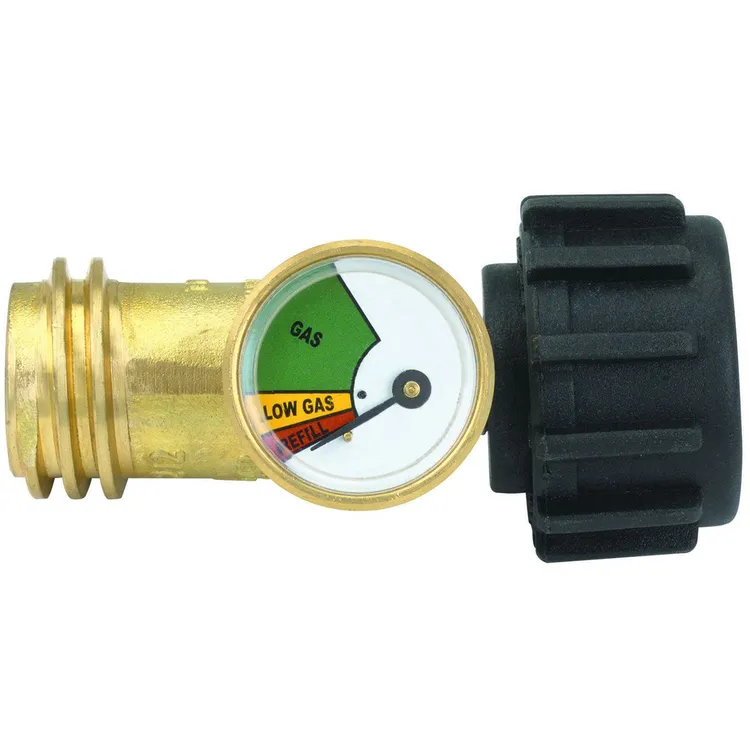
In the world of propane, 20% is the “magic” number. You might look at a gauge sitting at 15% and think, “I’ve still got plenty of time.” In the city, you might be right. On the Shore, you’re flirting with disaster.
Propane tanks are never filled to 100% (to allow for liquid expansion), so a “full” tank is actually 80%. When you hit 20%, you are nearing the bottom of your usable supply. If you run completely dry, the consequences are more than just a cold house. By law, if a tank runs out, a service technician must perform a “leak test” before the system can be restarted. This involves a service fee, a safety inspection, and a lot of shivering while you wait for the truck to arrive.
Auto-Fill vs. Will-Call
Your local propane supplier will sell you a one-time fill, but they offer a number of plans to help you keep the heat on through the winter. You will need to decide which plan works best for you.
Auto-Fill: The propane company uses an algorithm (based on “degree days”) to guess when you’re low and shows up automatically. It’s the closest thing to the “city experience,” though it sometimes comes with a slightly higher price per gallon.
Will-Call: You are the refill boss. When the gauge hits 30%, you’d best call your provider to schedule a delivery. This may allow you to “shop the price,” but it requires vigilance. If you forget to check the gauge during a days-long blizzard, the “Will-Call” becomes a “NoHeat” emergency.
The Winter Reach
Finally, remember the “Path to the Tank.” The local delivery drivers are hardy souls, but they aren’t Sherpas. If your tank is buried under four feet of snowdrifts or sits at the end of an unplowed 200-foot driveway, the truck can’t reach it. Keeping a clear path to your tank isn’t just a courtesy; it’s a requirement for staying warm.
When interviewing a propane provider, new residents often focus solely on the price per gallon. However, on the North Shore, the “hidden” terms of the contract are what determine whether you stay warm during a February blizzard.
Here is a list of essential questions designed to help you compare providers and avoid “contract shock.”
1. “Do you offer ‘Auto-Fill’ and how is it calculated?”
Ask if there is a price-per-gallon discount for being on Auto-Fill versus “Will-Call.”
2. “What are your tank lease fees?”
Most residents lease their tank from the supplier. Fees can range from $1 to $100+ per year.
3. “Are there ‘Hazmat’ or ‘Fuel Surcharge’ fees on every delivery?”
A low price per gallon may mean $20–$50 in additional fees for every delivery.
4. “What is your ‘Minimum Delivery’ requirement?”
Some companies charge a “short-fill” penalty if you order less than 200–300 gallons at a time.
5. “How long is your delivery hose?”
This is a critical North Shore question. If your tank is 150 feet from your plowed driveway, and the driver only has a 100- foot hose, they cannot fill your tank.
6. “Do you offer a ‘Pre-Buy’ or ‘Price Cap’ program?”
In late summer, many companies allow you to lock in a price for the upcoming winter. This protects you if global energy prices spike in January.
7. “What is your emergency service policy?”
If your furnace goes out at 2:00 AM on a Sunday, will they send a technician? Is there an “After-Hours” fee? Knowing their local staffing levels is vital.
Managing your own fuel might feel like a chore at first, but there’s a certain satisfaction in it. It connects you to the seasons and the reality of living in this beautiful, rugged place. Just remember: Check the gauge, mind the 20%, and keep the path clear. And welcome to the neighborhood.