


If you have electrical questions you’d like answered in a future edition of this column, send them to the Editor at northshorejournal@gmail.com, or email John directly at john@clovervalleyelectric.com.
By Clover Valley Electric’s Master Electrician, John Christensen
John Christensen is a licensed Master Electrician in Minnesota and has a bachelor’s degree in electrical engineering from the University of Minnesota – Duluth.
Electric Sauna Heaters: Getting the Wiring Right the First Time
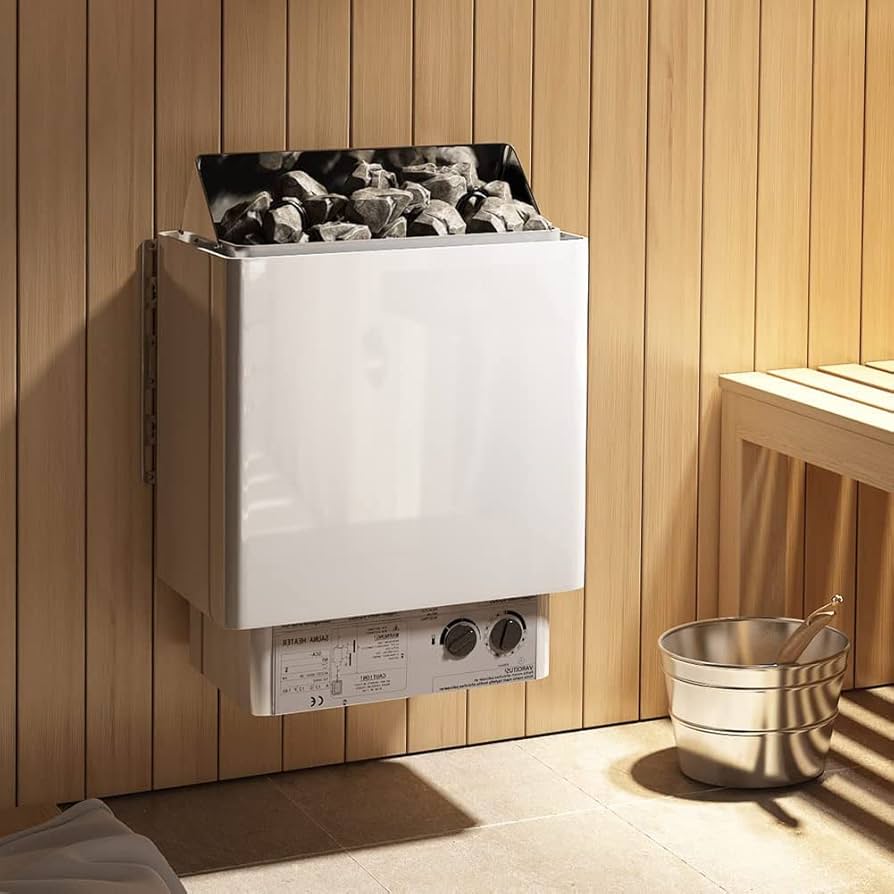
On the North Shore, saunas seem to be having a moment. They’re a popular way to thaw out after a cold, windy day, warm up after a ski, or just take the edge off our long winters. For those planning a new sauna with an electric heater, preplanning the electrical is a great early step in the process and one of the easiest ways to keep a sauna project calm and predictable. If the heater circuit, controls, lights, and fan wiring are figured out early, you avoid the late-stage scramble that can lead to visible wiring runs or reopening finished walls.
Sauna projects often require more than a single power circuit to a heater. Many modern systems include a control package (sometimes with Wi-Fi), a control screen, optional lighting, optional ventilation fan, and occasionally additional equipment such as a humidifier. Each of those components has its own wiring and placement considerations. If the layout isn’t decided up front, the result is often visible wiring runs on the exterior of the building or surface-mounted wiring inside the sauna – both of which are frustrating after finishing a beautiful space.
It is important to pay attention to location. A sauna built in a detached garage, down a trail from a cabin, or at the edge of a property may require an underground feeder or an underground branch circuit to supply power. Those runs can become a major part of the project cost depending on distance, trenching conditions, rock, roots, and what other utilities or obstacles are in the path. Figuring out where the sauna will sit and how it will be powered should be part of the initial planning, not something solved at the end.
Wiring methods also deserve attention during planning. Some sauna heaters – particularly European models – are often designed to accept a jacketed cable connection – but may use flexible or rigid conduit and individual conductors as an alternative. Either way, the wiring method needs to be suitable for the environment and installed in a way that remains serviceable over time. If wiring will be concealed in walls and ceilings, an electrical inspection is typically required before those surfaces are covered.
Sauna heaters can have a unique compliance challenge: the installation must follow both the manufacturer’s instructions and the 2023 National Electrical Code. The manufacturer instructions are part of the product listing and are not optional. The Code is the baseline standard adopted for electrical safety. Most of the time these requirements align, but sauna heater systems create confusion when they don’t, especially around ground-fault protection.
Many sauna heater manufacturers state that their heaters should not be installed with ground fault (GFCI) protection, and at least one major manufacturer explicitly states their warranty is void if the heater is powered by a GFCI breaker. In email exchanges with their engineering team, they stated that over time, water use around their heaters can contribute to the development of small leakage current. A GFCI device is designed to detect leakage current, so even a small amount can create nuisance tripping. That can result in a heater that does not really get the “sweat on”.
At the same time, depending on the sauna location and how the electrical supply is configured – particularly when the sauna is outside the home or cabin walls – the Code may require GFCI protection for the power circuit supplying sauna equipment. This is where early planning matters and why it’s wise to address questions before the project is finished. When manufacturer instructions and Code requirements appear to be in conflict, a discussion with the local electrical inspector is strongly advised.
A sauna should be a simple project, not one that becomes stressful. Early planning and decisions about heater location, control location, lighting and ventilation, and how power will reach the sauna (especially when it’s detached) can prevent costly changes later and help the project move smoothly through inspection.
John Christensen is a licensed Master Electrician in Minnesota and has a bachelor’s degree in electrical engineering from the University of Minnesota – Duluth. If you have electrical questions you’d like answered in a future edition of this column, send them to the editor, or email John directly at john@clovervalleyelectric.com.
The advice provided in this column is intended for general informational purposes only. If you have specific concerns or a situation requiring professional assistance, you should consult with a qualified professional for advice or service tailored to your individual circumstances. The author, this newspaper, and publisher are not responsible for the outcomes or results of following any advice from this column. You are solely responsible for your actions.