

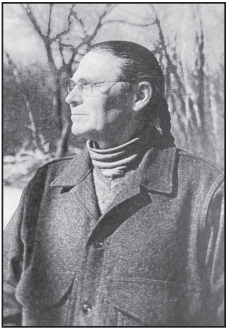
I’m sometimes asked how I find my weekly topics. I’m typically inspired by my daily experience of anything from our private woodland to International news and people contact. I interact with these ideas by reading, listening, and physical engagement when I have the opportunity. I am interested enough to write when my immediate experience reminds me of past lessons in behavior and morals I have learned in my seventy-seven years.
This week’s topic was inspired by what a retired FCC executive said about Jensen Huang’s fall as CEO of Nvidia. Nvidia is the world leader in AI chips and accelerated computing. The executive felt bad for Huang, calling his fall “Shakespearean, really.” However, he went on to quote Charles de Gaulle, former president of France, who said, “The graveyards are full of indispensable men.”
De Gaulle’s words made me think of all the contemporary men caught in an egotistical race to accumulate the most wealth. Those who build the biggest rocket ship to fly the farthest in space and sail the oceans in the biggest private yacht. Perhaps they will be buried on their private island estates so they don’t have to rest next to the other “indispensable” men who have died before them. Their histories will be written by their camp followers and skeptics as well.
I remember Charles de Gaulle when I was young, but I didn’t know much about him. I began to read a bit about this remarkable man. He was a French general and statesman who led the Free French Forces against Nazi Germany. He chaired the Provisional Government that restored democracy to France in 1946. He served as Prime Minister and later as President of France. His public statements are pithy and poignant. One in particular seemed relevant to us in the United States of today.
De Gaulle said, “Patriotism is when love of your own people comes first; nationalism when hate for people other than your own comes first.” Life Magazine published his words on May 9, 1969. He died on November 9, 1970, leaving behind an extraordinary legacy of guiding his French citizens from Fascism to Democracy. Given his long experience, I feel his definitions of “patriotism” and “nationalism” carry authentic credibility.
I have been troubled by the current use of the word “patriot” in the United States. It is attached to products like electrical generators and vehicles that have nothing to do with love of country. There is much public discourse and private arguments about who is a true patriot. Nationalism is currently embedded in MAGA as a right and just thing, causing more confusion and divisiveness.
I thought de Gaulle clarified the difference between patriotism and nationalism by using the words “love” and “hate.” Both words are complex and have many levels and applications. There are clear indicators that clarify the confusion over which is which. Patriotism in the form of love is expansive, inclusive, and nurtures growth and positivity. It can be soft and tender or firm but never violent. Love of self, family, friends, and community demonstrates the outward expansive nature of that kind of patriot. The hate of nationalism is a different story. Hate contracts the mind and hardens the heart. It destroys hope and damages opportunities for “others” in an attempt to protect and preserve “mine.”
Nationalism was expressed in the white apartheid system of Black repression in South Africa. Nelson Mandela, a member of the Xhosa tribe, was imprisoned as the leader of the anti-apartheid movement seeking freedoms and opportunity for the indigenous black Africans. Upon Mandela’s release, he became president of the African National Congress. He once spoke of his time imprisoned in apartheid South Africa. While incarcerated, he began to view his jailers with empathy when he realized that, as white jailers, they too were locked into a way of being and thinking. The prison system entrapped both the jailed and the jailor. Hate is also like that. In order to be expressed, hate creates a rigidity of thought and action. The expresser of hate and the receiver are often locked in a downward spiral of resentment and revenge.
Charles de Gaulle uses several other words in his definitions that are applicable to our affairs in the United States today. He uses loving “your own people” and hating “others.”
It is telling how each of us defines our “own” and “others.” De Gaulle states, “Patriotism is when love of your own people comes first…” Your own people might be defined by race, religion, belief, or region. His use of “first” doesn’t exclude loving others secondarily. From an expanded patriotic viewpoint, “our own people” would include all Americans. However, nationalistic hatred chops up our varied people into smaller and smaller groups of objectified hatred. They are the “other” who are different from “my own” in any number of ways.
White nationalists, and non-members who align with them, claim true patriotism by demanding an all-white, Christian nation that “others” must leave or remain inconsequential. Their claim of true patriotism is co-opted from the soldiers, politicians, religious organizations, and ordinary citizens who believe in the United States Constitution, rule of law, and expanded loving care for all US residents. Patriotism is about love. Nationalism is about hate. We must recognize and appreciate purveyors of love. We must name and call out those promoting hate.
Speaking truth is an act of love and courage. Telling lies is manipulating chaos and feelings of hate. Either can be overt or subtle. Years ago I was the cultural tutor for elementary Native children in the Traverse City Public Schools. The time they were given for cultural enrichment was either their playground recess time or their lunchtime. The subtle racial hatred was controlled by white schedulers with paper and pen. No understanding or love motivated their actions toward the children of the “other.”
Public demonstrations are overt expressions of patriotism and nationalism. It is over-simplified to say both sides are yelling. Look carefully beyond the rhetoric, signs, and news coverage. Which side is promoting the expansive quality of love, and which would have us contract in hatred? It might be tough to discern because both sides might be angry at each other. What tools are used to express that anger? Words or bullets? Enabling or restricting voting? Look beyond all that to recognize what each side envisions if they get their way. Freedom or repression? Inclusion or exclusion?
What kind of world do you want to live in? We can cope in a hate-filled country. The Native and Black American communities certainly have been forced to. But eventually hatred will come for each one of us if we tolerate it. As Nelson Mandela observed, the jailed and the jailor are locked in a restrictive system together. So it is with the hated and the hater.
The process of writing this article partly answers the question of how I find my weekly topics. I pay attention, use authoritative sources, and write as truthfully as I can from my own experience. Thanks for asking how I get there.