
Curious about your local watersheds? This past Lake County Board meeting offered a look courtesy of the County’s Water Planner and Soil and Water Conservation District (SWCD) Manager, Tara Solem. Her primary reason for speaking to the Board was to gain an extension for the Lake Superior North (LSN) One Watershed One Plan (1W1P), but the discussion naturally included a refresher on the area involved in said plan, along with updates and resources for those affected by natural disasters this past year, such as the Stewart Trail Fire.
Some background: each county in Minnesota has a water planner. Their job is to stay on top of water quality, resource, and conservation concerns and prioritize what should be handled when for each watershed, which could be defined roughly as a large connected region of water. Although the water planner’s water plan used to be done with each county separately, there is a relatively new state-level program called One Watershed, One Plan operated by the Minnesota Board of Water and Soil Resources. This program maintains a single framework for all watersheds throughout the state, ensuring they are managed with similar approaches and standards while allowing flexibility for local knowledge of each individual region.
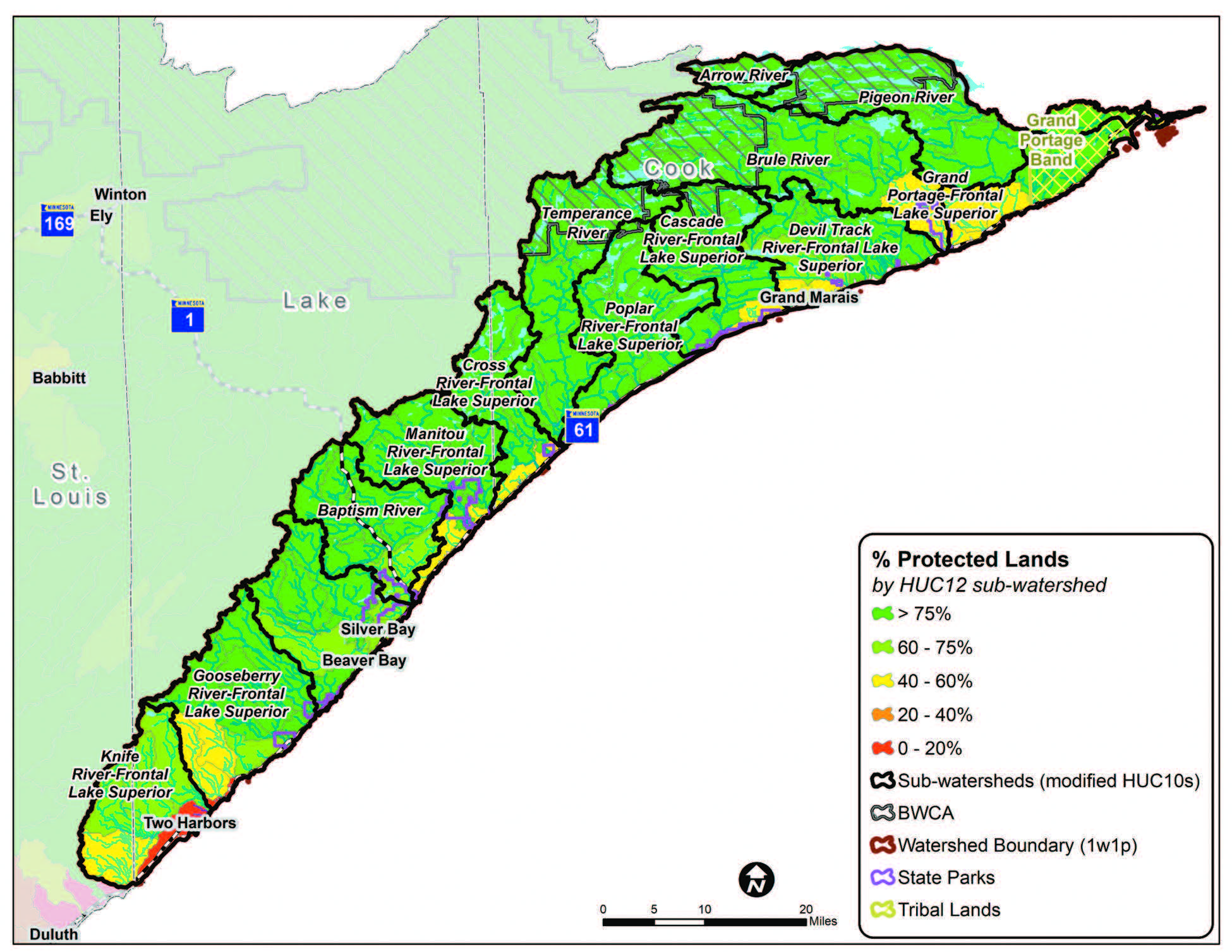
Lake County has three watersheds defined by One Watershed, One Plan that are partially within its borders: St. Louis River, Rainy Headwaters – Vermilion River, and Lake Superior North. Lake Superior North, as you might expect, largely spans the North Shore from Knife River up to Grand Portage, including much of Cook County. Lake County Soil and Water Conservation District has been designated as the water planner for the watershed.
The watershed was also one of the pilots for the One Watershed, One Plan, first taking part in the program in early 2017, and according to Solem, is “paving the way for processes through the state of how these watershed plans should go.” Because its water plan was formed back in 2017, and plans through the program are typically considered good for 10 years, it is considered due for an update by the program’s standards. Because of updates made in the interim, however, Solem was requesting an extension of the plan from the beginning of 2027 until the end of 2030.
One of the big reasons justifying a delay is a renewal of the plan in 2024 following talks with the Grand Portage Band of Lake Superior Chippewa to add their priorities and perspective. This, Solem added, was a thankful change from 2017, when many tribal governments declined to take part in the planning of the new program. Now, she said, “we have them as a collaborative partner.”
Another reason is to better line the new plan up with fresh data. Minnesota’s Clean Water Land and Legacy Amendment, adopted in 2008, added a sales tax increase with the money going towards several statewide funds aimed at raising quality of life standards for the public. One of these is the Clean Water Fund, which, among other tasks, runs an assessment of watersheds every 10 years with the Minnesota Pollution Control Agency to check water quality. Solem noted the test would ideally line up with the One Watershed, One Plan so water plans could be formed with new hard data rather than only potentially outdated numbers and a gut check. As it happens, the Clean Water Fund’s next round of watershed testing will be done in 2029, lining up nicely with pushing the date of the next water plan to 2030.
As part of pursuing the plan extension, Solem was speaking with each plan partner in turn, aiming to get their resolutions of support for the extension before taking her request to the state. The Lake County Board gave their approval this session.
Solem also gave updates on current watershed planning. Funding is allotted to watersheds every two years, then shared with partner agencies for projects guided by the plan and aimed at sustaining the watershed and fixing concerns. Lake Superior North, for example, received just over one million dollars during its fifth round of funding for improvements, and Solem was enthused about what projects were now possible with the allotments. One unexpected way the public benefits from the funding, she added, was allowing the County to help low-income households upgrade their septic systems. Another example of a project using the funds was work with the Lake County Highway Department on a stormwater management plan for Knife River.
Fund allocation is determined by a policy committee, with there being some overlap between governing bodies: Just within the Lake County Board in the room, Board Chair Rich Sve is on the policy committee for Lake Superior North, while Commissioner Joe Baltich is on the policy committee for St. Louis River and Rainy Headwaters.
Solem briefly covered St. Louis River, one of the other three watersheds in the County, which was added to the One Watershed, One Plan program in 2023 and is currently going through its second round of funding. The watershed is dealing with a number of concerns, including forest health, fire risk, spruce budworm damage, tree, riparian and lakeshore planting, and shoreline stabilization and erosion reduction.
Lake Soil and Water Conservation District has six full-time staff, some of whom are currently in training for site visits. Solem noted the staff must meet the standards of a job approval authority in order to do work on site, which “shows that the staff that we have are highly qualified to be able to give guidance” to landowners. The majority of calls for the office involve forest health, fire risk, and coastal erosion.
The office is currently offering several benefits to residents: Those affected by the Stewart Trail Fire are being offered tree planting and cost-share availability to make up for fire damage. The office is also offering grants for low-income residents in Silver Bay and Two Harbors, as well as County/Township entities to aid with handling dead, diseased, or hazard trees, such as those infested by emerald ash borer. The office is additionally offering free well water testing courtesy of a grant from the Minnesota Department of Health. For updates on their services, they can be found on the Lake County website at lakecountymn.gov/523/Services.