


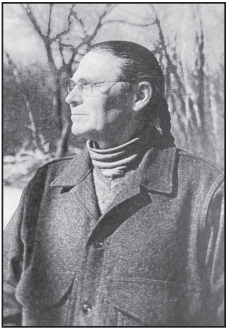
My thoughts on healing are based on my own journey of recovery from serious early childhood abuse. The event and its impact went unacknowledged by all, including myself, until my late thirties. I had developed chronic leg pain that was being treated by a professional massage therapist. One session triggered mental, dream-like flashbacks that terrified and confused me. Searching for explanations started my path to healing over the next decades. My intellectual and emotional understanding expanded with professional counseling. Deep soul-work through Native ceremony gave me a sense of awe and appreciation for the spiritual capacity of human beings. My process informed me as to why I was a cautious observer and a reticent joiner of male associations. My lifelong curiosity was drawn to the deeper workings of the human heart and mind. The worst and best angels of humanity became known to me. I grew to appreciate the helpful and useful assets found within my journey despite a terrible childhood experience.
Recently, I came across a term for the potential positive aspects in healing. “Post-traumatic growth (PTG)” is a theory explaining positive transformation after trauma. The term was coined in the mid-1990s by two psychologists, Richard Tedeschi, PhD, and Lawrence Calhoun, PhD. Many subsequent professionals have studied persons who experienced trauma as both difficult and transformative. A general understanding that suffering and distress can potentially produce positive change is thousands of years old. The early writings of all the great religions contain elements of the transformational power of suffering. The word “healing” implies the process of repairing physical or emotional damage and sometimes includes a spiritual element. “Social healing” is the process of recovery and well-being in a community with an emphasis on relationships and collective support in overcoming trauma and adversity. In any context, “heal” is the root of “health”. Healing leads to health—a condition of optimal well-being.
Individuals and societies that possess PTG find themselves “transformed” beyond their origins. They possess information and experience that others do not. They are elevated by the wisdom that comes from the courage and effort to heal. Persons and social groups with PTG are inspirational and informative to others wanting to heal. Genuine leadership in trauma recovery is found in individuals and groups who are transformed by their own healing.
Recovery from trauma is not always complete because the process can last a lifetime. Some victims learn to cope with the lifelong effects of injury or illness which eclipse a return to full health. It is possible to live a good enough life with unhealed and/or unaddressed trauma. Other individuals live a life with cyclical personal and social challenges. Native American tribes and African American communities live with systemic cultural post-traumatic stress (PTS) and yet live as functioning social units producing culture, art, music, and professionals. Their evolution in social healing is a testimony of resilience and the value of community in recovery and healing from trauma even in the face of continued traumatizing circumstances in modern America.
The trauma of the American Revolution and the Civil War became an example of “post-traumatic growth” in a time of social healing. The wisdom to end slavery eventually became the Civil Rights movement, resulting in federal and state laws protecting marginalized groups. Women, being excluded from full citizenship, were finally granted voting rights equal to men. Rectifying relationships between governments and Native American Tribes continues. The 1964 “War on Poverty” legislation offered health care, food assistance, and Head Start education to American citizens living in trauma-inducing poverty. These examples occurred over time and struggle as transformative growth from the American ideal to an American reality.
Sometimes the impact of trauma overrides the possibility of recovery and health. I would coin a term opposite of “post-traumatic growth” (PTG). That would be (PTH) “post-traumatic harm”. Some victims become victimizers, harming others by replicating or embellishing their own damage. Cross-border revenge between adjacent countries is an example of continuing damage in relationships. These conflicts perpetuate suffering with no post-traumatic growth potential because there is no “post-trauma” in unending retribution. The trauma has to stop before healing can begin a path to health—the condition of optimal well-being.
The first indicator of trauma is a serious lack of conditions for optimal well-being. The average citizens of Ukraine and Russia are existing with their well-being destroyed by war. Ukraine is fighting to safeguard its territory from an invading Russian aggressor. I have the legal right to refuse a trespassing deer hunter access to my property. Minnesota state laws safeguard my property boundaries. This is an ancient tradition and basic to international law, justifying Ukraine’s resistance. To reward victory to an illegal aggressor is the opposite of health and the road to unending revenge conflicts. Continued ill-health for the citizenry.
The history of positive transformation of American society is currently in a relapse due to leadership. It is like a world-class drug or alcohol addict falling off the wagon. American leaders’ retreat from optimal well-being has impacted the world order. Countries and institutions trying to promote humanitarian values are distancing themselves from the Trump administration and current American policies. All European countries, Canada, Australia, the UN, NATO, and WHO are realigning their relationships to diminish the negative impact of current American leadership. They are attempting “social healing” on a global scale.
The actions of the American Experiment to better itself and the Free World are currently in a state of PTH— post-traumatic harm. By rapidly unravelling the social, educational, and economic advantages of being an American citizen, that very citizenry is currently highly traumatized. By cutting long-standing ties with peacetime and economic allies, the world is suffering trauma leading to war and economic disruption.
Living is not without pain and suffering. The question is what do we do with our personal and collective problems? History reveals waves of traumatic and healthful times sweeping across the globe of humanity like darkest nightfall and daytime sunlight. The difference is that day and night are controlled by cosmic patterns, but human health and harm are housed in our free will. We have to decide if we, as individuals and community, have PTG or PTH. Will we ignore, cope, or heal? Will we be agents of growth or harm? It is a struggle either way, so we might as well make it count for the benefit of our future generations. May Dawn arise before they are born. It is up to us now.