


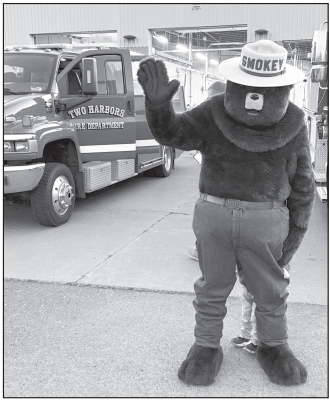
The Two Harbors Fire Department hosted an impressive open house on Wednesday, October 7th. Children had the exciting opportunity to spray a real fire hose at a model target house, and even participate in a supervised live-fire demonstration where they practiced using a real fire extinguisher alongside local firefighters. All of the department’s fire trucks were open for families to explore, giving kids a hands-on experience of what it feels like to sit inside an actual fire truck.
Inside the fire hall, guests enjoyed hot dogs, chips, and drinks while firefighters shared valuable safety knowledge. Even Smokey Bear made a special appearance to greet the children and pose for photos. With a fantastic turnout, it was certainly an event that local families won’t soon forget.
Lake County is fortunate to have dedicated firefighters stationed throughout the region. Local departments host events year-round to raise funds and promote public safety awareness. After witnessing these teams in action, most recently during a devastating fire along Highway 61, the community saw firsthand how their hard work, dedication, and teamwork saved homes, protected local businesses, and brought the blaze under control.
Firefighting is extremely demanding, dangerous, and grueling work. Yet, when speaking with local crews, their passion is clear: they love what they do, take pride in helping neighbors in need, and are deeply committed to their communities. Local stations are always looking for new recruits; anyone interested in making a difference is encouraged to reach out to their neighborhood fire department.
Holiday Fire Safety Tips
Fire Prevention Week was observed from October 4 –10, a time when fire departments across the nation host events to promote safety and prevention education. As the busy holiday season approaches, it is easy to become distracted and complacent about home safety. Keep these essential tips in mind to ensure a safe, fire-free holiday season.
Christmas Trees & Greenery
• Water daily: Keep live trees well-watered so needles do not dry out and become flammable.
• Maintain clearance: Position your tree at least 3 feet away from fireplaces, space heaters, heat vents, and candles.
• Keep exits clear: Never place a tree or large decoration where it blocks doors, hallways, or emergency exit routes.
• Dispose promptly: Remove live trees from your home as soon as they start dropping dry needles or within a few weeks after the holidays.
Lights & Electrical Safety
• Inspect strands: Check every string of lights for frayed wires, cracked sockets, or loose connections before hanging them.
• Limit connections: Connect no more than three strands of traditional incandescent lights together unless the manufacturer’s guidelines state otherwise.
• Match locations: Only use extension cords and light strands rated specifically for outdoor use when decorating outside.
• Turn off when unattended: Always unplug holiday lights and tree displays before going to bed or leaving the house.
• Prevent overloads: Avoid overloading electrical outlets or daisy-chaining power strips into a single circuit.
Candles & Open Flames
• Keep distance: Place candles at least 12 inches away from anything combustible, including wrapping paper, furniture, and curtains.
• Use sturdy holders: Place candles on stable, heat-resistant surfaces where pets or children cannot knock them over.
• Extinguish completely: Never leave burning candles unattended, and always blow them out before sleeping or leaving the room.
• Go flameless: Consider swapping traditional wax candles for safer, battery-operated flameless options.
Cooking & Fireplaces
• Stay in the kitchen: Never leave stovetop cooking unattended—especially when frying or cooking with high heat.
• Clear the hearth: Keep wrapping paper, holiday cards, stockings, and firewood at least 3 feet away from an active fireplace.
• Use a screen: Place a sturdy metal screen in front of your fireplace to catch flying sparks and embers.
• Never burn paper or greenery: Avoid burning wrapping paper, tree branches, or holiday greenery in the fireplace, as this can cause dangerous flash fires.
Smoke Alarms & Preparedness
• Test monthly: Verify that your smoke alarms and carbon monoxide detectors are functioning properly, and replace batteries at least once a year.
• Review escape routes: Ensure everyone in your household knows two ways out of every room and agrees on a designated meeting spot outside.
Lithium-Ion Battery Safety
With the growing popularity of modern electronics, e-bikes, and electric scooters, lithium-ion battery fires have become a major safety concern. Follow these guidelines to keep your household safe:
General Battery Best Practices
• Certified products: Purchase and use devices tested and listed by a qualified testing laboratory (such as UL).
• Follow instructions: Always adhere to the manufacturer’s operational and charging instructions.
• Use correct gear: Only use the battery and charging cord designed specifically for your device.
• Proper placement: Ensure batteries are inserted correctly.
• Safe charging surfaces: Never charge a device under a pillow, on a bed, or on a couch.
• Avoid overcharging: Disconnect devices once they reach a full charge.
• Temperature control: Keep batteries at room temperature; do not charge them at temperatures at or above 105°F (40°C).
• Safe storage: Store batteries away from combustible materials.
Warning Signs of Battery Failure
Stop using and charging a battery immediately if you notice any of the following:
• Strange odors
• Changes in color or shape
• Excessive heat buildup
• Leaking fluid
• Unusual popping or hissing noises
Safe Battery Disposal
Do not throw lithium-ion batteries in the household trash.
• Recycle responsibly: Take used batteries to a local battery recycling facility or contact your municipal authority for local disposal guidelines.
• Avoid piling: Do not stack or store discarded batteries in loose piles.
You can find additional information at The NATIONAL FIRE PROTECTION ASSOCIATION (nfpa.org/education).
The NATIONAL FIRE PROTECTION ASSOCIATION has provided this fire safety information. It is the leading information and knowledge resource on fire, electrical, and related hazards.