


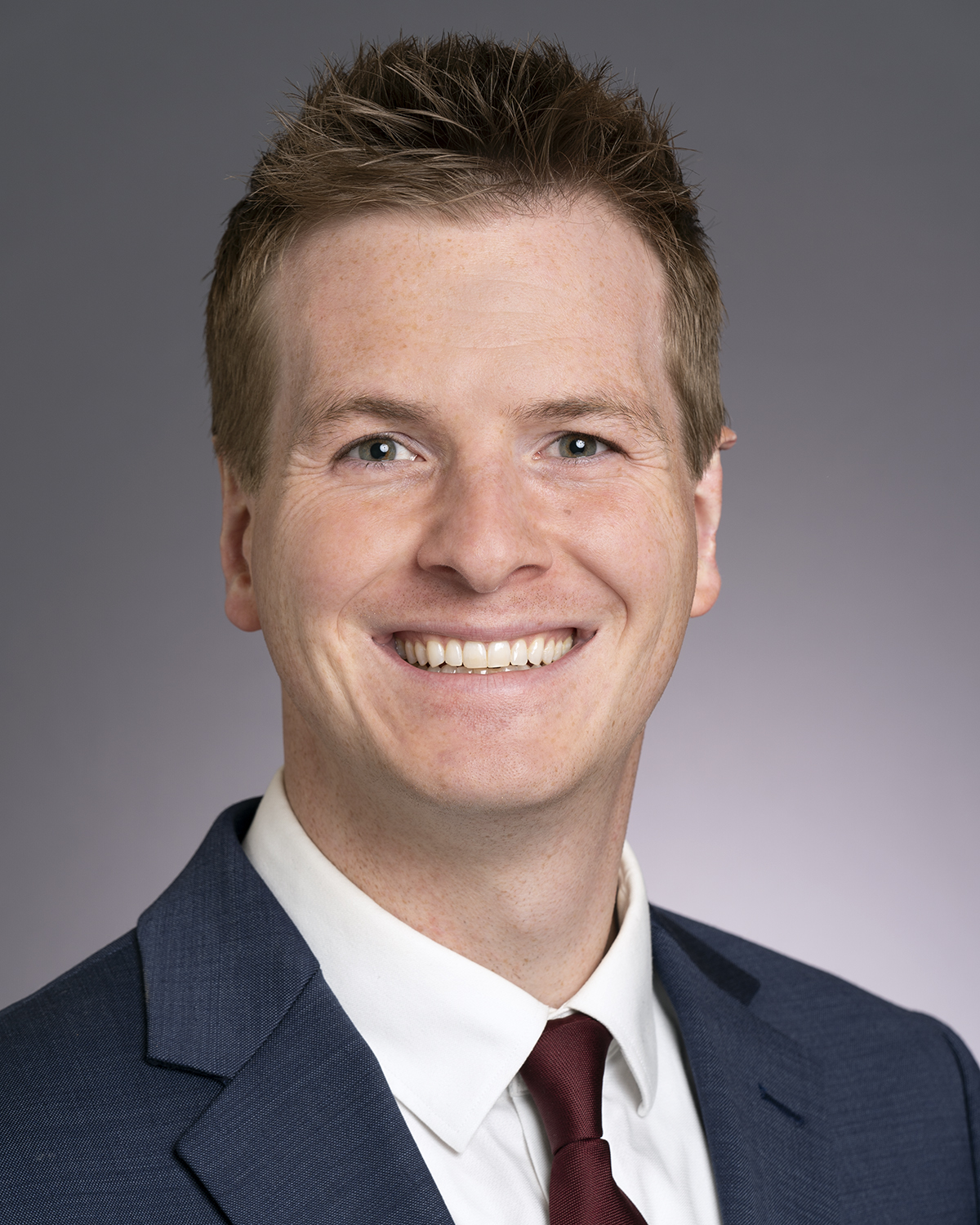
Minnesota Senate candidate and incumbent Grant Hauschild’s tour on healthcare in Northern Minnesota had a stop in Silver Bay, where a small group of residents gathered for thoughtful discussion on the future of healthcare resources in the region. There is no getting around the fact that the outlook for healthcare on a national, state, and local level is grim at present. The question is, what to do to improve the situation?
Hauschild was joined by Minnesota House District 3A candidate Aaron Kania to gather opinions from locals on what they should prioritize if (re)elected this November. At the center of the talk: Silver Bay’s clinic, due to officially close down at the end of this year. The clinic’s closure is adding strain to a district already suffering from a lack of resources to support an overall aging population. Hauschild is concerned about the effect the recent cascade of decisions made at higher levels will have on his district, which he noted is not only the most rural district in the state but physically larger than several entire American states. Close and reliable healthcare access is key “if we want people to stay and reside in our communities, if we want our communities to survive, frankly,” Hauschild said. “And we want people to be able to retire near where they’re from.”
The clinic’s closure is not happening in a vacuum. Hauschild explained that healthcare across America is being squeezed by a number of issues, including upcoming cuts to Medicaid and Medicare. “That’s supplemental insurance that many of our seniors rely upon.” From his perspective, the state has been working hard to bridge healthcare gaps created recently at the federal level. His district is especially at risk due to the older population, meaning a higher percentage using healthcare funded via government programs such as Medicaid.
Over the course of several conversations with hospital directors in the region, they were unanimous in saying that their hospitals were already pushed to their limits by operating expenses. “And with those cuts coming,” Hauschild continued, “it’s going to be that much harder to keep them open.” In today’s healthcare system, hospitals, clinics, and other healthcare services are often only able to operate because of the reimbursements they gain from caring for patients who are using Medicare and Medicaid. Without those reimbursements given by the government, the healthcare facilities would be operating at such a steep loss that they would be unable to stay open. Nelson, a longtime resident of Silver Bay, said he had spent a long time watching the local healthcare scene change. “It’s been interesting to watch the morphing of that and the evolution of the industry,” he noted, but the changes have overall not been good.
Hauschild expressed frustration that the public hearing in July on the clinic’s closure was not even held in Silver Bay, which he sees as a further sign that the problem of physical distance for residents is not properly being taken into account. A state incentive, he thinks, could help keep facilities closer at hand and give another reason to keep clinics like the one in Silver Bay open. Without clinics in key locations like that, “you’re starting to talk distances now that will mean lives lost and mean people not being able to stay here.”
The meeting’s attendees did not appear impressed by the circumstances of the clinic’s closure or its handling so far. Kate, a Silver Bay resident, was concerned by comments made during the public hearing where the closing was decided based on money loss with little regard for it being considered an essential service. She further shared that in her experience, “Aspirus has not been very transparent with us with the clinic situation,” recounting that although they were promised the clinic would remain open with limited hours until the end of the year, “they don’t have that right now.” She has been unable to make appointments for her kids, and attempts to contact Aspirus have not helped. And although physical therapy is being offered as promised, it is being held at the clinic rather than William Kelley Schools as planned due to apparent security issues. So far as residents have noticed, attempts to resolve these issues appear to have stalled out, with local resident Marcia stating that physical therapy at the school is “not happening any time soon.”
Even if the closure cannot be stopped at present, in the longer term Nelson wants a way to reinvest in the clinic. “In its day, when it first started,” he said, “it was a healthcare model for the Country.” Marcia agreed, stating that “keeping that lifeline – that door – open for what the next phase might be” for healthcare in Silver Bay and the region is important. At the very least, Kania stated he would like to at least be able to provide residents with a crisis team to help “hold the community together” in the event of a critical clinic’s closure. Hauschild pointed to state-level funding currently in process that is intended to help close the gap from the loss of Medicaid reimbursements. Although he emphasized it would not come close to the scale of the impending cuts, the $30 million intended for maintaining hospitals and clinics in need would at least provide a starting point for keeping services active.
Telehealth remains one of the quicker solutions on the table. Marcia spoke of the current situation leading residents to have to “drive to Duluth for a ten-minute appointment to have your blood pressure checked,” but admitted the use of technology required for telehealth services is a high hurdle for many locals. She suggested a telehealth kiosk of sorts, to provide face-to-face assistance from workers while getting the benefit of remote experts.
Another, related problem for the area is transportation, especially for medical-related reasons. Lack of funding and staffing has strained local services, and one of Hauschild’s stated aims is to improve medical transport in rural areas. For a start, he said, the state is currently providing $24 million in funding to “help bridge the gap” and keep vital operations like Lake County Ambulance Service going. Funding at the state level is important because of how the mostly rural district is being covered. Smaller communities are separated by larger distances and rely on non-profits, which are funded by the state and county subsidies.
Dialysis came up as a prime example of those in need of transportation aid. The lack of a dialysis center or other available resources north of Duluth has led to locals needing a ride from as far away as Grand Portage and International Falls. Kania highlighted the latter as being a particularly egregious example due to an excellent center located just across the border in Canada that residents are currently unable to access due to tensions between the two countries.
Two Harbors resident Kirsten said, “It’s unbelievable how much work those organizations are doing to support people getting home, getting rides to the doctor,” adding that these services are used not only by locals but tourists, making it a matter relating to the region’s economy as well. Kania noted that from his experience working with the Forest Service’s Search and Rescue, emergency services and ambulances also have the challenge of dealing with aircraft incidents in the region. “That’s a real challenge,” he said. “We have this boost of people come up, and when they do get hurt,” the local community has to be prepared to take care of them.
After hearing participants out, Hauschild shared his thoughts on “creating some sort of healthcare innovation fund, that people could apply for, communities could apply for, to fit what they’re looking to do,” listing home dialysis, telemedicine, or “whatever it might be that fits their community.” This, he concluded, would allow each individual community to “right-size what their needs are”.
Another upcoming problem for the district’s healthcare, according to Hauschild, is the 340B Drug Pricing Program. This federal program forces pharmaceutical companies to give discounted drugs to critical access hospitals, clinics, and pharmacies. “It’s essentially a backdoor way of making pharmaceutical companies pay for rural healthcare,” he said, but enforcing the discounts has been a difficult battle. Hauschild stated that pharmaceutical companies have widely stopped obeying this federal program and providing discounts, which is why it is important that Minnesota has state-level enforcement to ensure they follow the law at least within the state. The enforcement, however, is due to sunset in 2027, and its renewal has passed the State Senate but not the House.
He was blunt in telling the groups what would happen if it did not pass in time. “If we lose 340b and this drug discount program, I have heard from all of the hospital leadership in this region that they will close. There is not the ability to keep services open without the money that they are getting from that program.” This issue, he said, accounted for some of the added intensity of Minnesota House and Senate races this midterm. “It’s unfortunate, but it’s these big companies that are making a lot of money” to try and end the program. Hauschild is hopeful that after the midterms, the sunset will be prevented.
On a smaller scale, the group brainstormed what the average resident could do to improve the immediate healthcare situation. Kania, who had attended the Silver Bay clinic’s public hearing and spoken in the facility’s defense, brought up the ‘economy of scale’ problem that had been mentioned at the time: the idea of services such as the clinic being too diluted in their user base, such as the big example given at the meeting of the school district not using the clinic. He asked how the community of Silver Bay was organizing, according to its own residents.
Those local to Silver Bay agreed that, despite the City getting support from accomplished experts like David Drown and “one of the best city administrators in Minnesota, in my observation,” according to one participant, staff and community leaders are being stretched dangerously thin. There is also a lack of younger-generation individuals stepping in to fill local staffing and volunteering, which the group worries will only make the matter worse with time.
The solution, they think, is more opportunities for training the next generations and greater communication across the board. Hauschild noted state funding given to Lake County which in turn went to giving EMT training at William Kelley Schools in the hopes of inspiring the students to consider becoming EMTs, firefighters, and other like-minded professions. He hopes to push for similar grants covering other needed fields.
Nelson thinks that, despite Silver Bay’s problems, “it’s amazing how far we’ve gotten in this community.” He listed off the City’s marina, campground, and the new trailhead center they were sitting in as just a few examples. Although he admitted many residents prefer to stay isolated, the City has the potential to grow and become healthier as a result. “The future is very bright, we just need to pace ourselves and put resources in the appropriate places.”
Hauschild agreed. “You look at the opportunities, being on the Shore, how beautiful it is,” he said, “there is so much opportunity here.”