


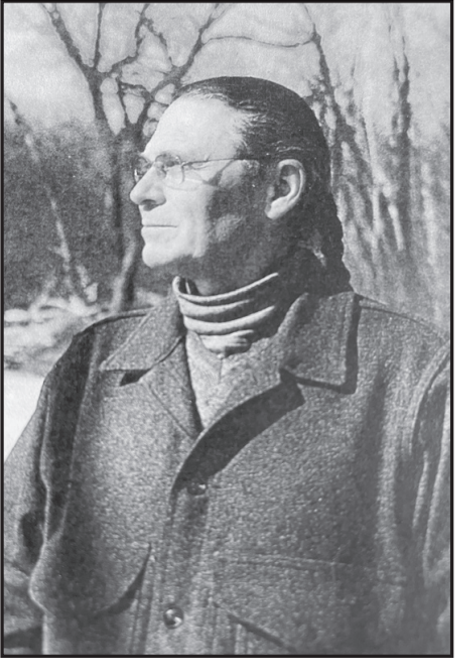
“After landing in America he opened the wooden box carried across the Atlantic Ocean from Wales. The box contained oat seeds grown on his family farm back home. He was overwhelmed with hiraeth as he would never walk that land again.”
“Hiraeth” is a Welsh word I recently learned. It has no direct English translation, but it describes a feeling I have had all my adult life but never understood nor could name until now. Hiraeth (pronounced heer-eye-th, here-eyeth) implies a profound and deeply saddened longing for a home, place, or era which can never be revisited. A return is impossible. It is a specific kind of longing or homesickness combined with nostalgia and grief.
I have a deep feeling of loss of place. My early childhood joy was wading the two shallow sandy bottomed clear water creeks on my mother’s family farm. Far from family dynamics at the farmhouse, I wandered in quiet solitude observing water-walking insects and swimming fish in those streams. I was seven when those meanderings became limited due to a family move. Our new location was backed by farm fields, wood lots, and a murky creek along a railroad track. When my chores were done, I was allowed to traipse among this new realm of plants and animals. I did that alone as none of my siblings seemed interested in finding what had been lost in our move. I lost access to that roaming when I left home to go to college. There I explored classrooms, libraries, and gardens still looking for something. My personal era of family life ended when my father died at forty-three years of age. I was nineteen. Joni Mitchell’s lyrics “don’t know what you got till it’s gone” stung me. I wept fiercely with what I now know was hiraeth.
Within a few years I had deep desire for a place and family of my own. I married, bought rural forested and watered land, built a house, and had three children. My wife at that time shared a desire for family but, unbeknownst to me, didn’t share the same drive to “re-place” something lost. The attempts to recover what was lost to me resulted in divorce and loss of yet another place and time that couldn’t be revisited.
I don’t know for certain but speculate that hiraeth is multi-generational. The Bible records many passages about “fathers passing sins” to future generations. What about passing hiraeth? The deep longing filled with grief for what is gone would certainly impact family life. It impacted me as a child and as an adult. I am quite certain it impacted my three children. My father was forced to leave his country home of farming, hunting, and fishing when orphaned to live with foster relatives. He dropped out of eighth grade to work in his foster father’s roofing business. He was never able to regain the lost time in woods and water. My mother refused to move to a lake home of my father’s choice because it was too far from her family farm; her sense of place. Dad’s Scottish ancestors were forced from their ancient homelands by the British in what was referred to as the “Highland Clearances.” His Irish relatives left their homelands for North America due to the Irish potato famine. His European ancestors pushed aside his Native relatives, resulting in indigenous displacement and famine. My mother’s Teutonic ancestral home was overrun when the Romans conquered Magna Germania. Her modern relatives left Germany in the late 1800’s to settle on Michigan land taken from indigenous occupants. All of the European immigrants took up land previously occupied by a thousand distinct tribes living in North and South America before European colonization. Hiraeth might be a Welsh term, but its implied description of a grieving homesickness and lost era seems potentially universal to the human condition.
Hiraeth also implies a deep emotional longing for something that “may have never existed.” This might suggest an escapist desire, but based on my own experience, I speculate that interpretation of hiraeth relates to past life experiences. Studies of “cellular memory” hint at past life experience. “Blood memory” is a term in Native traditions describing knowledge brought forward from past lives. Parts of my own lived experience can only be explained as coming from a past life. I had a vague memory of an epidemic in a Native summer camp which killed many. Later I would read of Andrew J. Blackbird’s account of the smallpox epidemic at L’Arbre Croche on Lake Michigan started by the British military in 1763. Senior military officers “gifted” Odawa elders an ornate wooden box filled with smallpox scabs. I had teenage memories of preparing for a sun-dance ceremony only to become a sun-dancer in my adulthood. I have known other individuals who actively merge past and present lives. One person in particular shares memories in common with my own in a stunningly remarkable overlay of shared past life experience.
Those memories and a longing for those times cause me to wonder and imagine what the land I travel through would have looked like before European conquest. I wonder what my grandparents’ land would have looked like before they cleared all the white pine to farm the soil. I wonder what my father’s childhood upper Michigan home near the St. Mary’s River looked like when that area was still a thoroughfare of indigenous activities long before the fur trade era. When we travel the great plains of America on super highways with easy accommodations, I wonder what living there was like before Manifest Destiny pushed out the original two-legged and four-legged occupants. As I drive my car, I can still see the deeply worn migration routes of millions of buffalo. Walking those areas can occasionally reveal old tipi rings of stone. The ancient ceremonial medicine wheel in Wyoming is now protected with a chain-link fence. In the old times, respect for the sacred would have been enough protection.
My own hiraeth is finally salved by the establishment, with my wife of thirty-five years, of a landed home base in magnificent woods and water. We quietly walk our trails ever watchful for living things that share their lives with us. We remember the caribou who are gone now but hope to see any of the once abundant moose. Once I found an ancient tool, a pecked stone mortar used to prepare paint pigment, embedded in the creek mud. It was proof that the old ways reside in the land we walk. We are able to live here, approximating times past and lost as best we can in the modern era. Our conscious living is an experiment in healing hiraeth. Learning the Welsh word “hiraeth” helped me understand a large part of myself. It also taught me that grievous longing is healed by hope, love, laughter, and resilience.
“With hiraeth in his heart, tears in his eyes and determination in his mind, he planted the treasured oat seeds in newly plowed ground in new places to see what might grow.”