


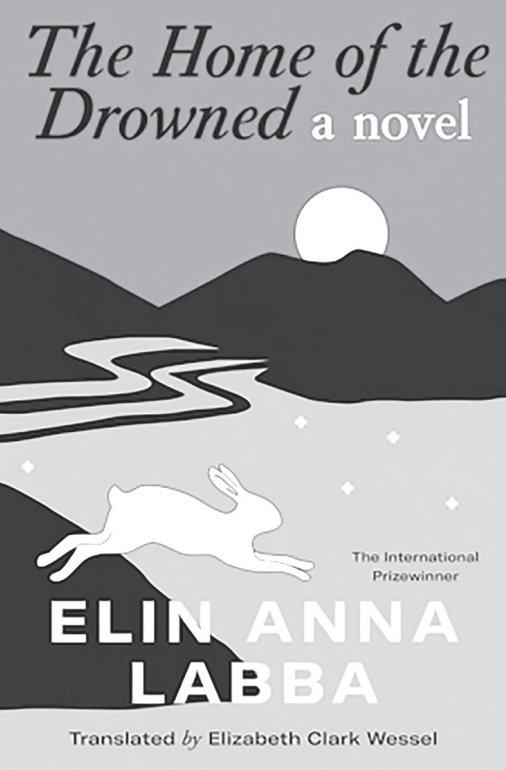
I admitted early on that I had known almost nothing about the Sámi, the Indigenous people of northern Norway, Sweden, Finland, and the Kola Peninsula, before reading Elin Anna Labba’s new novel. I recognized the bright colors and the reindeer, but not any of the rich culture, nor the tragic history.
Labba and I talked over Zoom while she sat in Norway, close to the region where she grew up and the lake that shaped her family’s life. When I asked whether she imagined far‑away readers like me learning about Sámi culture through her work, she said that wasn’t her goal, though she’s glad the book has traveled.
“I didn’t expect it to be translated,” she said. “Maybe that was good because I think if I knew, I think I have been maybe adapting more.”
Writing without an imagined international audience allowed her to stay close to her own language and landscape and to the purpose that guided her from the beginning.
“I actually wrote it to understand my own history and my own family,” she said.
Her novel, The Home of the Drowned, follows a family who lived along a chain of small northern lakes before hydropower development transformed the landscape into a single, swollen reservoir. The lake in the book mirrors the one she has lived beside for most of her life, a body of water that rose and swallowed the land her relatives once depended on.
Gathering stories from relatives wasn’t easy. She grew up hearing fragments about the flooding, but many were half-told or held back. Years of shame and silence shaped what was shared and what was not, and even within her own family, people often believed they had nothing worth saying.
“Some history has become very silent,” she said.
That silence was not unique to her home. It was part of a wider pattern, where generations were taught to hide who they were. Yet when she began asking questions for the book, she found that her relatives had far more to say than they believed.
“My family had a lot to tell me when they started,” she said.
The stories she heard were layered with memory, loss, and the quiet resilience of people who had learned to adapt to change they did not choose. Some elders had never been asked about the flooding. Others had carried their stories quietly for decades, unsure whether anyone wanted to hear them.
Her research included accounts from relatives who remembered the years before and after the flooding. Some recalled the sound of the rising water, the way the shoreline crept closer each season, and the moment they realized their homes would not survive. Others remembered the practical challenges that followed, from relocating livestock to rebuilding routines in unfamiliar places. These stories helped her understand the scale of the disruption and the emotional toll it carried.
Previously writing about the history of the Sámi people in her non-fiction book, The Rocks Will Echo Our Sorrow, Labba said fiction gave her a freedom she did not have as a journalist. It was a way to explore the emotional truth of her family’s past without being limited to documented facts.
“It kind of liberated me in some kind of way,” she said. “To go from being that journalist to becoming more like a novelist.”
Labba previously worked in radio and print journalism, including for P4 Norrbotten, SR Sápmi, and the Sámi magazine Samefolket. She later served as editor‑in‑chief of the Sámi youth magazine Nuorat.
As she gathered these stories, she began to see how the flooding fit into a larger history of Sámi displacement. Hydropower projects, land seizures, and government policies reshaped communities across the region for generations. The loss of land was not a single event but a pattern, repeated in different forms and at different times.
She also saw parallels between the past and the present. Climate change is altering the northern landscape again, bringing new uncertainties to communities that have already endured so much.
“It was a book for me about climate change,” she said.
The novel also extends the historical arc of her first book, which traced Sámi displacement up to the 1930s. This new story picks up where that one left off, following the next generation through the upheavals of the 1940s to the 1980s.
Her next project continues along that path of writing about family. This time, the other side, which dwelt in the forests. It centers around land use and the pressures facing Sámi communities today. The themes of loss, resilience, and belonging remain central, but the focus has shifted to the present and the choices communities face as the landscape continues to change.
Language is central to Labba’s writing. She writes in Swedish but draws heavily on Sámi expressions and ways of thinking. She said the translation process required care.
“I’ve been using a lot of Sami language. It’s kind of a challenging translation to do,” she said. “I think they have been doing a great job.”
She appreciated that the English edition, printed by U of M Press, preserved the texture of her language.
“I like that they have been really respectful towards me using my own language and letting that be in the text,” she said. “That’s very Sami kind of English.”
The English edition was translated by Elizabeth Clark Wessel, whose careful work carries Labba’s cadence and sense of place into English without smoothing away the Sámi language woven through the book.
Labba’s novel opened a world I had not known existed. It made me aware of histories I had never learned and voices I had never heard. Listening to Labba talk about her work, I felt the same pull I felt when I first opened The Home of the Drowned. It was a sense that I was being invited into a story that had been waiting a long time to be told.
I was especially struck by the scenes of elders in nursing homes, feeling the pull of the land as the seasons changed. Labba told me those stories came directly from her interviews.
“That is a story that I heard a lot,” she said, describing elders who ran away from care homes, following the old routes north or west. “My grandfather, he always went west when he got old.”
The novel left me with a deeper understanding of a world I had not known and a renewed appreciation for the power of listening. The stories she gathered, the voices she amplified, and the history she brought forward all speak to the importance of paying attention to the places we come from and the places we lose.
Pick up The Home of the Drowned by Elin Anna Labba at your local bookstore or library. Drury Lane Books offers both of Labba’s titles and offers online ordering at drurylanebooks.com. Back Forty Books in Two Harbors can also special-order copies for readers; visit backfortybooks.com.