


COOK – The recently shuttered Ruby’s Pantry is facing a wrongful death lawsuit following a 2024 incident on the Iron Range where a man died at one of the nonprofit’s food distribution sites.
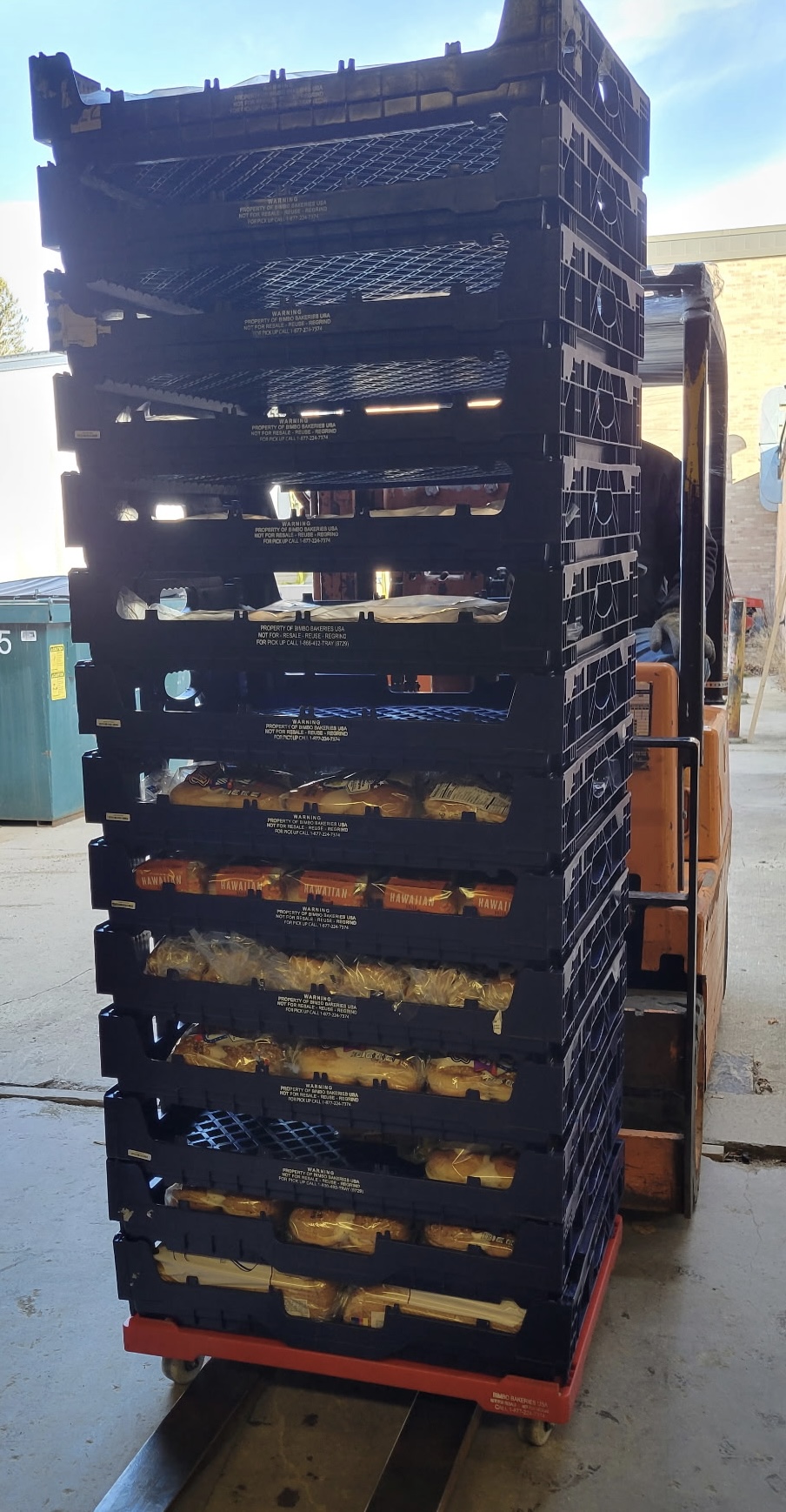
Records confirm that Richard Paul Johnson, 72, of Cook, died following what is described in his obituary as a tragic accident on March 14, 2024. The accident involved a stack of pallets tumbling from a forklift at the distribution site for Ruby’s Pantry in Cook, MN.
The lawsuit raises new questions regarding the financial distress and abrupt closure of the nonprofit organization that for more than 20 years distributed food to rural communities like those on the North Shore and the Iron Range.
In the lawsuit filed in January 2025, Johnson’s wife, acting on behalf of his estate, is suing Ruby’s Pantry and another individual involved in transporting goods from the Ruby’s Pantry warehouse north of the Twin Cities to the Cook distribution site. The lawsuit is for more than $1.2 million. The case is currently set to go to trial in November.
Ruby’s top officials announced March 31 that the organization was immediately ending operations at 85 sites spread primarily across Minnesota and Wisconsin, with locations in Iowa and North Dakota as well. The abrupt cease to operations includes the pantry distribution sites in Silver Bay and Grand Marais.
Ruby’s Pantry, according to its now shuttered website, collected more than 21 million pounds of food and served more than 650,000 people each year, dating back to 2003.
Many people who were directly involved with Ruby’s Pantry told this newspaper they were aware the organization was struggling financially. However, the abruptness of the closure, a general lack of communication from Ruby’s headquarters with volunteers who’d been around for decades in some instances, the seizing of money from bank accounts tied to the various Ruby’s distribution sites, turning off the company’s website, and the leadership team shutting down all lines of communication from the nonprofit’s headquarters didn’t sit well with some longstanding volunteers.
Media reports across the country, including in the New York Times, have focused on the value of Ruby’s Pantry for people in rural communities following the nonprofit’s closure. No previous reports in the media or otherwise have mentioned the existence of a wrongful death lawsuit. It is unknown what role insurance will play in any pending litigation. Officials from Ruby’s Pantry did not respond to multiple requests for this story.
According to court documents:
Richard Thompson, the operator of the truck, had a duty to load the towers of bread in a manner that did not cause injury to those unloading the bread from the tractor-trailer he drove to the Cook distribution site. Specifically, as laid out in the Federal Motor Carrier Safety Regulations, Thompson, as the operator of a commercial transportation vehicle, had a duty to ensure that all cargo on the truck was “firmly immobilized” on the vehicle by “structures of adequate strength,” the complaint states.
When Thompson arrived to drop off food on March 14, 2024, there were pallets of bread stacked upon one another, some as high as 13 feet. Ruby’s Pantry volunteers at the Cook site had previously warned Thompson that the “bread towers” were unstable and unsafe. Volunteers also requested Ruby’s Pantry officials to make the bread towers safer for the unloading process, according to court documents.
The day of the incident, a volunteer at the site, unloading the truck with a forklift, lost control of the freight, with the pallets striking Johnson on the head. Johnson died 12 days later in the hospital due to injuries he sustained in the accident. The court documents cite pain, suffering, and emotional distress among the five counts in the wrongful death lawsuit.
The suit claims Thompson, during his loading of the tractor-trailer with the bread towers and consequent delivery of the cargo, was acting under the course and scope of his employment with Ruby’s Pantry at the time of Johnson’s injury.
“Ruby’s Pantry is therefore liable … because an employer is vicariously liable for the torts of an employee committed within the course and scope of employment with the employer,” a court document specific to the wrongful death lawsuit reads.
Meanwhile, Ruby’s Pantry, like any nonprofit in Minnesota, is required to take legal steps to dissolve through the Minnesota Attorney General’s Office.
The Attorney General’s Office confirmed with this newspaper on May 6 that it sent a letter to RoxAnn Sahr, the director of Ruby’s Pantry, on April 1 telling her that, under law, she needs to notify the office of its intent to dissolve. A copy of the letter sent to leadership at Ruby’s Pantry was shared with the Northshore Journal.
A spokesperson for the Attorney General’s office said that as of May 6, they had not heard back from Sahr.
Ruby’s Pantry started in 2003 and was the vision of its founder, Lyn Sahr, RoxAnn’s father. A preacher who bounced around from church to church in the North Branch and Pine City area, two small towns just north of the Twin Cities, Sahr named the organization after his grandmother, Ruby Flodin. Sahr was not shy about making a direct tie between his Christian faith and that of the numerous nonprofits he founded over the years, which include Home and Away Ministries, Ruby’s Heart, and Ruby’s Pantry. Sahr passed away in April 2023 at the age of 74.
After his death, RoxAnn stepped into a leadership role with Ruby’s Pantry. RoxAnn was familiar with operations at Ruby’s, having worked in the administrative office before her father’s passing. Assisting with administrative duties following Lyn Sahr’s death was RoxAnn’s sister, Tami Martinson.
Both RoxAnn and Martinson declined to be interviewed for this story. Another of Lyn Sahr’s daughters, Nicole Schwidder, was listed as the board chair of Ruby’s Pantry in the nonprofit’s most recent tax filing. She also declined to be interviewed for this story.
Throughout its 23-year history, the Sahr family offered the narrative of growing a Christian organization from a “pickup load of food” to one that possessed “two distribution centers, nine semi-trucks and handled (the distribution of) nearly one million pounds of (food) per month.” In 2025, the company said on its now defunct website, “Ruby’s Pantry handles over 34 million pounds of food each year and serves over 300,000 families a year with shares of food. For a $25 share donation, guests receive an abundance of groceries that would normally be food suppliers/distributors overage and surplus that would normally end up in landfills.”
For months leading up to the March 31 shutdown, officials at the organization’s headquarters said the nonprofit had fallen on hard financial times. An email that a former Ruby’s site leader sent last week to this newspaper made it clear the organization was struggling financially. The email, dated Jan. 17, was originally sent from RoxAnn Sahr.
“As we closed out the year, our financial picture is concerning,” RoxAnn wrote in the email, which had a subject line of “Ruby’s Pantry Urgent and Prayerful Request for Financial Partnership.”
There was no mention of the incident at the Cook distribution site from March 2024 in any letters Ruby’s Pantry sent to site volunteers. It was not mentioned in either the January email or the brief closure announcement the organization issued in March.
RoxAnn explained in the January email that Ruby’s closed 2025 showing a loss of more than $450,000. Tax records from the year before show Ruby’s Pantry lost more than $1 million in 2024. That being the case, the nonprofit still had about $21.5 million in assets. During recent years, Ruby’s Pantry received large sums through various gifts, grants, contributions, and donations.