


If you have electrical questions you’d like answered in a future edition of this column, send them to the Editor at northshorejournal@gmail.com, or email John directly at john@clovervalleyelectric.com.
Dimmers, Fan Controllers, and Saving Energy
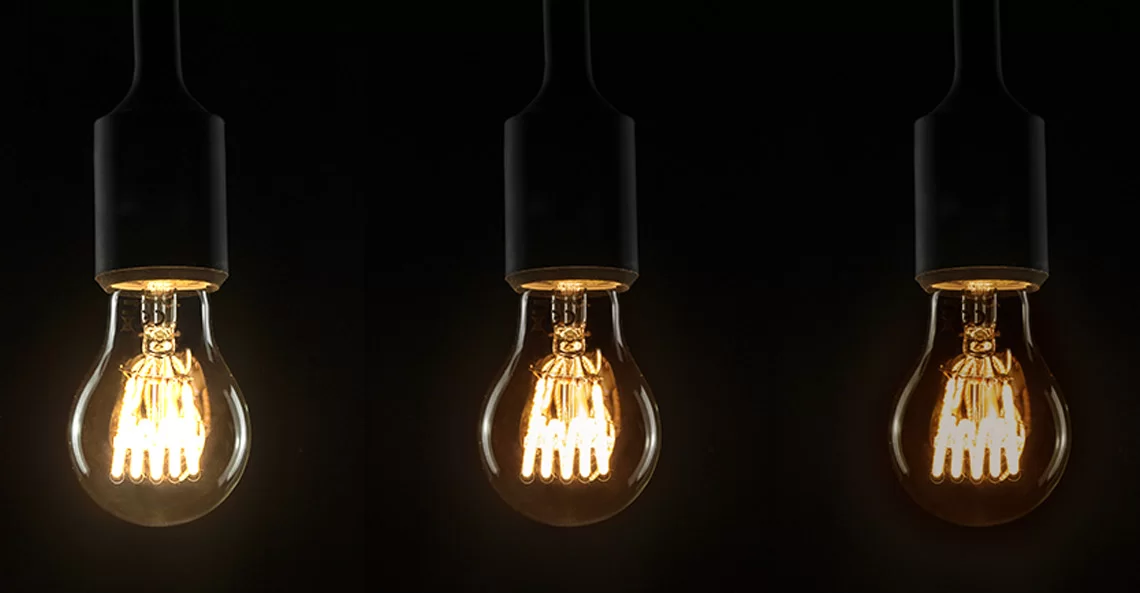
A reader, Roxanne L., has owned her home for over twenty years and kept having trouble with her bathroom light – her light bulbs would dim randomly, then go out. She replaced a lot of light bulbs, convinced she was buying bad ones. Then one day, while cleaning the switch, the lights dimmed and brightened as she touched it. The toggle switch had a dimming function too. Roxanne now uses it turned low as a nightlight and wondered – does that save electricity? Ruth R. asked the same question, “Does a dimmed bulb use less energy?”
The answer is yes, and the reason is a bit nerdy. The AC power in your home is a relatively smooth sine wave: the voltage rises, crosses zero, falls, and repeats sixty times per second (60 Hz). A standard modern wall dimmer uses a semiconductor switch called a TRIAC. The TRIAC waits for the waveform to cross zero and then delays before turning on. The longer the delay, the less of each half-cycle gets through the dimmer to the light bulbs. What reaches the bulb is a partial waveform with a chunk cut from the front of each cycle.
So, where does the “missing” power go during the “off or delayed” portion? It was never allowed to flow; basically, the dimmer is a switch turning on and off at roughly double the frequency of AC power (120 Hz). While the TRIAC is off, the circuit is essentially open (or off) – no current flows and no power is consumed. The dimmer isn’t absorbing energy and throwing it away as heat. It’s simply not letting current through until partway into each cycle.
If you’ve had LED bulbs flicker, buzz, or drop out at low dim levels, that’s usually a compatibility issue. Older TRIAC dimmers were designed for incandescent loads, which are purely resistive and draw substantial current (as discussed in a previous column). The TRIAC needs a minimum holding current to stay latched during each half-cycle, and an incandescent bulb provides that easily. An LED draws far less current, and that low draw can fall below the TRIAC’s threshold, causing it to cut out mid-cycle, causing flicker. LED-rated dimmers are built with lower minimum load requirements and better compatibility with modern LED bulb drivers. If your dimmer was installed during the incandescent era, swapping to an LED-rated dimmer often solves the problem.
Adam B. wrote in about a bathroom vent fan that was moving too much air. Similar to the lighting situation, his instinct was to install a dimmer to slow it down. He found out that it’s dangerous and asked for an explanation.
The reason goes back to that waveform. An LED doesn’t care that the sine wave has been chopped up. The LED just gets less energy and, as a result, produces less light output. But an induction motor, like the one in a bath fan, relies on a smoothly alternating magnetic field in its windings to spin the rotor. When an induction motor has a distorted or chopped waveform with sharp on/ off transitions each cycle, the windings in the motor see abrupt current changes. Those extreme current spikes cause the windings to develop excess heat, and the motor can’t develop proper torque. The motor may hum and vibrate, and the winding insulation on the coils in the motor is likely to break down much more quickly. Given enough time, that’s a path to motor failure or even possibly a fire.
A proper fan speed controller – like the Lutron Toggler fan control I’ve used on jobs – works on a completely different principle from a TRAIC lighting dimmer. Rather than chopping the waveform, most dedicated fan controls use capacitors wired in series with the motor. Each speed setting switches in a different capacitor value, which changes the effective impedance at the motor windings. The motor still receives a complete, smooth waveform – just at reduced effective voltage (maybe 90 volts instead of 120 volts). The motor slows down, the fan moves less air, and the windings stay within their thermal limits because there are no sharp electrical transitions. These controllers are often marketed as “quiet” because, without a TRIAC switching device, the motor generally will not hum or make weird vibrations.
Both the lighting dimmer and fan speed controllers reduce power to the load, but each one is designed for a different application.
This column is open for reader feedback and questions. If you have an electrical question or are curious how something works in your electrical system, please send over a question.
John Christensen is a licensed Master Electrician in Minnesota and has a bachelor’s degree in electrical engineering from the University of Minnesota – Duluth. If you have electrical questions you’d like answered in a future edition of this column, send them to the editor, or email John directly at john@clovervalleyelectric.com
The advice provided in this column is intended for general informational purposes only. If you have specific concerns or a situation requiring professional assistance, you should consult with a qualified professional for advice or service tailored to your individual circumstances. The author, this newspaper, and publisher are not responsible for the outcomes or results of following any advice from this column. You are solely responsible for your actions.