

(Third in a four-part weekly series reporting on managing trash and recycling)
In metro areas, trash is like a vanishing act. You wheel a plastic bin to the curb on Tuesday morning. By noon, a big, noisy truck with a hydraulic arm whisks the contents of the bin away before you finish your sandwich. The “system” handles the rest, leaving you to roll the bin to its parking spot by the garage.
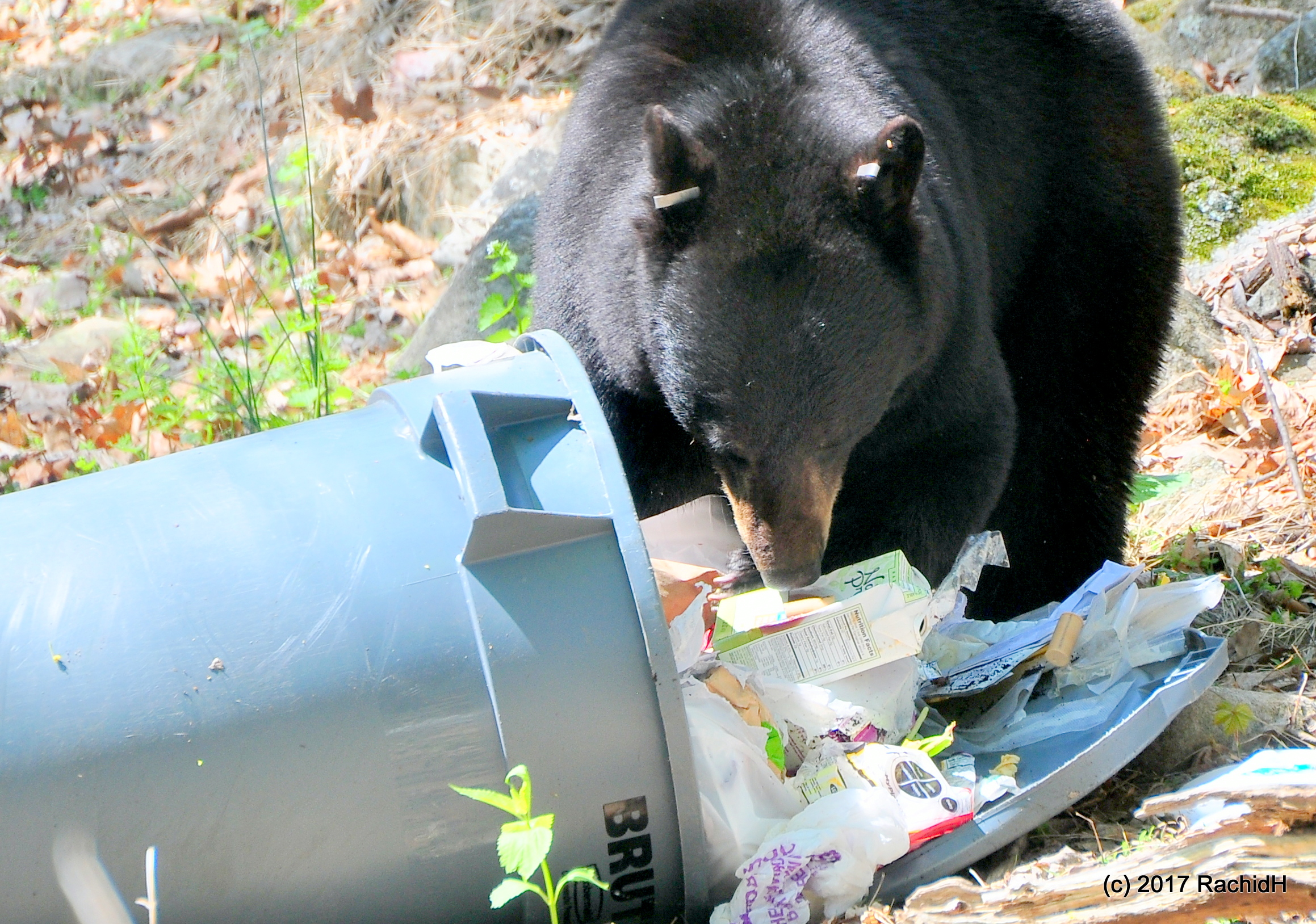
If you’ve recently moved to the North Shore, know that your trash isn’t just refuse—it’s an invitation. You now share your neighborhood with black bears. Weighing in at a couple of hundred pounds or more, these foraging neighbors have a sense of smell seven times stronger than a bloodhound’s. To a bear, a standard suburban garbage can is a “Tupperware container” filled with high-calorie appetizers.
To successfully transition to rural living, adopt a strict “Zero Odor” policy for your solid waste. In the city, a half-empty pizza box in the bin might be a minor nuisance, unless the raccoons get wind of it. Here in the Arrowhead, it’s a directional beacon for wandering bruins. A common local tip for a “Zero Odor” policy is to double-bag meat scraps or freeze them in a dedicated “trash baggie” until the morning of the dump run.
If you plan to leave your trash outside until you can bring it to the transfer station, use a heavy-duty, reinforced, bear-proof container. These look like miniature tanks. Better yet, keep your garbage cans in a garage or shed. This will keep Yogi from breaking in until disposal day at the transfer station. Once a bear discovers your garage is a drive-thru, it becomes a nuisance animal—a path that rarely ends well for the bear.
Depending on how close to town your domain is, you may be on a route for a local hauler. But if curbside pickup isn’t an option, you’ll soon discover a unique North Shore tradition: the trip to the transfer station.
Unlike an old-school dump, the transfer station is where you drop trash, which is then “transferred” to large trucks that haul it to landfills miles away. Also, the transfer station can become a local town square. Because everyone has to go there, it is where you’ll see your neighbors, catch up on the latest county board drama, and find out whose driveway is currently washed out.
If you’re a newcomer, don’t just drop and run. Bring your “North Shore Wave” and a little extra time to stay up to speed. The attendants are often the most knowledgeable people in the county. They know who the best local plumbers are and where the fish are biting. They probably won’t be too free with the fishing info. Still, they’ll appreciate you asking.
Transfer stations are located strategically throughout Cook and Lake counties. In August last year, the new Hovland Transfer Station opened. It has actually made the “social hour” a bit more high-tech, featuring a “drive-thru” window for payment—locals call it the “McDump”—but the loop layout still encourages a slow roll for a quick wave to neighbors.
Recycling is taken very seriously around here. Both counties have strategically located recycling locations to encourage diverting recyclables from the trash. Remember to rinse everything that you will store before the recycling trip. A sticky soda can is just as enticing to a bear as a steak bone.
Managing your solid waste here takes more effort than in the metro, but it forces you to keep a healthy mindfulness about what we consume and how we live alongside the wild. Keep it locked, keep it clean, and never underestimate a hungry bear with an appetite for a midnight snack.