


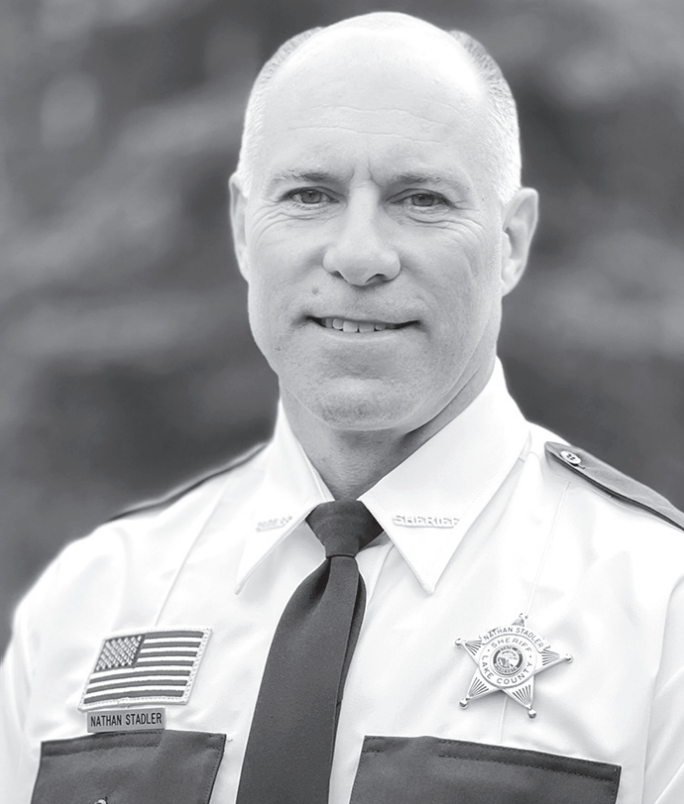
Lake County Sheriff Nathan Stadler always expected to retire from law enforcement by 55. The plan had been in place for years, but reaching that point has felt different than he imagined. After more than three decades in the field, he’s stepping away without a clear picture of what comes next.
“It’s time to get out of this field and try something different for a little while. I don’t know what that’s going to be yet,” he said.
The announcement came last week when he confirmed he wouldn’t seek another term this fall. Even though retirement had long been part of the plan, saying it publicly made the shift feel more real.
“It was kind of my plan all along, but then when it actually came time to put it into words, it’s been a little bit different. It just kind of got more real,” Stadler said.
Stadler’s career has been anchored in the same building since the late 1990s. He first walked in as a young deputy while construction crews were still finishing the place. Over the years, he watched the department move from typewriters and a single office computer to the technology-driven operation it is today.
“The building that we’re in right now was being built in 1996, and we moved in here in ’97. I’ve been here in this building, come this September, will be 30 years,” he said.
The tools changed, but the teamwork amongst colleagues remained constant. Stadler talks about camaraderie with the kind of affection that comes from years of shared calls, long shifts, and quiet trust built between coworkers.
“It’s always been a fun group of people. The sheriff’s office is a pretty close group of deputies. They work well together. We don’t have a lot of problems,” he said. “You have to rely on your partners and other partner agencies. It’s always been a good open relationship with all the departments, ever since I’ve been here. We all know that we need to rely on each other and everybody shows up to help when it’s needed.”
He said he’ll miss that part the most: the daily interactions, the teamwork, the sense of showing up for one another. He’ll also miss the community side of the job, helping steady a difficult situation or guiding someone through a hard day.
“I like working with the community too and helping whenever you can. You’re there a lot of times in their worst day and you can try to make it as good as you can, get the outcome as good as you possibly can,” he said.
The unpredictability of the work is something he’s always appreciated. No two days look the same, and that variety kept him engaged.
“The job was different every day. Every call is a little bit different. That’s what drew me to this particular position with the sheriff’s office,” he said.
Some challenges, though, never went away. Staffing has been one of the biggest, especially in recent years. Recruiting and retaining qualified people has required constant attention, and even when deputy positions were full, dispatch and jail often weren’t.
“It’s hard to find qualified people and keep them here,” Stadler said. “We’re finally full staffed as far as the deputies go but we’re too short now in dispatch and jail. The deputies themselves have really been stepping up and working a lot of overtime just to keep the shifts filled. My goal is always to be full staffed. I’m already in my fourth year and the staff just rotates through.”
He also points to public perception of law enforcement as another ongoing challenge. The idea that every situation has a clear, predictable outcome doesn’t match the reality he’s seen on the ground.
“You have to take each instance individually. We have to look at it individually and try to figure out the best outcome. It doesn’t mean they’re not going to get charged with a crime, but they might not go to jail that night,” he said. “We have to do the best we can within the laws. The outcomes of the calls are not always the same.”
Despite the difficulties, Stadler leaves with accomplishments he’s proud of. During his tenure, the department implemented body-worn cameras, updated squad cameras, and created a mental health wellness program using Public Safety Aid funds. The wellness program stands out as one of the most meaningful additions.
“We require one one-hour appointment every year. If they would like to come back… they can come back up to three more times,” he said.
The program gives deputies and staff immediate access to support after difficult calls, and early hesitation faded once people began using it.
“If we have a critical incident, this is the place that we will send our people right away. People were a little bit leery at first but we’ve had mostly all positive outcomes,” Stadler said.
He hopes the program also strengthens retention by showing employees that their wellbeing matters.
“Hopefully that’s just another thing that will help keep the employees here because they feel that they’re cared about,” he said.
As for life after law enforcement, Stadler doesn’t have a firm plan yet. He knows he likes to stay busy and looks forward to visiting his sons, who are out of state, more often. He also hopes to spend more time on the golf course and, as he put it, “hopefully improve my game.” After 32 years in uniform, he’s earned the right to let the next move come to him.