
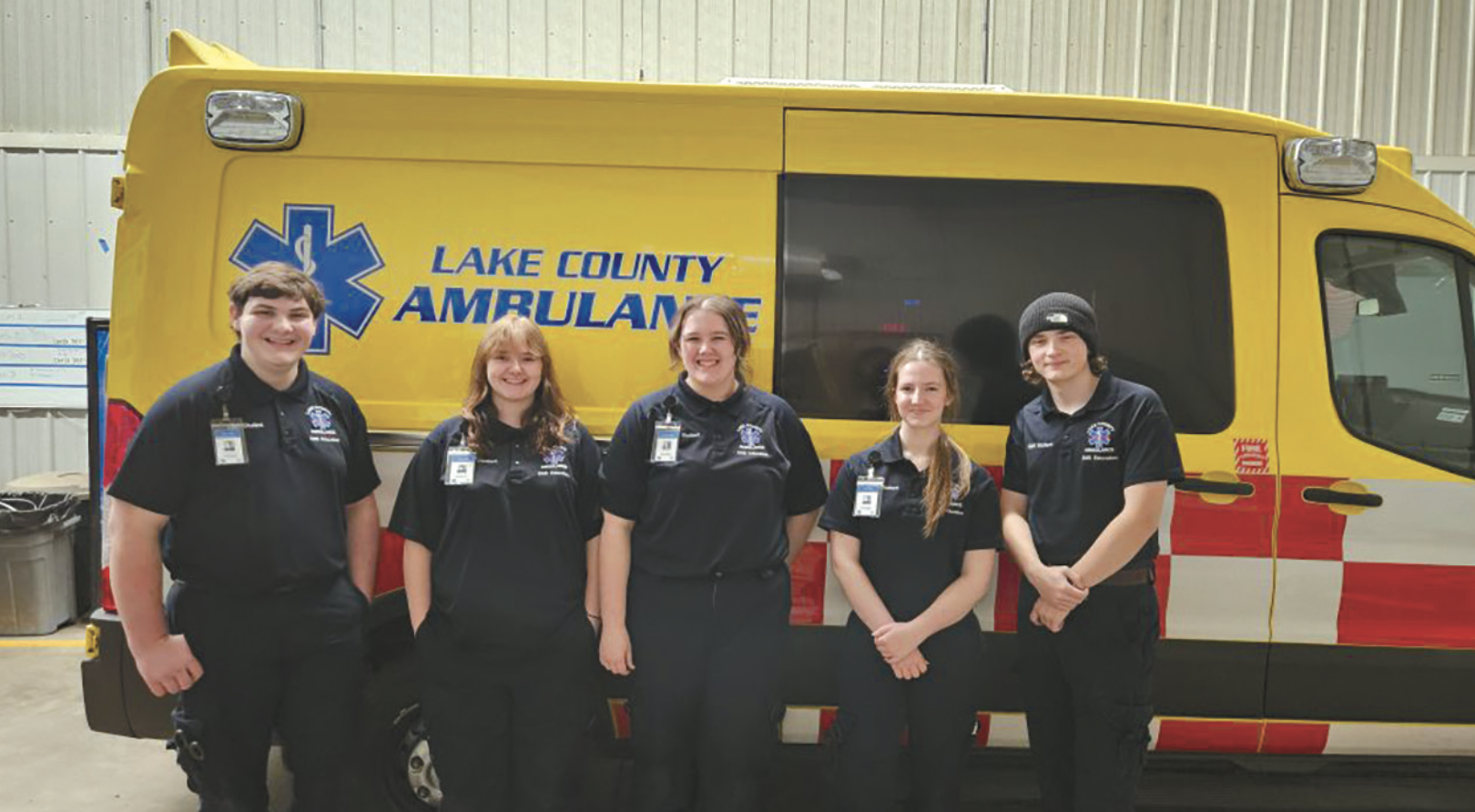
Five local high school students in Lake County have completed the first major step toward becoming nationally certified Emergency Medical Technicians through the new EMS in the Schools program. The initiative is a partnership between Lake County Ambulance Service, Lake Superior School District, and the State of Minnesota, and this group represents the program’s first class.
Over the course of the program, students practiced essential EMT skills, including splinting, back-boarding, and simulated baby deliveries. They also completed classroom work, hands-on skill labs, and clinical ride-alongs, gaining practical experience under the guidance of program instructors.
In November, each student completed a huge milestone, passing six psychomotor exam stations and demonstrating proficiency in key emergency procedures. The next step for the students is the NRE-MT cognitive exam, which, once passed, will grant them national certification.
Completing this level of training is a significant achievement, especially while balancing high school classes and the typical demands of being a teenager. Program leaders expressed pride in the students’ dedication and hard work, with Lake County Ambulance posting, “We couldn’t have asked for a better ending to this class.”
While the students’ work reflects their personal commitment, it also highlights the broader importance of programs like this. Rural communities often face challenges in recruiting and retaining emergency medical personnel, and school-based EMT programs can help build a pipeline of trained responders for the future. Completing a psychomotor exam and preparing for the national certification gives students both hands-on experience and a head start toward a potential career in emergency medicine.
Once certified, EMTs are qualified to provide basic life support, manage injuries and illnesses, assist in medical emergencies, and transport patients safely to medical facilities. This training equips students with the skills needed to respond quickly and effectively in real emergencies, which is a valuable contribution in rural communities where timely medical care can save lives.
By successfully finishing the first class, the program has set a foundation for future students to explore EMT training while still in high school, and an opportunity that blends education, skill development, and community service.